



Antique Alpine Wall Art
Antique alpine wall art brings the dramatic peaks and valleys of European mountains into your home through period paintings and photographs.
Antique Alpine Wall Art
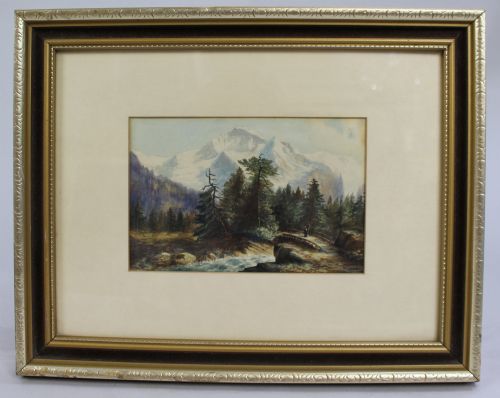
Antique alpine wall art encompasses framed paintings, watercolours, and monochrome photographs capturing mountain landscapes, snow-capped summits, and castles. These pieces record the topography and romantic appeal of the Swiss, Austrian, and Bavarian ranges during the nineteenth and early twentieth centuries.
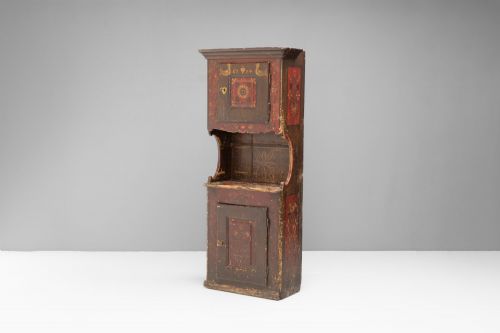
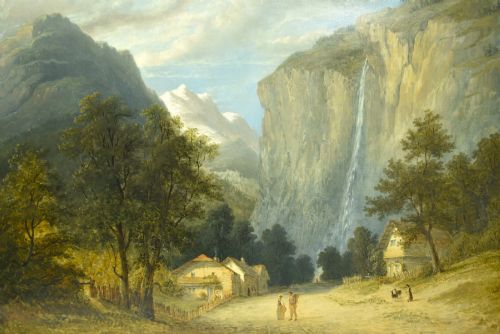
The selection on this page ranges from large oil paintings depicting lakes and waterfalls such as Staubbach Falls to delicate watercolours and topographical photographs of the Eiger. Alongside flat works, you encounter carved wooden hunting trophies and painted wooden wall cabinets or cupboards associated with mountain dwellings.
Romanticism and Scandinavian Country styles heavily influence the visual character of these works, alongside Austrian Folk Art traditions. Buyers frequently find framed views dated from the Victorian era up to the nineteen-thirties, reflecting both grand landscape traditions and regional craft.
Materials and construction
Artists painted these scenes using oil on canvas or watercolour on paper, capturing light on snow and rock with layered pigments. Monochrome photographs preserve early topographical views of peaks like the Eiger through chemical prints on paper.
Frames and related wall pieces utilise pine and other solid woods, sometimes featuring hand-carved details in the Black Forest style. Painted cupboards and wall plaques incorporate applied pigments directly onto wooden substrates to create folk art motifs.
Antique Alpine Wall Art Retail Price Guide 2026
Typical asking prices for alpine wall art among the pieces listed under this phrase on Sellingantiques today, from the lower quarter to the upper quarter. They describe what is for sale here now, not the wider market.
Listings feature works spanning the nineteenth century to nineteen thirty, utilising oil on canvas, watercolour, pine, and paper.
Evaluating quality and execution
Quality in these works rests upon the precision of brushwork, the handling of atmospheric light over mountain ranges, and the clarity of topographical detail. Stronger paintings demonstrate a confident command of scale when portraying massive peaks against lakes and valleys.
For carved wooden elements and painted cupboards, execution is judged by the depth of the carving and the preservation of the original painted surface. Signed works by documented artists carry distinct attribution that separates them from anonymous topographical views.
Karl Herrle·Noel Harry Leaver·A Michaelis
The Antique Alpine Wall Art Glossary
- Topographical photography
- Early photographic prints that document specific geographical locations and mountain views with scientific and artistic precision.
- Black Forest
- A style of wood carving originating from the mountainous region of Germany, known for realistic animal trophies and foliage motifs.
- Watercolour
- A painting method where fine pigments are suspended in a water-soluble binder, frequently utilised for delicate mountain sketches.
- Romanticism
- An artistic movement focusing on emotion, individualism, and the awe-inspiring power of untamed natural scenery.
- Pine
- A softwood commonly utilised for constructing regional cupboards, wall cabinets, and backing frames in mountain workshops.
Antique Alpine Wall Art: Frequently Asked Questions
What subjects appear in this art?
These works typically depict snow-capped mountain peaks, glacial lakes, alpine waterfalls, and regional castles set within the Swiss, Austrian, or Bavarian Alps. Views often feature specific landmarks such as Staubbach Falls or the Eiger.
Artists also recorded local topography, mountain streams, and rural alpine architecture through both detailed paintings and early photographic prints.
How do I hang large canvases?
Large oil paintings require secure wall fixings suited to the weight of the wooden stretcher frame and heavy canvas. Position them at eye level where adequate wall space allows the expansive mountain scenery to be viewed without obstruction.
Keep these pieces away from direct heat sources and strong sunlight to protect the canvas and traditional pigments from fading or cracking over time.
Are watercolours sensitive to light?
Paper and watercolour pigments are vulnerable to fading when exposed to direct, strong sunlight for extended periods. Displaying them behind protective glass in a shaded part of the room helps preserve the delicate washes.
Rotate watercolours periodically or limit ambient light exposure to maintain the original tones of the mountain skies and snow.
How are periods identified?
Periods are determined through a combination of artist signatures, framing techniques, paper types, and stylistic markers associated with Victorian or early twentieth-century art. Dated inscriptions on the reverse or front of the canvas often provide precise confirmation.
Material analysis of the wooden stretchers, pine boards, and photographic printing methods also helps establish whether a piece originates from the nineteenth century or later.