
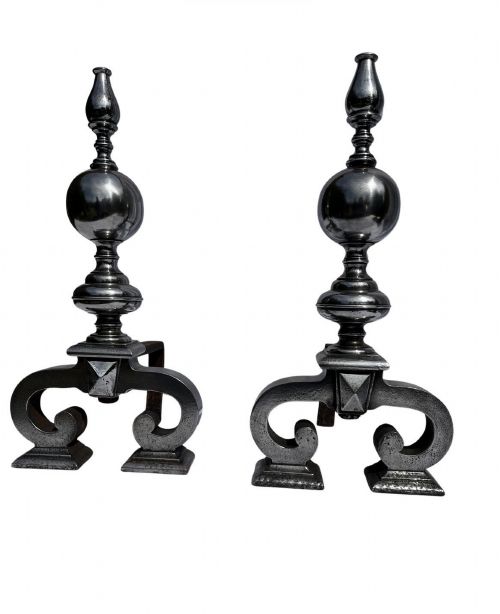


Traditional Metal Firedogs
Traditional metal firedogs anchor the hearth with functional sculpture, offering enduring form and utility for an open fire.
Traditional Metal Firedogs
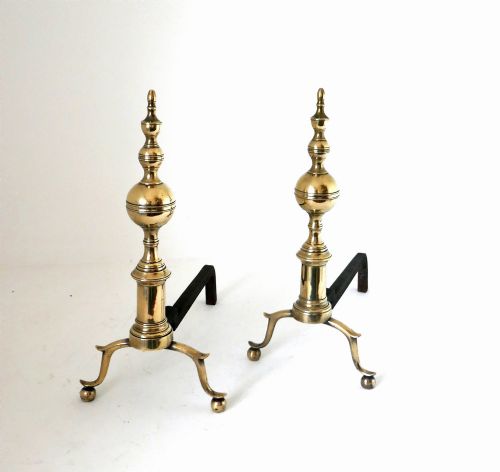
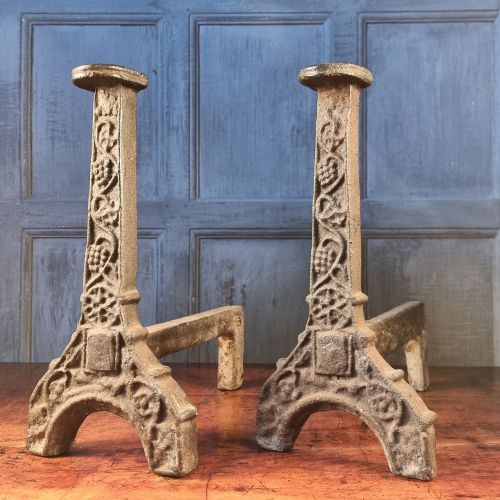
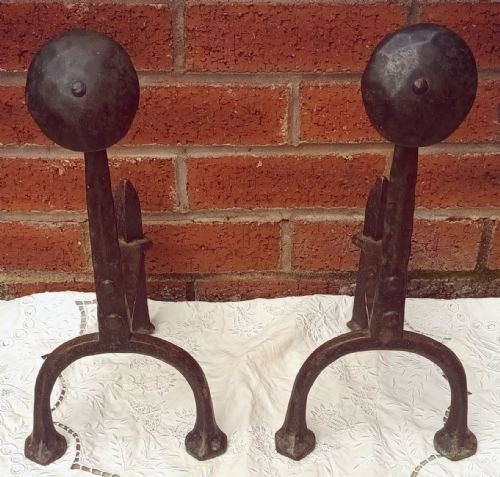
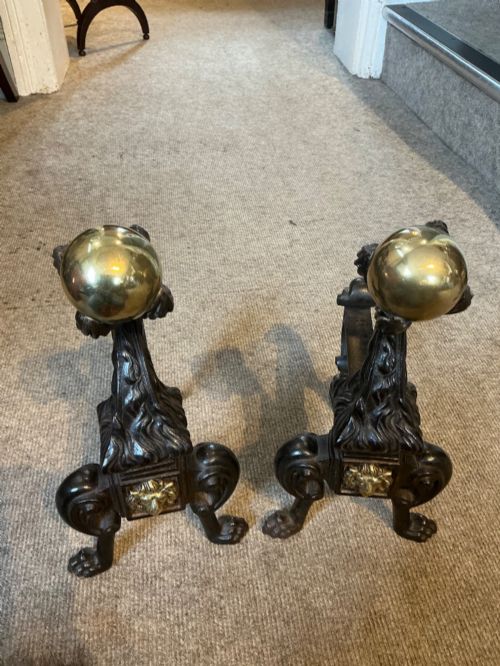
The selection ranges from robust nineteenth-century wrought iron examples to ornate cast brass pairs influenced by Victorian, Arts and Crafts, and Gothic styles. Earlier forms, such as those dating from the sixteenth or eighteenth centuries, appear occasionally and present heavier forging or distinct period casting. Most examples found on this page consist of matched pairs designed to sit symmetrically at either side of the hearth basket or grate.
Materials and construction methods
These pieces rely heavily on metals such as brass, cast iron, wrought iron, and steel, sometimes enhanced with polished iron, copper, or gilt brass finishes. Smiths forged iron by hand to create durable structural bars and scrolls, while foundries utilised casting techniques to shape intricate brass heads and feet.
Construction methods dictate the weight and presence of each pair, combining hand-forged elements with bolted or riveted joints. Arts and Crafts examples often display visible hammer marks and honest joinery, contrasting with the smooth, polished surfaces of Victorian classical revival or Regency style brass work.
Listings feature items spanning from the sixteenth century through the Victorian period, executed in brass, iron, and copper.
Distinctions in craftsmanship and design
Quality in traditional metal firedogs rests on the crispness of the casting and the skill of the smith's hand rather than mere weight alone. Finer pairs exhibit balanced proportions, sharply defined decorative motifs, and robust assembly that withstands the heat of the hearth without warping.
The disparity between standard production items and superior examples lies in the detailing of the finials and the finish of the metal. Hand-forged wrought iron pieces show purposeful manipulation of the material, whereas mass-produced nineteenth-century items rely on simpler cast components with less hand-finishing.
James Cartland & Son
The Traditional Metal Firedogs Glossary
- Andirons
- Another term for firedogs, these are metal supports placed in a hearth to hold logs. They typically feature an upright front standard and a horizontal bar extending backward.
- Finial
- The decorative terminal at the top of the upright standard. This ornament is often cast in brass or forged into distinctive geometric and floral shapes.
- Wrought iron
- Iron that has been heated and shaped with hand tools by a smith. This material offers high tensile strength and displays characteristic surface texture from the hammer.
- Gilt brass
- Brass coated with a thin layer of gold or a gold-coloured finish. This treatment adds a bright reflective quality to formal nineteenth-century hearth furnishings.
Traditional Metal Firedogs: Frequently Asked Questions
What is the difference between firedogs and andirons?
There is no functional difference between the two terms, as both describe the metal supports used to hold logs in an open fireplace.
Regional preferences often determine which word is used, though both names appear interchangeably across historical periods and listings.
Can traditional firedogs be used in a modern fireplace?
These pieces can be placed in any working open fireplace provided the hearth has sufficient depth and floor space to accommodate the horizontal bars.
Buyers should measure the hearth opening carefully to ensure the upright standards and rear bars fit comfortably without crowding the space.
How do I identify the period of a pair of firedogs?
Dating relies on stylistic clues, manufacturing techniques, and the specific metal alloys used in the construction.
For instance, heavy hand-forging points toward earlier centuries or Arts and Crafts revivals, while polished brass and ornate cast details commonly align with Victorian and Regency aesthetics.
Do firedogs require special maintenance?
Regular dusting and occasional light cleaning help maintain the metal surface, depending on whether the material is iron or brass.
Iron benefits from a protective coat of wax or oil to prevent oxidation, while brass can be polished periodically or left to develop a natural patina.