



Traditional Mahogany Nursery Furniture
Traditional mahogany nursery furniture brings domestic history to life through timber high chairs, cradles and small seats designed for children.
Traditional Mahogany Nursery Furniture
Traditional mahogany nursery furniture comprises small-scale seating and sleeping apparatus constructed for children during the nineteenth and early twentieth centuries. These pieces translate adult furniture forms into child-sized proportions, utilising dense hardwoods suited to heavy domestic use.
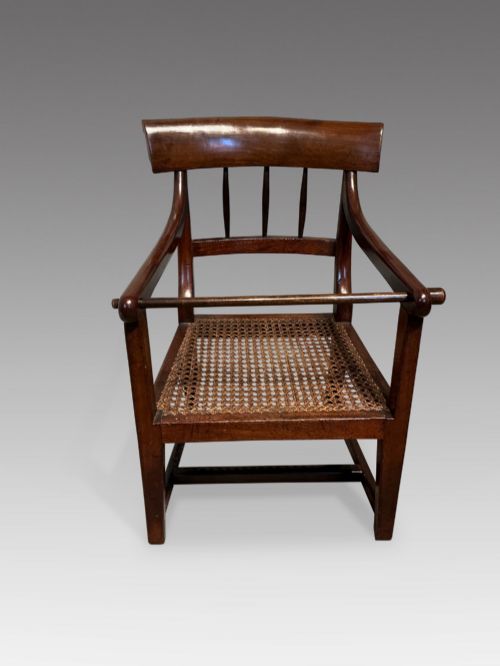
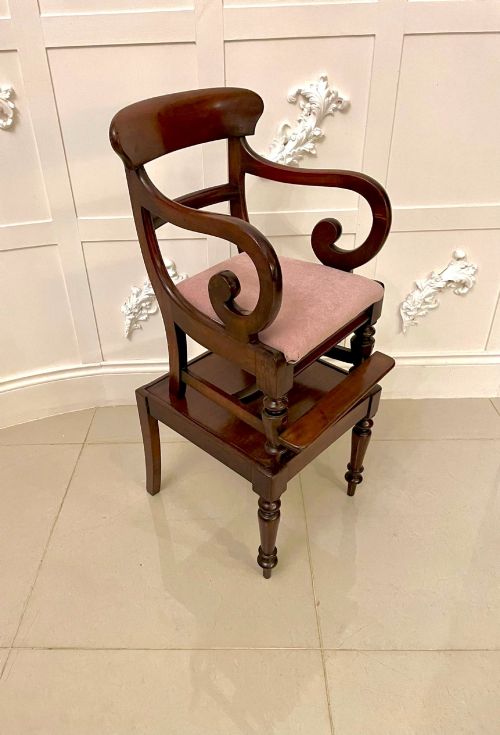
High chairs, rocking cribs, and children's armchairs dominate this category, spanning the Regency, William IV, Victorian, and Edwardian eras. The most common survivals on this page are high chairs and rocking cribs executed in solid mahogany, often featuring secondary materials like cane or upholstery.
Makers of these items adapted contemporary domestic styles for the nursery, resulting in miniature tub chairs, caned seats, and fitted stands. Each piece demonstrates how Victorians and their predecessors approached juvenile accommodation with both utility and formal design in mind.
How traditional mahogany nursery furniture was made
Cabinetmakers constructed these items using solid mahogany, shaping the dense timber through turning, joinery, and steam-bending for components like rocking crib bases. Frame construction relied on traditional mortise and tenon joints to withstand the physical demands placed by children.
Secondary materials such as cane, brass hardware, and upholstered pads appear frequently alongside the primary mahogany structure. Caned panels were hand-woven into chair backs and seats, while iron and brass provided mechanical support for high chairs and walkers.
Traditional Mahogany Nursery Furniture Retail Price Guide 2026
Typical asking prices for traditional mahogany nursery furniture among the pieces listed under this phrase on Sellingantiques today, from the lower quarter to the upper quarter. They describe what is for sale here now, not the wider market.
Listings span the nineteenth and early twentieth centuries, featuring Regency, William IV, Victorian, and Edwardian periods.
What varies in quality
The refinement of timber selection and joinery distinguishes superior examples from standard workshop production. Better pieces display carefully figured mahogany grain and precise turning on legs and spindles, whereas simpler items utilise plain stock timber.
Integration of secondary materials like fine cane-work or original brass components indicates higher initial cost and superior craftsmanship. The preservation of original mechanical mechanisms in high chairs and strollers also sets exceptional pieces apart from heavily altered examples.
The Traditional Mahogany Nursery Furniture Glossary
- Mahogany
- A durable, reddish-brown tropical hardwood favoured by cabinetmakers for its stability and rich grain. It formed the primary structural material for finer nineteenth-century nursery pieces.
- Bergere
- A type of upholstered armchair with enclosed cane-work sides and back. This technique lightens the visual weight of mahogany frames in high chairs.
- Tub chair
- An armchair featuring a continuous curved back and arms forming a rounded enclosure. This form offered security and support for young children.
- Regency
- An English design style spanning the early nineteenth century characterised by classical restraint and clean lines. Pieces from this period exhibit simpler geometric forms.
Traditional Mahogany Nursery Furniture: Frequently Asked Questions
What is traditional mahogany nursery furniture?
Traditional mahogany nursery furniture consists of miniature chairs, high chairs, cribs, and strollers made for children during the nineteenth and early twentieth centuries. These pieces reflect adult furniture styles scaled down for domestic use.
Craftsmen built them from durable mahogany to endure rigorous daily handling by children and nurses in period households.
How were high chairs used?
High chairs elevated young children to table height during family meals or kept them seated securely while being fed. Many designs incorporated trays or adjustable stands.
They served as essential pieces of functional nursery equipment in middle and upper-class homes throughout the Victorian era.
How do I date these pieces?
Dating relies on identifying stylistic markers associated with periods such as Regency, William IV, Victorian, and Edwardian. Turned legs, joinery methods, and upholstery styles provide key chronological clues.
Cabinetmaking techniques evolved across the nineteenth century, moving from lighter classical forms to heavier proportions before returning to lighter Edwardian designs.
Can I use these pieces today?
These items function primarily as decorative antiques and collector's pieces rather than modern nursery equipment. Safety standards for children's furniture have changed significantly.
Collectors integrate them into living spaces as display items, plant stands, or historical conversation pieces rather than practical seating for infants.