
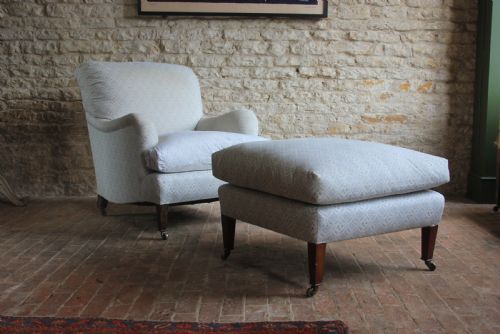


Traditional Mahogany Leg Ottoman
A traditional mahogany leg ottoman brings solid timber framing and textured upholstery together to ground a seating arrangement.
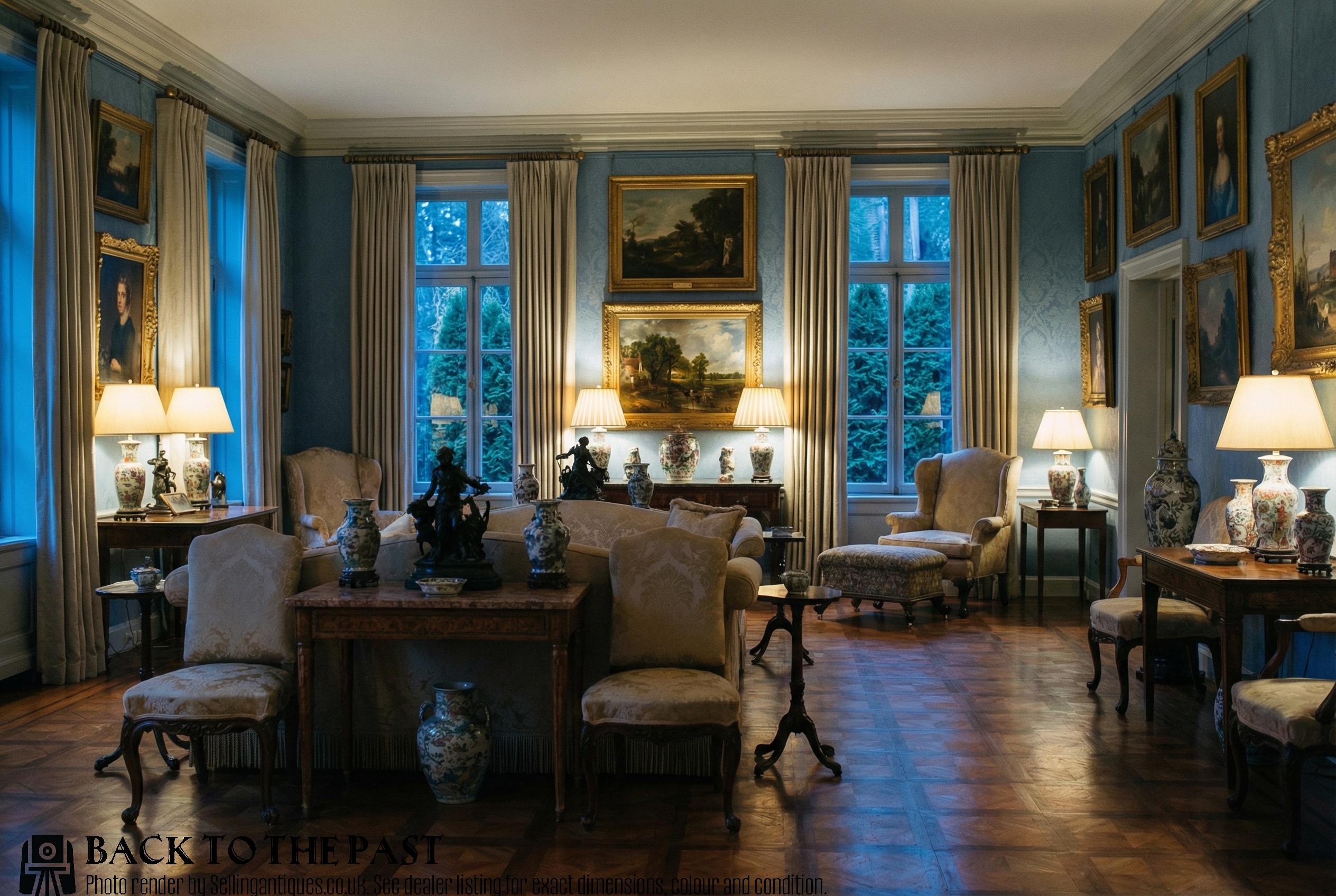
Traditional Mahogany Leg Ottoman
A traditional mahogany leg ottoman takes the form of a low footstool, long bench or centre stool built to rest comfortably within a room. Buyers searching for a traditional mahogany leg ottoman encounter pieces spanning the nineteenth century up to the early twentieth century.
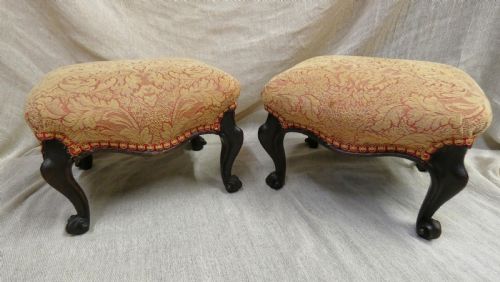
The assortment relies heavily on Victorian and Edwardian examples alongside revival aesthetics such as Chippendale style, Georgian style, and Regency. Footstools and long benches dominate the selection, frequently elevated on brass castors or shaped legs.
Materials and construction
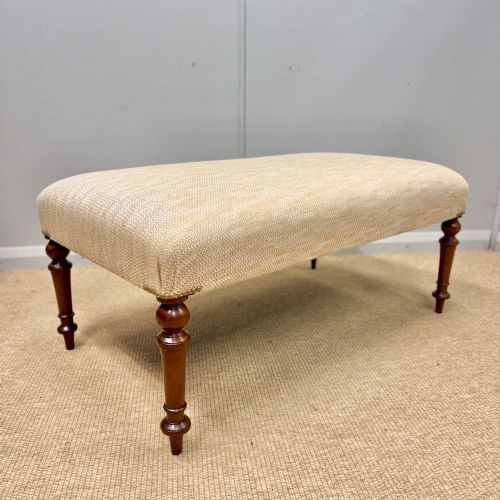
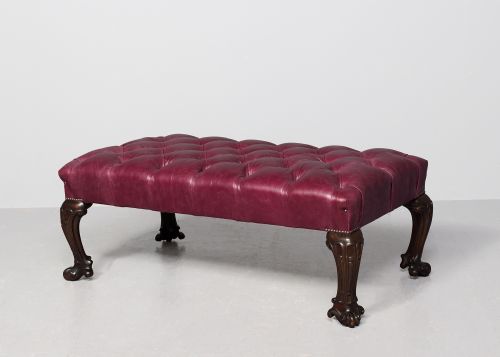
Solid mahogany forms the structural framework of these pieces, often shaped into cabriole supports, fluted legs or ball and claw details. Woodcarving appears on revival frames, translating historical design motifs into sturdy furniture.
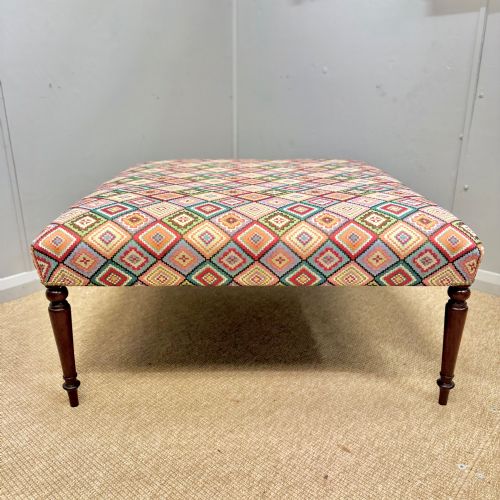
Upholstery materials range from leather and hide to woven tapestry fabric, wool, velvet and Kilim textiles. Deep buttoning and recent re-upholstery update the surfaces while retaining the traditional timber bases.
Listings feature mahogany frames paired with materials such as wool, leather, velvet, and tapestry fabric.
Distinctions in quality
The depth of carving on the mahogany frame separates standard production from finer workshop output, particularly in revival pieces displaying detailed ball and claw motifs. Solid timber construction and sturdy joinery determine the longevity of the base.
The choice and execution of the top covering, from simple fabric to hand-finished buttoned red hide or Kilim textiles, dictate the visual weight of the stool. Original brass castors and well-preserved timber patination add character to the piece.
Howard and Sons·Whytock and Reid
The Traditional Mahogany Leg Ottoman Glossary
- Mahogany
- A durable tropical hardwood prized for its rich reddish-brown colour and stable grain. It forms the structural frame for the majority of these stools and benches.
- Cabriole leg
- A furniture leg that curves outward at the knee and tapers inward toward the ankle, ending in a pad or foot. This form appears frequently on eighteenth and nineteenth-century seating.
- Kilim
- A flatwoven textile originating from the Near East and Central Asia. These durable fabrics often provide colourful geometric patterns when utilised for ottoman upholstery.
- Castor
- A small wheel mounted in a swivel housing attached to the base of a furniture leg. They allow heavy footstools and ottomans to move smoothly across floor surfaces.
- Deep buttoning
- An upholstery technique where twine is pulled through padding and secured with buttons to create a diamond pattern. This method adds firmness and texture to leather and fabric tops.
Traditional Mahogany Leg Ottoman: Frequently Asked Questions
What is a traditional mahogany leg ottoman?
A traditional mahogany leg ottoman is a low upholstered stool or bench supported by a dark hardwood frame. These pieces function as footrests, extra seats or central table alternatives.
Most examples date from the nineteenth or early twentieth century and incorporate revival styles such as Chippendale or Regency.
How do I identify a Victorian footstool?
Victorian footstools typically feature dark mahogany frames combined with heavy upholstery, deep buttoning or tapestry fabrics. Many examples incorporate turned wooden legs and occasionally brass castors for mobility.
Proportions tend to be generous, reflecting the comfortable seating arrangements of nineteenth-century drawing rooms.
Are these ottomans suitable for daily use?
These timber-framed stools are built for regular domestic placement as footrests or seating. Many surviving pieces have been newly upholstered to handle modern wear while keeping their historic frames intact.
Placing them in living spaces provides a functional surface that complements traditional and eclectic interiors.
What is the difference between a stool and an ottoman?
Stools and ottomans both serve as low upholstered supports, though larger examples are often termed ottomans or centre stools. Stools generally feature exposed wooden legs while full ottomans may carry heavier upholstered bodies.
Both categories utilise solid mahogany frames and traditional textiles across the surviving inventory.