
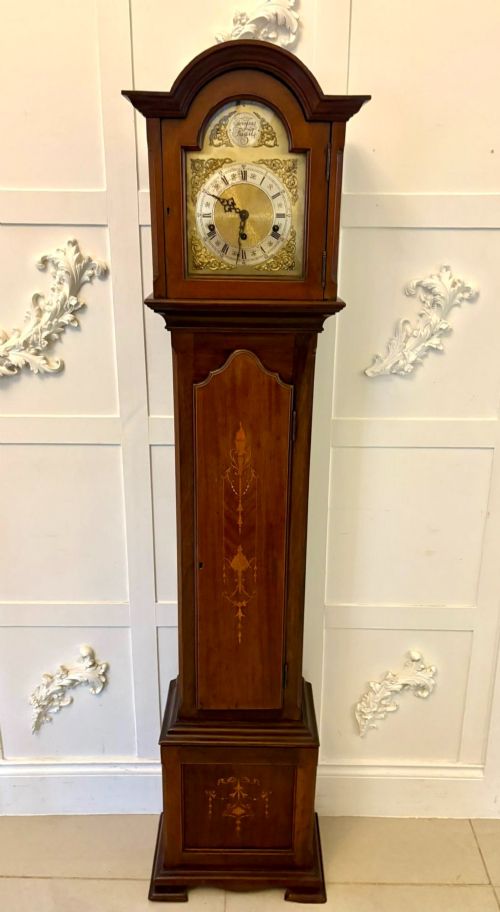
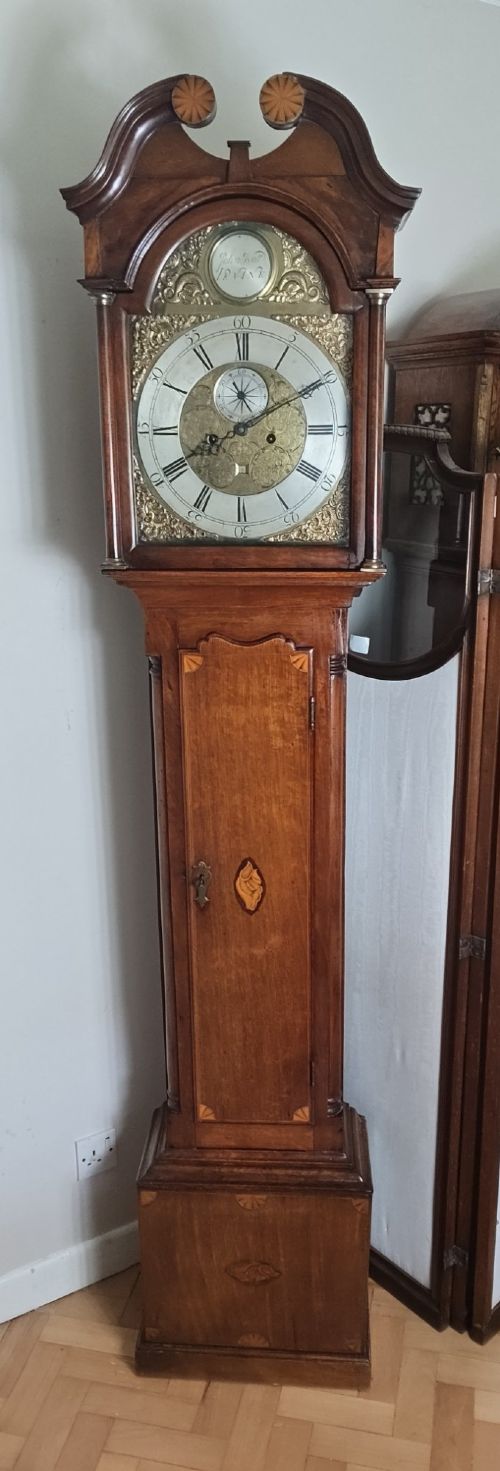
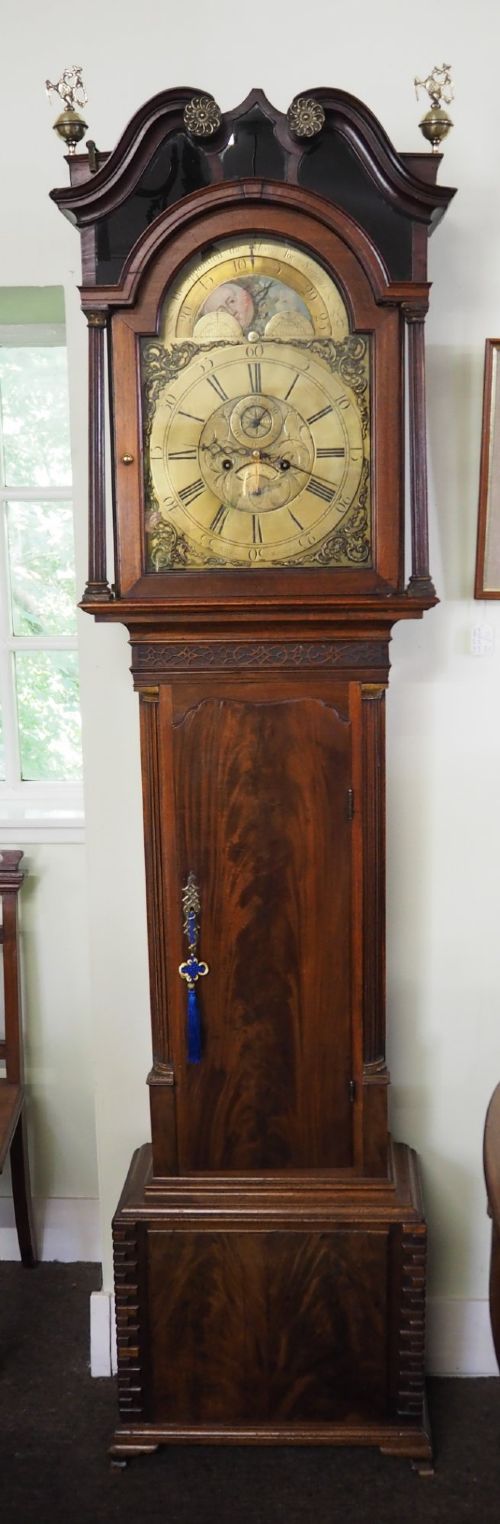
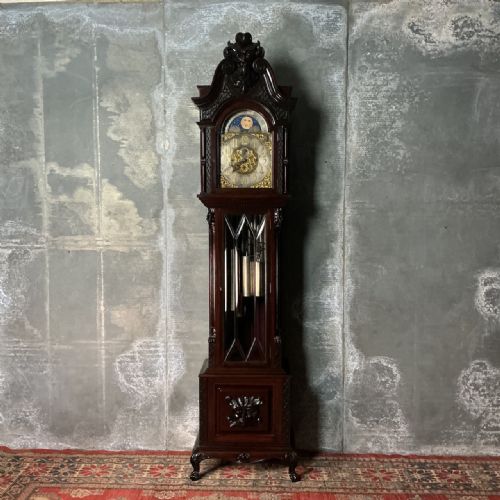
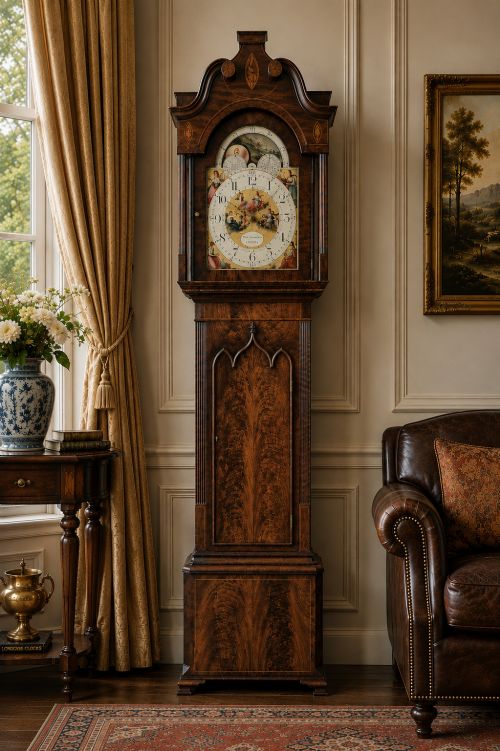
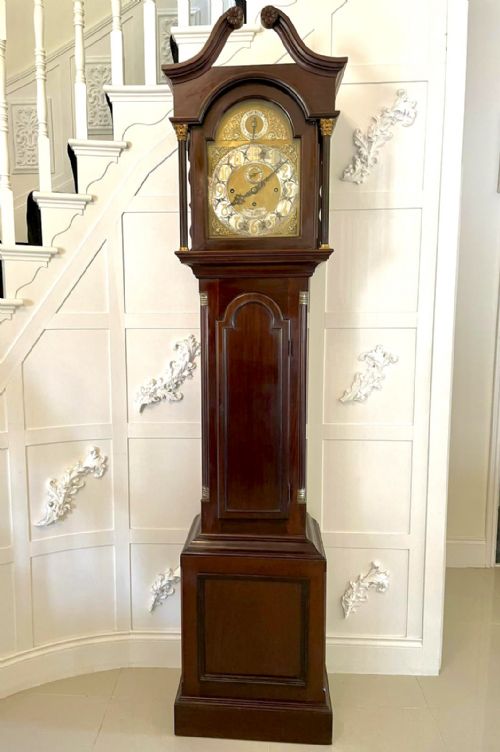
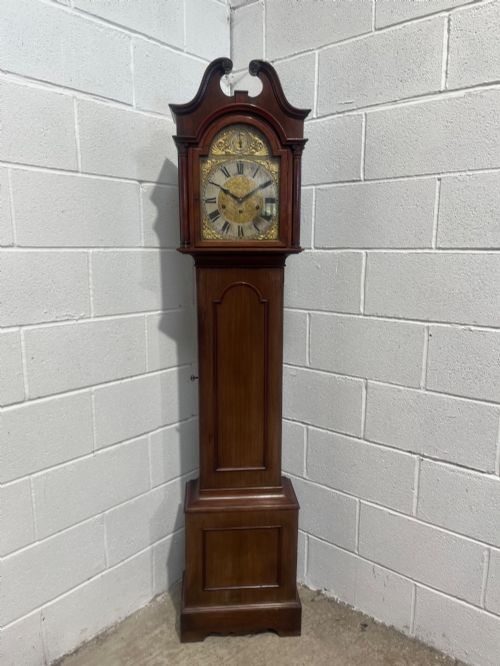
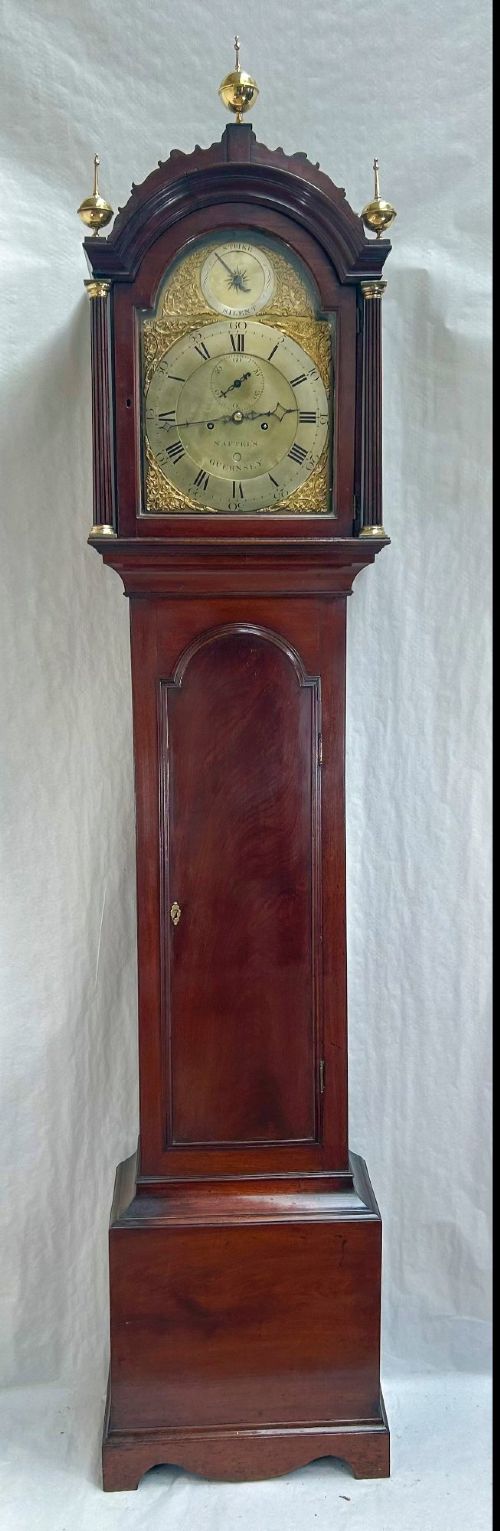
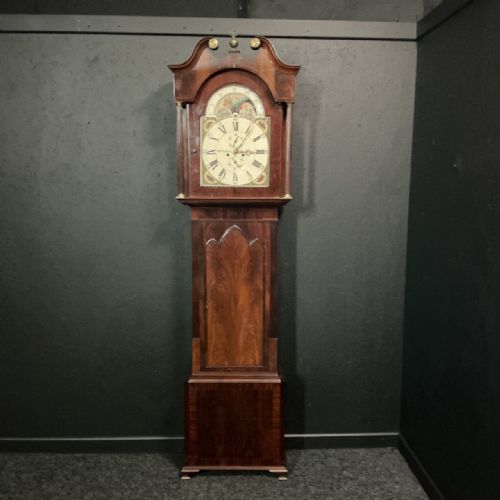
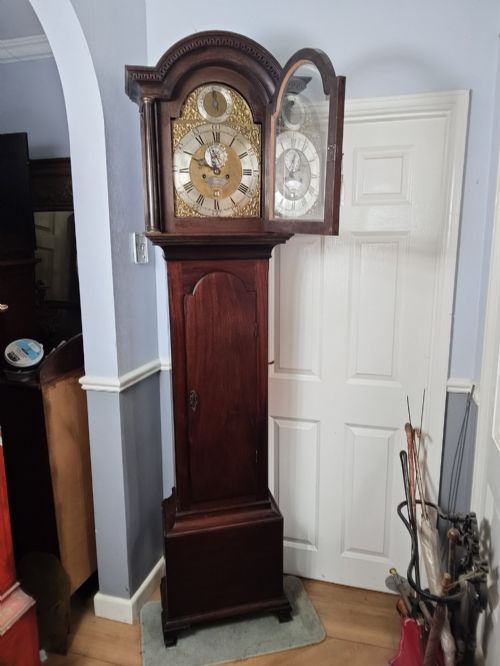
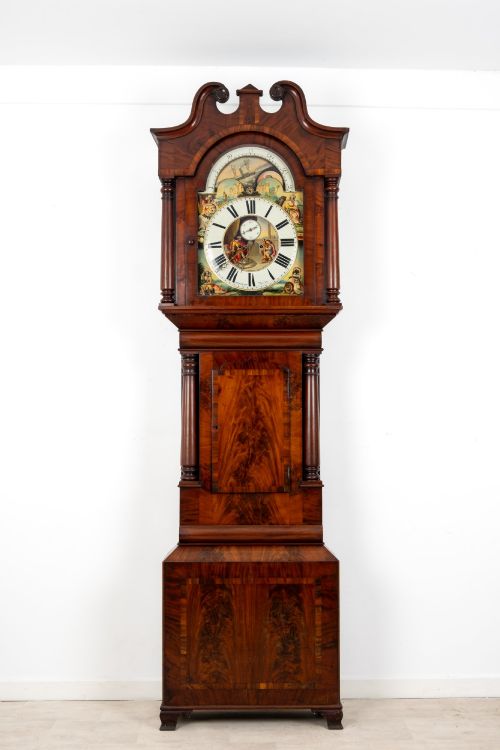
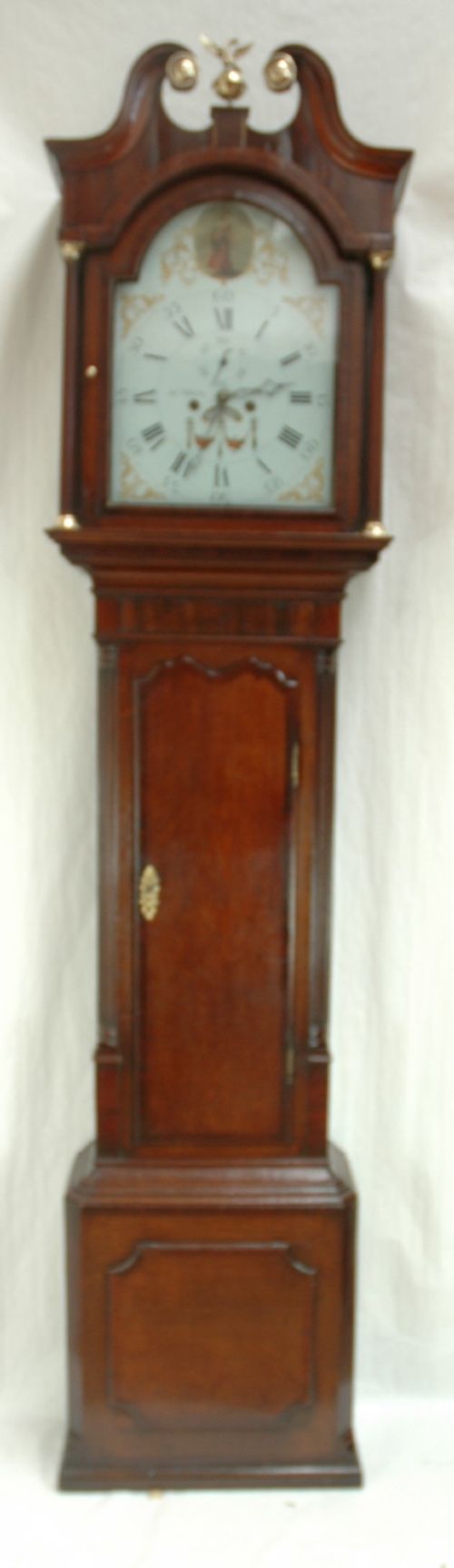
Traditional Mahogany Grandfather Clock
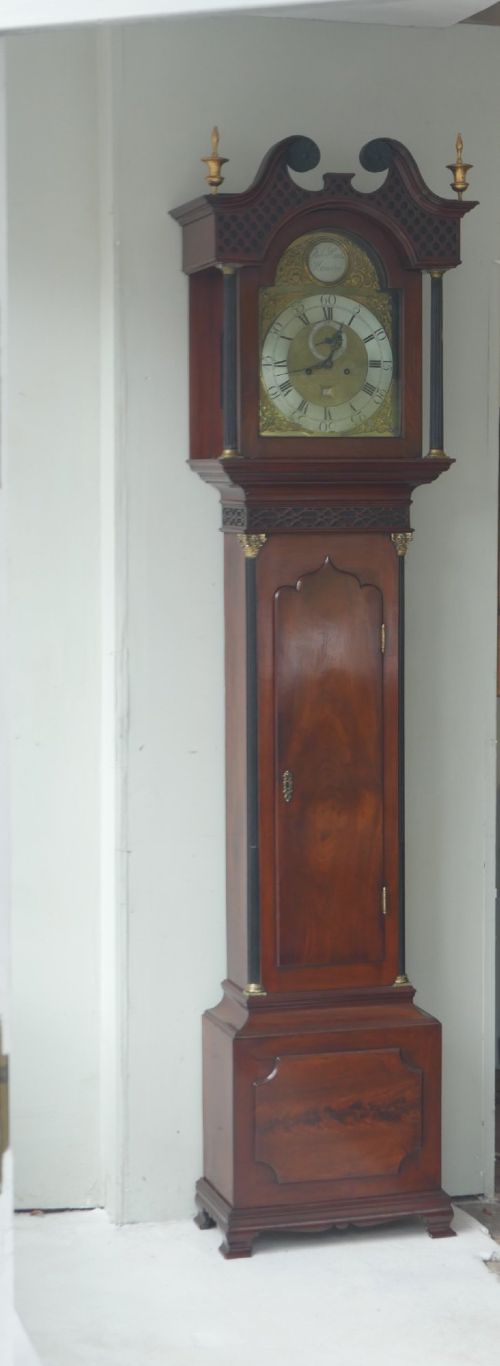
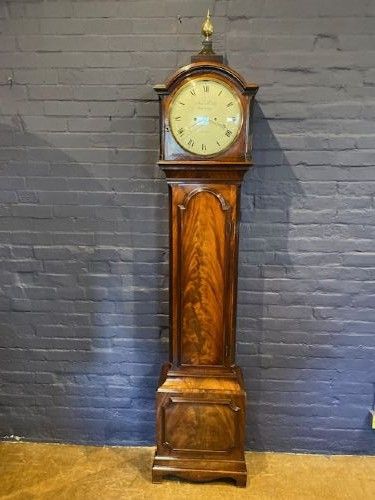
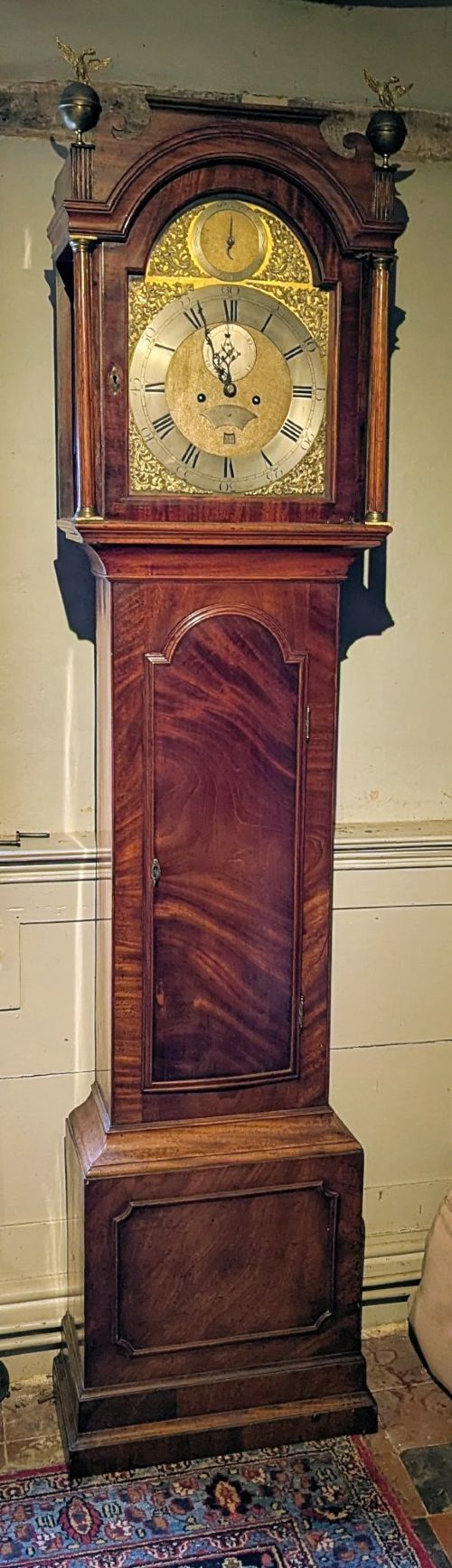
A traditional mahogany grandfather clock stands tall in the hallway, marking the hours with brass dials and rhythmic weight-driven pendulums.
Traditional Mahogany Grandfather Clock
A traditional mahogany grandfather clock is a tall, floor-standing timepiece housed in a timber case, designed to regulate time through a swinging pendulum and falling weights. Buyers searching for a traditional mahogany grandfather clock will find pieces spanning the Georgian, Victorian, and Edwardian eras, as well as the 18th, 19th, and 20th centuries.
The objects appear under various historical labels including longcase clocks, grandfather clocks, and smaller dwarf or grandmother variants. Most examples seen on this page date from the Georgian and Victorian periods, constructed from rich mahogany timber with dial work in brass, enamel, or painted iron.
Regional variations emerge clearly across the selection, featuring London makers alongside Scottish workshops from centres such as Edinburgh, Dundee, and Auchterarder. Dial configurations range from simple time-only faces to complex moonphase displays, strike-silent mechanisms, and multi-bell musical movements.
Materials and Construction
The structural casework relies primarily on mahogany timber, occasionally complemented by oak carcases, showcasing decorative grain patterns such as flame mahogany alongside delicate inlay and paterae details. Glass panels protect the dial face and door aperture, allowing a view of the weighted movement within.
Mechanical components combine brass for movement plates and gears with steel pinions, iron weights, and enamelled or painted iron dials. Cabinetmakers joined the hood, trunk, and base using traditional joinery, while specialist horologists fitted the eight-day, thirty-hour, or three-train movements into the completed cases.
Case materials span primary mahogany timbers with oak internal carcases, complemented by brass dials, enamelled iron faces, and protective glass viewing doors.
Evaluating Quality and Craftsmanship
Quality rests upon the crispness of the cabinetwork and the sophistication of the movement housed within. Finer examples display carefully selected flame mahogany veneers, precise inlay work, and well-proportioned architectural hoods featuring glazed doors and brass dial furniture.
Horological excellence distinguishes standard timekeepers from exceptional regional or metropolitan pieces. Movement complexity, such as strike-silent capabilities, moon roller dials, musical chime trains, and signatures from noted makers, elevates the standing of an individual clock.
James McCabe·Samuel Kellett of Bredbury·Winsor Bishop Norwich·Parkinson Bros Batley·Andrew Thom·Henry Weedon London·Joseph Gibson Ecclefechan·Thwaites London
The Traditional Mahogany Grandfather Clock Glossary
- Longcase clock
- An alternative term for a tall pendulum clock housed in a protective wooden case, standing directly on the floor. This term is frequently used interchangeably with grandfather clock.
- Moonphase
- A dial mechanism tracking the lunar cycle through a rotating disc painted with moon phases. This complication appears behind an arched aperture on the clock face.
- Strike-silent
- A mechanical feature allowing the chiming train to be silenced at night without stopping the clock's timekeeping. It is controlled by a small lever positioned on the dial face.
- Paterae
- Small circular decorative motifs carved or inlaid into the timber casework, typical of neoclassical design periods. They accent the frieze or corners of the hood.
- Grandmother clock
- A smaller, scaled-down version of the traditional longcase clock, standing lower to the ground. These typically date from the Edwardian period or later.
- Three-train
- A movement containing three separate gear trains to drive timekeeping, striking, and chiming functions. This setup enables quarter-chiming melodies.
Traditional Mahogany Grandfather Clock: Frequently Asked Questions
How do I wind an eight-day grandfather clock?
Winding requires inserting a crank key into the winding holes on the dial face and turning it gently until the weights rise to the top. Care must be taken not to overwind the movement.
Most traditional eight-day mechanisms need attention once a week. Keeping a consistent schedule helps maintain steady timekeeping accuracy.
Where should I place a longcase clock?
Position the clock against an interior wall away from direct sunlight, heating vents, and exterior doors. Fluctuating temperatures and humidity can affect the wooden case and delicate internal mechanics.
The floor beneath must be level and stable to ensure the pendulum swings evenly. Levelling feet or shims may be required to achieve an even beat.
What is the difference between a grandfather and a grandmother clock?
The primary distinction lies in overall height and proportion. Grandfather clocks stand tall, usually between six and eight feet, while grandmother clocks are considerably more compact.
Grandmother clocks emerged later in popularity, offering a smaller footprint suited to more modest domestic spaces while retaining weight-driven mechanical movements.
How can I tell if a clock dial is original?
Examine the fit of the dial within the hood arch and inspect the mounting feet securing it to the movement. Original brass and painted iron dials show consistent signs of ageing appropriate to the period.
Signatures should match the style of lettering common to the maker's era. Mismatched fixing holes or modern screws often indicate a replacement face.