
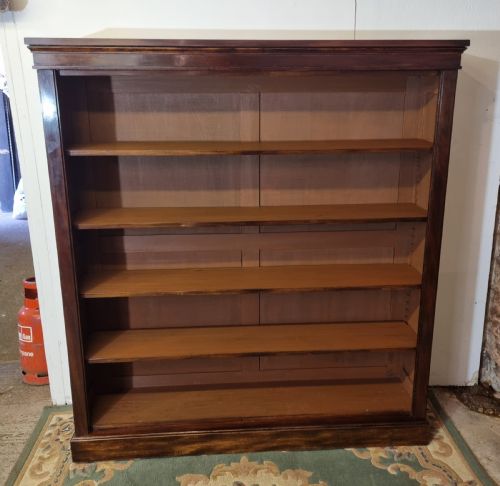
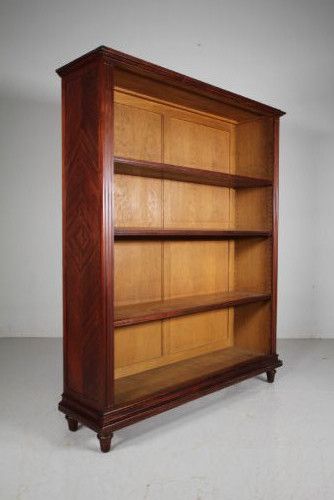
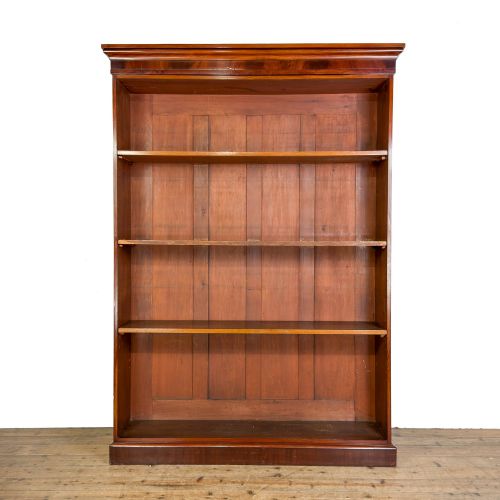
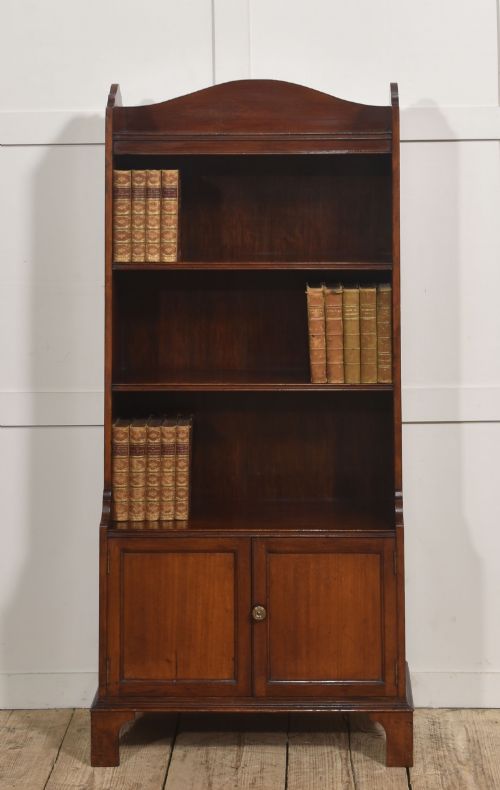
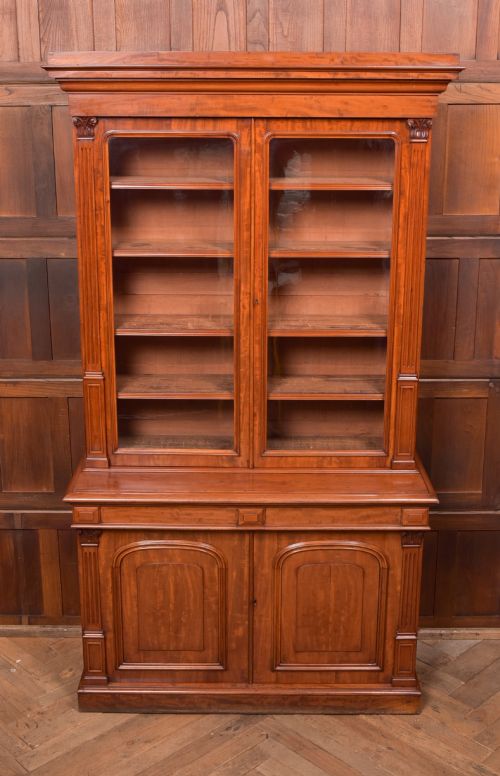
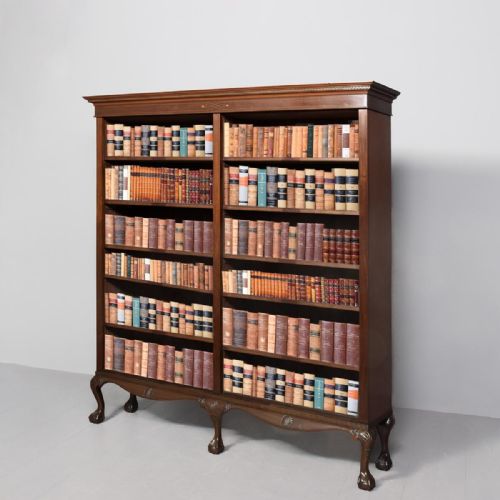


Traditional Mahogany Display Shelves
Traditional mahogany display shelves bring warmth and architectural order to a room, offering practical storage alongside rich timber grain.
Traditional Mahogany Display Shelves
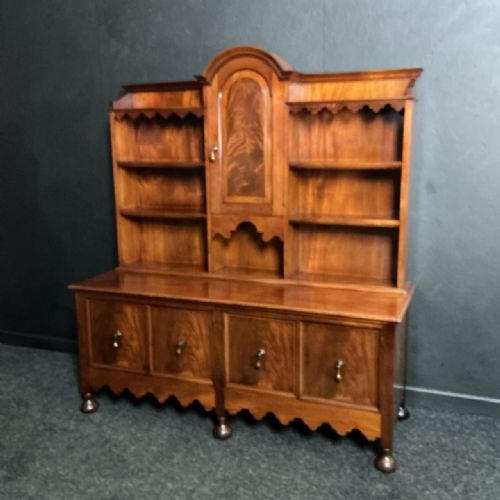
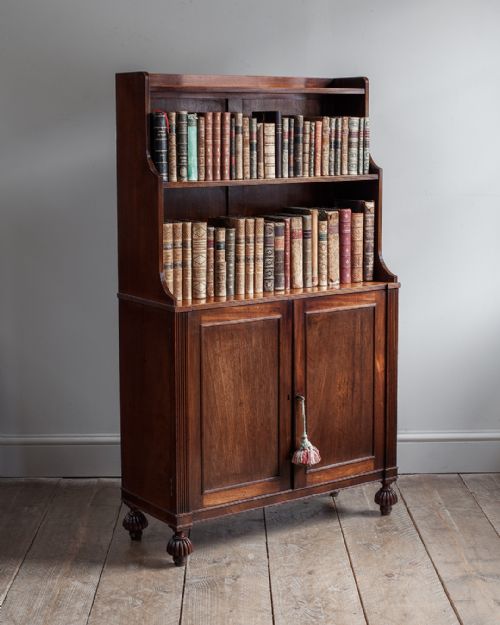
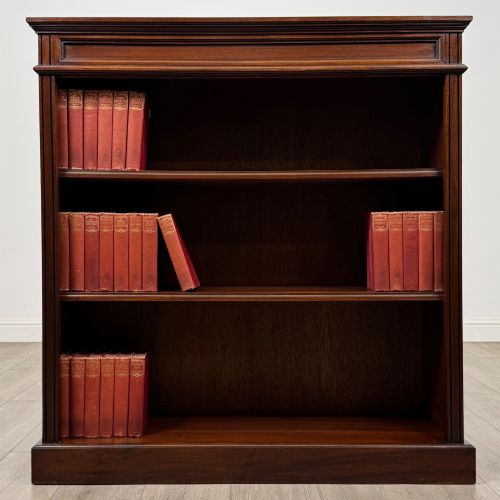
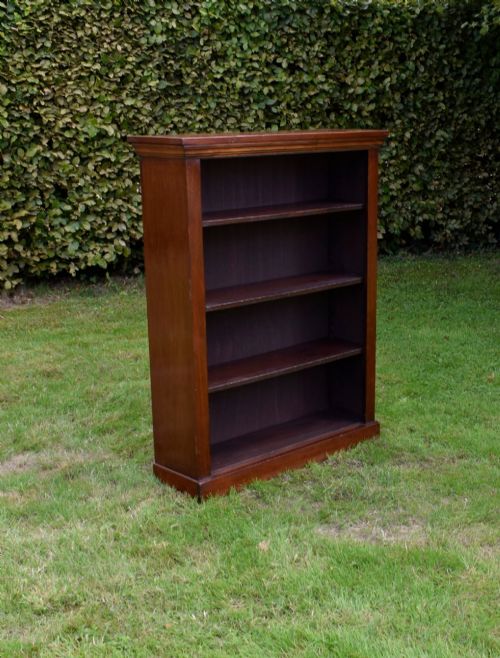
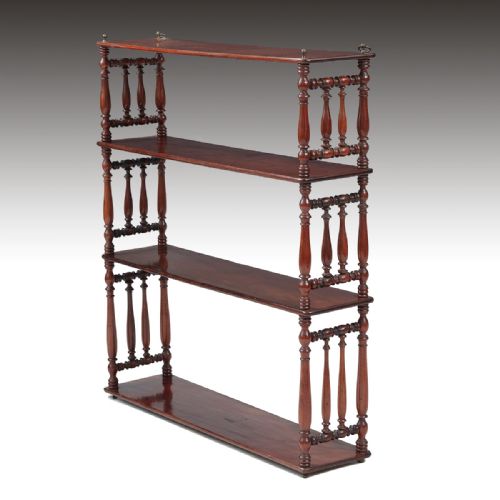
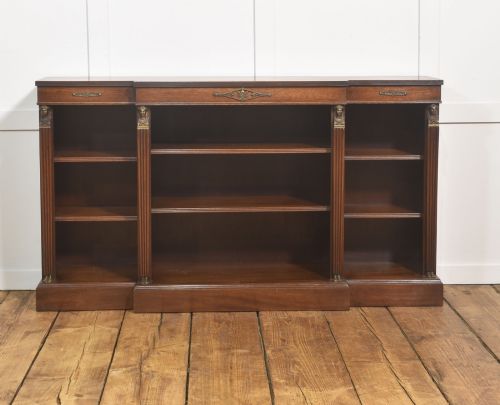
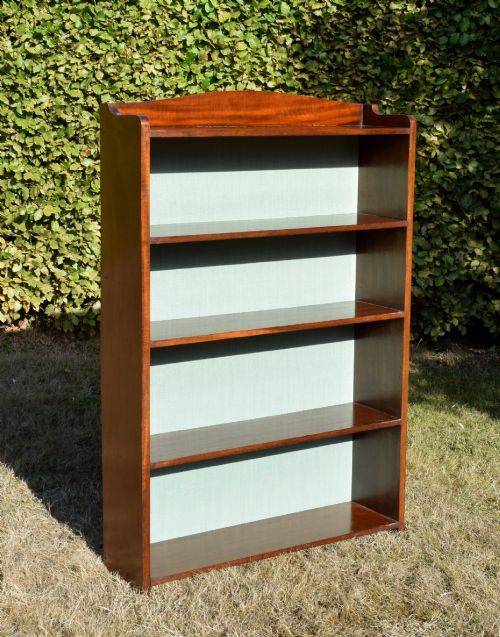
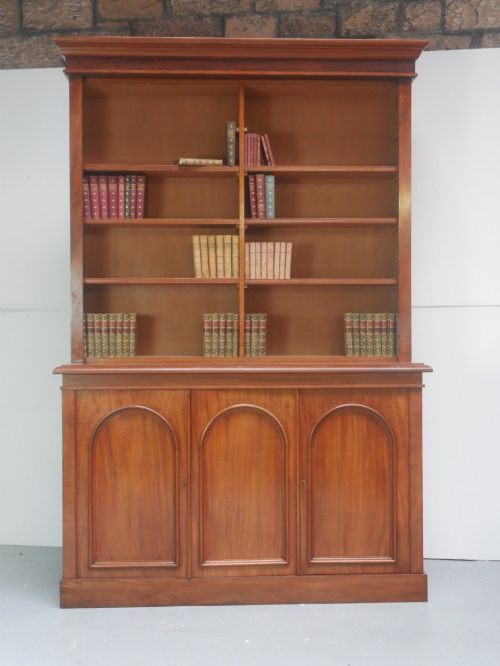
Traditional mahogany display shelves encompass open bookcases, hanging wall shelves, and corner cabinets designed to organise and exhibit books or decorative objects. You will frequently encounter tall open bookcases and smaller wall-hanging formats dating from the Victorian and Edwardian eras, alongside pieces built in earlier Georgian styles.
Makers fashioned these items to suit domestic spaces ranging from grand libraries to modest sitting rooms, resulting in variations from large breakfront units to diminutive hanging brackets. The selection on this page demonstrates how these storage forms evolved through the nineteenth and early twentieth centuries while retaining their core timber identity.
What varies in quality
The refinement of the timber selection largely determines the grade of a piece, with figured flame mahogany veneer representing a more costly choice than plain stock. Finely executed mouldings and balanced proportions distinguish superior examples from simpler utilitarian shelving.
Attention to structural detail, such as adjustable shelving mechanisms and clean joinery on breakfront cornices, separates workshop output from mass production. The presence of original brass fittings and intact glass panes further elevates the standing of surviving items.
A solitary clock wall bracket reminds us that not all display shelves were meant to stand on the floor.
The Traditional Mahogany Display Shelves Glossary
- Breakfront
- A piece of furniture where the central section projects forward from the flanking wings. This architectural arrangement creates shadow lines and visual variety across large bookcases.
- Waterfall bookcase
- A set of open shelves where each tier steps back progressively from the one below. This format gained popularity during the Regency and Victorian periods for displaying small objects.
- Flame mahogany veneer
- A thin slice of timber cut from where a branch joins the main trunk, displaying a characteristic flamed grain pattern. Cabinet makers applied this over stable secondary woods to create decorative surfaces.
- Corner cabinet
- A storage unit specifically built to fit into the ninety-degree angle of a room. These pieces make efficient use of dead space and often feature glazed upper doors.
- Inlaid stringing
- A narrow strip of contrasting timber or light material embedded flush into the mahogany surface. This technique creates delicate linear borders around panels and shelves.
Traditional Mahogany Display Shelves: Frequently Asked Questions
How do I secure tall bookcases safely?
Tall open bookcases require attachment to the wall using discreet brackets to prevent tipping, particularly when loaded with heavy books.
Ensuring the piece rests level on the floor also relieves strain on the vertical frame and keeps shelves stable.
Can shelf heights be adjusted?
Many Victorian and Edwardian bookcases feature vertical slots or wooden battens that allow shelves to be moved to different heights. Fixed shelves are more common in older vernacular pieces.
Checking the interior sides reveals whether the current configuration is original or altered.
Where should I place hanging shelves?
Wall-hanging shelves suit narrow wall spaces or areas above sideboards where floor standing furniture would crowd the room. Fixing them directly into solid masonry or wall studs is essential.
Keeping them away from direct heat sources protects the timber joints from drying out over time.
How do I distinguish Regency from Victorian styles?
Regency pieces often display classical restraint with clean architectural lines and subtle brass mounts. Victorian designs tend to be heavier in scale with more prominent cornices and varied carving.
Revival pieces from later decades frequently borrow these earlier design vocabularies.