


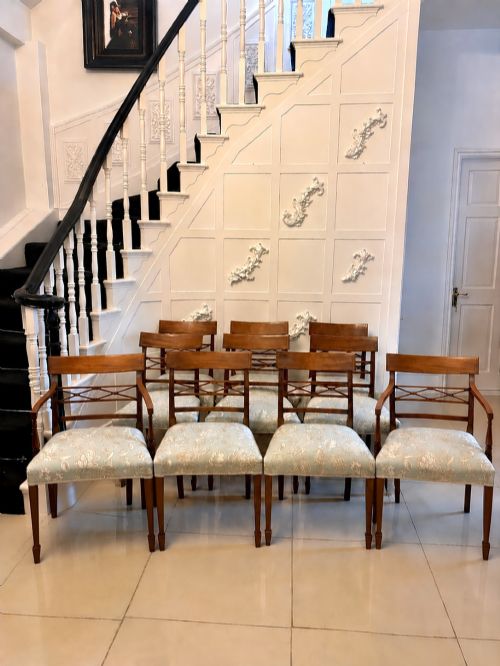
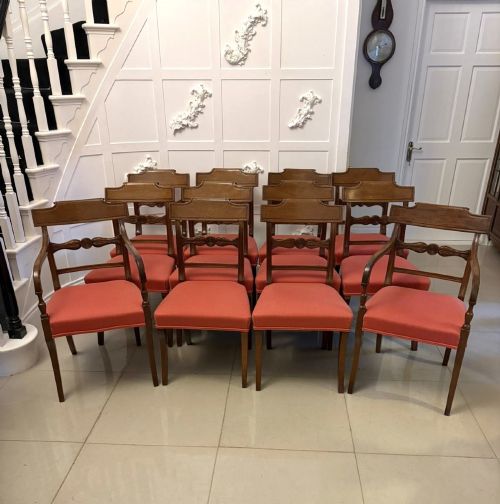
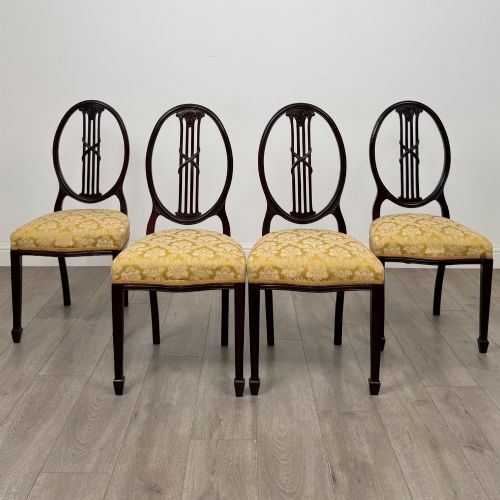
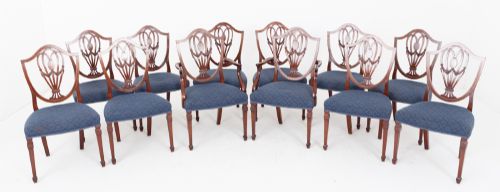
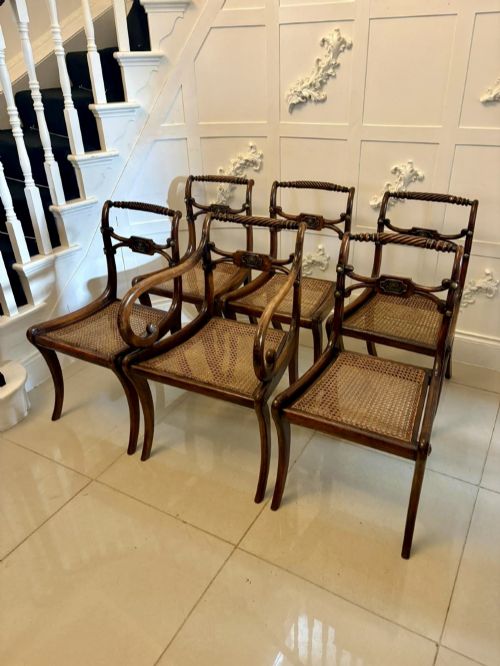
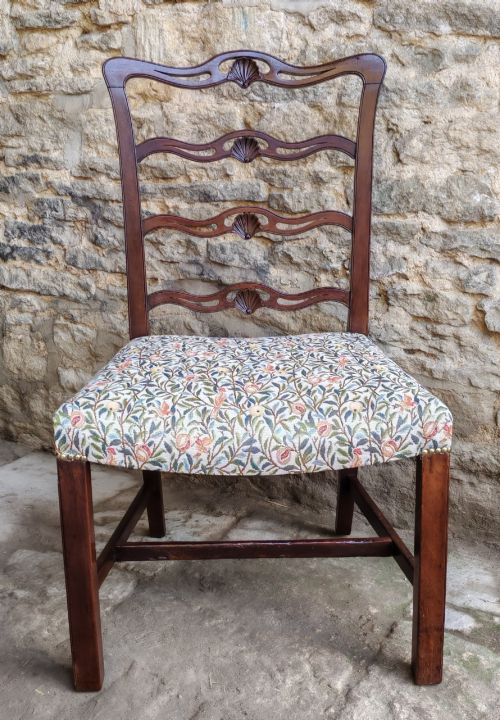
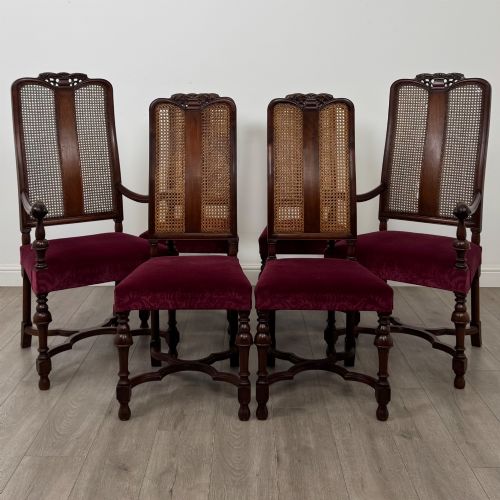
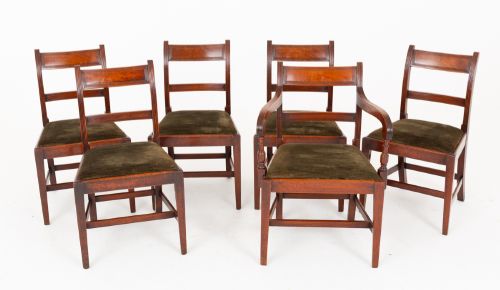
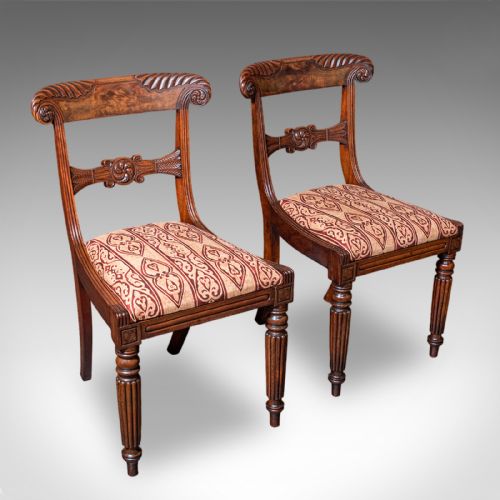
Traditional Mahogany Dining Seats
Traditional mahogany dining seats bring centuries of craftsmanship and rich timber to the table, offering lasting elegance for formal dining rooms.
What traditional mahogany dining seats are
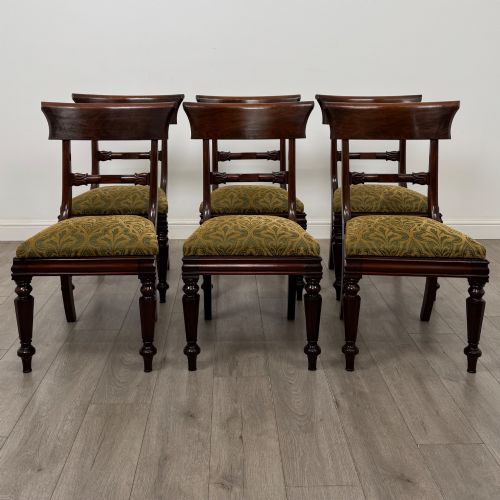
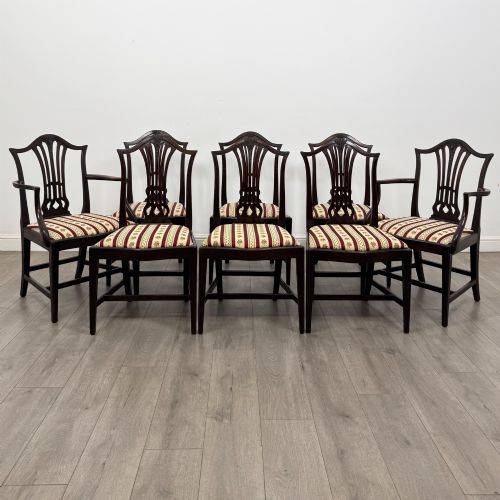
Traditional mahogany dining seats comprise dining chairs and carvers fashioned from rich timber across multiple eras, including the eighteenth century, the Georgian period, the Regency era, and later revival periods up to nineteen-twenty. Buyers searching for traditional mahogany dining seats encounter matched sets ranging from six to ten chairs, often including armchairs alongside side chairs.
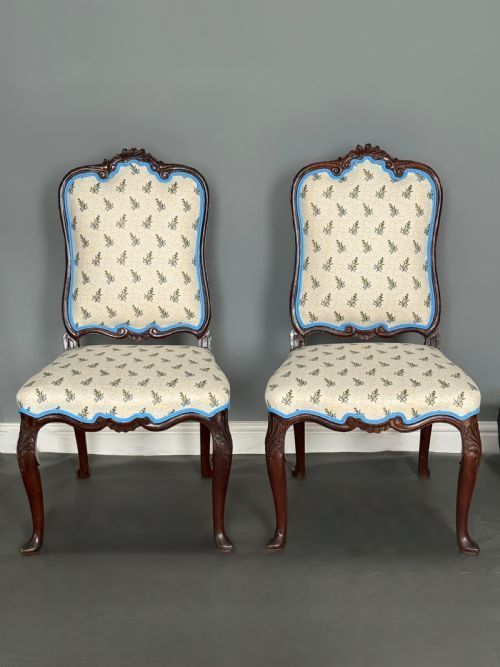
The selections on this page span genuine eighteenth-century pieces as well as later revival interpretations in the Chippendale, Hepplewhite, Sheraton, Queen Anne, and Neoclassical styles. Makers such as Brights of Nettlebed also appear among the twentieth-century pieces, showing how classic designs continued to be interpreted long after the Georgian period.
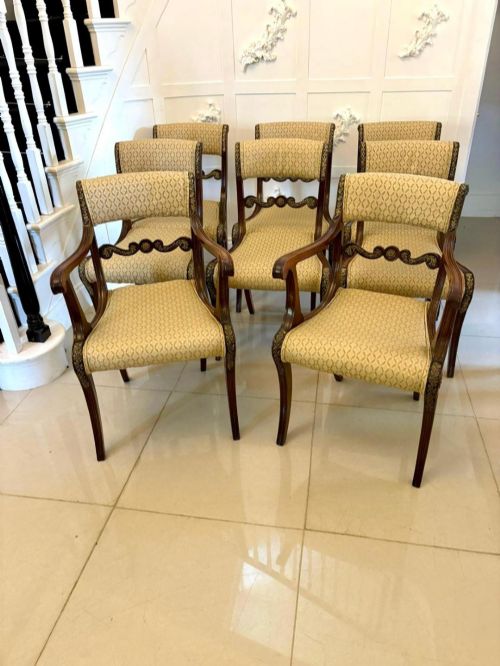
Most pieces function as practical seating around large dining tables while displaying the characteristic dark timber, carved splats, and upholstered drop-in pads typical of British dining furniture. The forms vary from straightforward revival sets to elaborate carved suites incorporating brass details and satinwood inlay.
How they were made
Construction relies primarily on solid mahogany wood, sometimes enhanced with satinwood inlay and brass accents to create decorative contrast on the splats and frames. Woodworkers shaped the dense timber using traditional joinery techniques, carving backs and legs by hand to achieve classic eighteenth-century and revival silhouettes.
Upholstery forms an integral part of the construction, utilising fabric, leather, and specialist upholstery fabric secured over padding to create comfortable dining seats. Makers combined structural wood frames with supportive webbing and stuffing to ensure longevity during daily use.
Retail Price Guide 2026
Typical UK retail prices for traditional mahogany dining seats, calculated from the Sellingantiques database of over a million retail prices indexed since 2003. This retail price guide relies exclusively on Sellingantiques data; no external sources or auction records are used, so the figures do not describe the wider market.
Brights of Nettlebed brought twentieth-century polish to eighteenth-century tastes, proving that revival makers loved a good historical throwback.
What varies in quality
The refinement of the timber carving sets superior examples apart, where crisp details on the splats and legs demonstrate exceptional skill by the cabinetmaker. Higher quality pieces maintain tight, stable joinery across all joints of the frame without relying on excessive modern repairs.
The selection of the mahogany timber itself dictates visual depth, with finer grain patterns and rich natural figuring elevating the overall presence of the suite. Consistency across a whole set of chairs, rather than mismatched replacements, preserves the integrity and visual harmony of the dining group.
Brights of Nettlebed
The Traditional Mahogany Dining Seats Glossary
- Carver
- An armchair designed to sit at the head of a dining table, featuring supportive armrests alongside the standard seat frame.
- Slipper chair
- A low-seated chair historically used in bedrooms but found within broader antique dining suites.
- Splat
- The vertical central strip of wood down the back of a chair, often carved or pierced in distinct revival styles.
- Inlay
- Decorative contrasting timber, such as satinwood, fitted flush into the mahogany surface to create geometric or floral patterns.
- Drop-in seat
- A removable upholstered frame that fits neatly into the wooden rails of the chair seat.
Frequently Asked Questions
How do I care for antique mahogany dining seats?
Maintain the timber by dusting regularly with a soft cloth and applying appropriate beeswax periodically to nourish the mahogany grain. Avoid placing chairs in direct sunlight or near heat sources to prevent the wood from drying out.
Protect the upholstered pads by using gentle cleaning methods suitable for fabric or leather. Ensure heavy use remains balanced across the full set so individual chairs do not experience disproportionate wear.
Can I mix different styles of dining chairs?
Mixing revival styles requires careful attention to timber tone and chair height to maintain a cohesive look around the dining table. Matching a set of six or eight ensures visual harmony.
Georgian and Sheraton revival pieces share similar proportions, making them easier to pair than contrasting centuries. Sticking to a single maker or period style usually yields the most balanced interior scheme.
What is the difference between Georgian and revival chairs?
Original Georgian pieces date from the eighteenth or early nineteenth century and carry the patina of actual period use. They represent the primary designs that later workshops sought to copy.
Revival chairs date from the late nineteenth or early twentieth centuries, imitating earlier Chippendale, Hepplewhite, or Queen Anne aesthetics. They offer period style combined with sturdier structural longevity typical of later manufacturing.
How do I distinguish carvers from standard dining chairs?
Carvers feature integrated armrests designed to accommodate the host at the head of the dining table. They generally have wider frames and more substantial proportions.
Standard chairs lack arms, allowing them to tuck neatly along the sides of the table in greater numbers. Traditional dining suites often combined two carvers with six or eight standard chairs.