



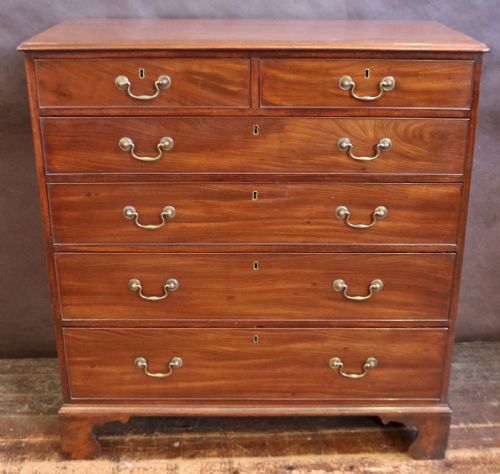


Traditional Mahogany Coffer
A traditional mahogany coffer provides robust storage with deep historical character, suiting period interiors and contemporary spaces alike.

Traditional Mahogany Coffer
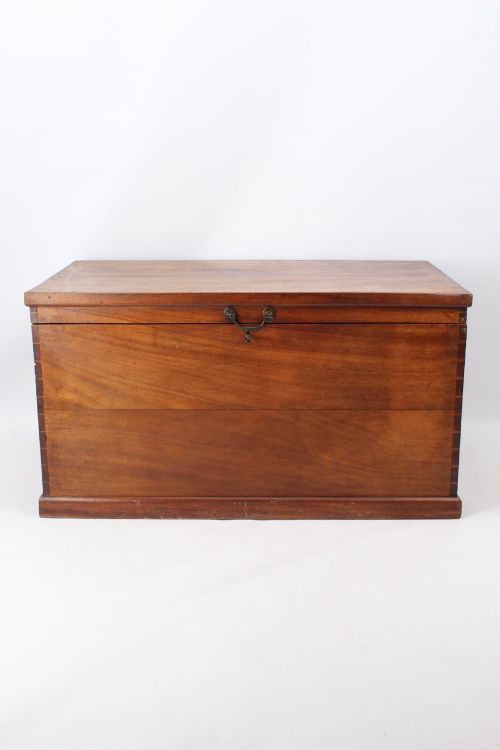
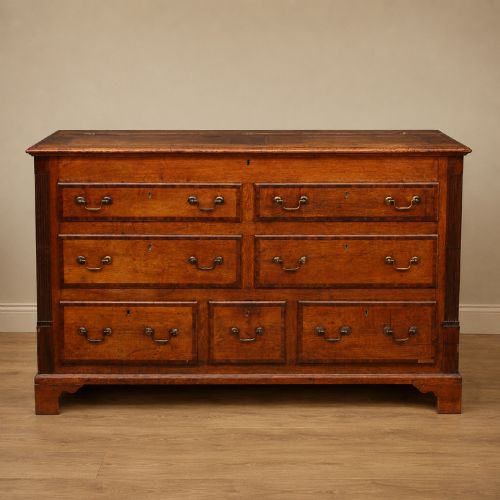
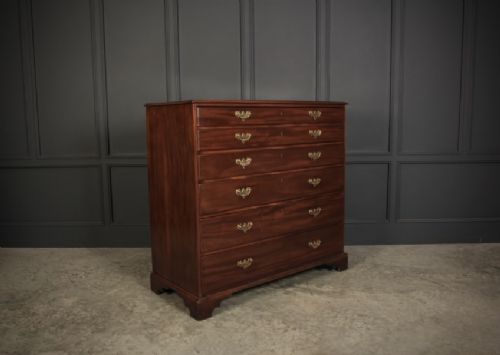
A traditional mahogany coffer spans form variations including mule chests, blanket boxes, storage chests, and chests of drawers produced across the Georgian, Victorian, and Edwardian periods. These robust pieces served domestic storage needs, often incorporating internal compartments or base drawers for linen and garments.
The selections encountered here range from early eighteenth-century examples to later revival styles like Chippendale. Makers worked within established regional traditions, resulting in distinctive configurations such as the Lancashire mule chest or the blanket box on chest.
Construction and materials
Makers utilised solid mahogany and wood veneers over secondary woods like oak and pine, frequently adding brass handles, escutcheons, and hinges for structural reinforcement and visual contrast. Panel construction accommodated the movement of timber over centuries, while crossbanding and marquetry introduced geometric or floral enrichment.
Joinery methods relied on dovetailed drawer boxes and mortise and tenon frames to ensure durability under heavy domestic use. Carved details, such as those found on Brazilian mahogany settle boxes, demonstrate skilled hand-tool work by period artisans.
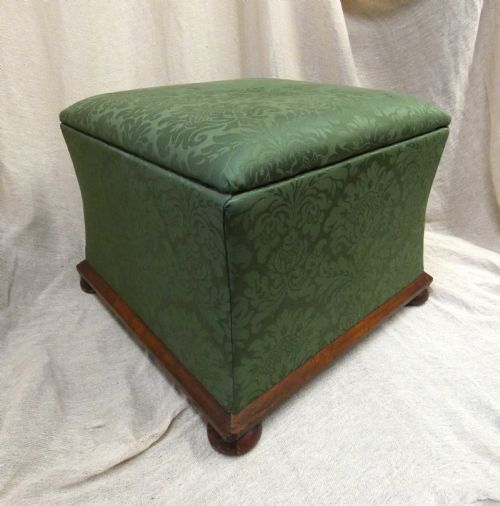
Materials documented across the inventory include mahogany, brass, pine, oak, damask, hardwood, leather, and wood veneer.
Assessing craftsmanship and condition
Quality rests in the choice of timber figure, such as flame mahogany, and the precision of the crossbanding and secondary wood selection. Superior pieces display crispness in hand-carved details and originality in brass hardware, whereas lower tiers show replacement mounts and simplified construction.
The integrity of the internal structure and the retention of original panel work distinguish master-built examples from utilitarian or heavily restored pieces. Proportions and the balanced arrangement of drawers or lids dictate the visual harmony of the finished item.
The Traditional Mahogany Coffer Glossary
- Crossbanding
- A border technique where thin strips of veneer are laid across the grain of the primary wood to create a contrasting frame. This method was widely practiced by eighteenth and nineteenth-century cabinet makers.
- Mule chest
- A storage chest featuring one or more drawers beneath the main internal compartment. It bridges the evolution between the simple blanket box and the chest of drawers.
- Hongmu
- A traditional Chinese term translating to red wood, used to describe dense, dark hardwoods utilised in imported travelling boxes. It exhibits high durability and a fine natural finish.
- Marquetry
- The art of applying pieces of veneer to a structure to form decorative patterns and pictures. Dutch examples frequently employ floral motifs using various contrasting timbers.
- Flame mahogany
- A veneer cut from the point where a branch joins the main trunk, producing a distinctive flickering wave pattern. Cabinet makers reserved this highly decorative wood for primary display surfaces.
Traditional Mahogany Coffer: Frequently Asked Questions
What is a mule chest?
A mule chest combines a traditional lift-lid storage compartment with one or more lower drawers for improved organisation.
This hybrid form emerged when makers sought the deep capacity of a blanket box alongside the easier drawer access of a cabinet.
How do I date a mahogany coffer?
Dating relies on examining construction methods, timber choices, and hardware styles across periods like the Georgian and Victorian eras.
Hand-cut dovetails, secondary woods such as oak, and original brasses provide key chronological indicators for the piece.
Where should I place a coffer?
These pieces suit hallways, bedrooms, or living spaces where they function as focal storage units or display surfaces.
Keep them away from direct heat sources and strong sunlight to protect the mahogany finish and prevent timber splitting.