

Traditional Mahogany Arm Chair
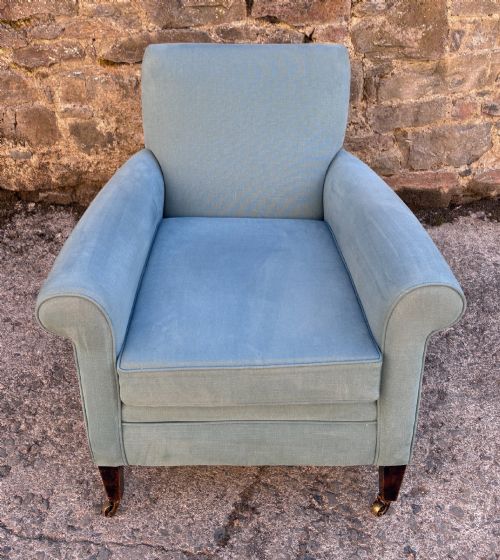
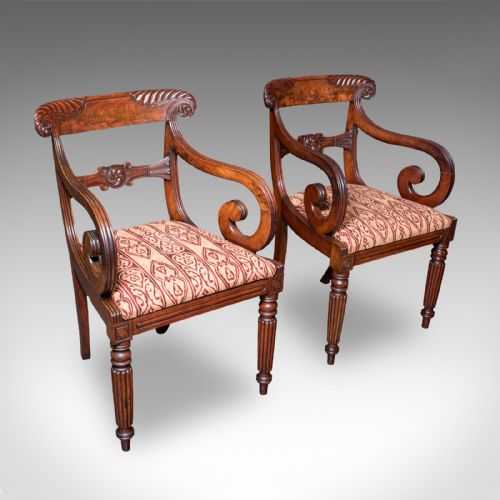
A traditional mahogany arm chair offers solid timber framing and classic seating forms spanning Georgian, Regency, and Victorian periods.
Traditional Mahogany Arm Chair
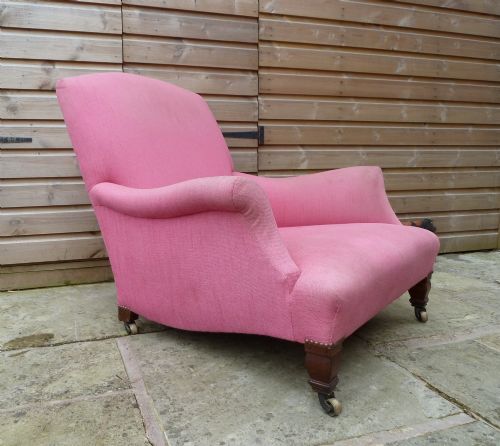
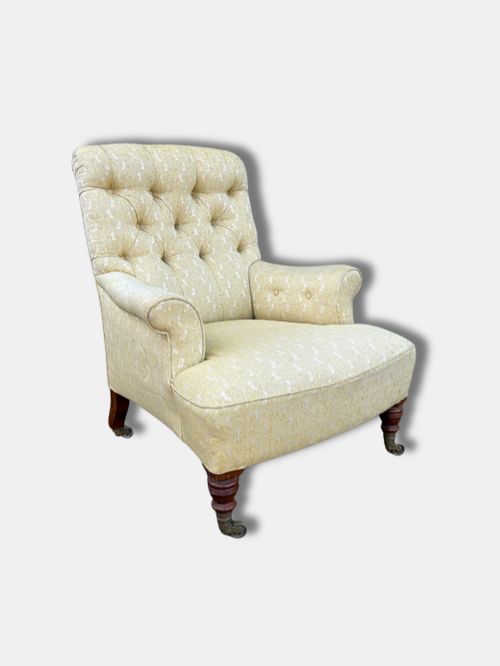
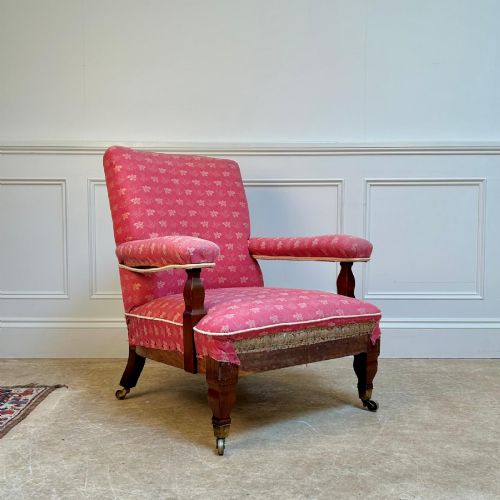
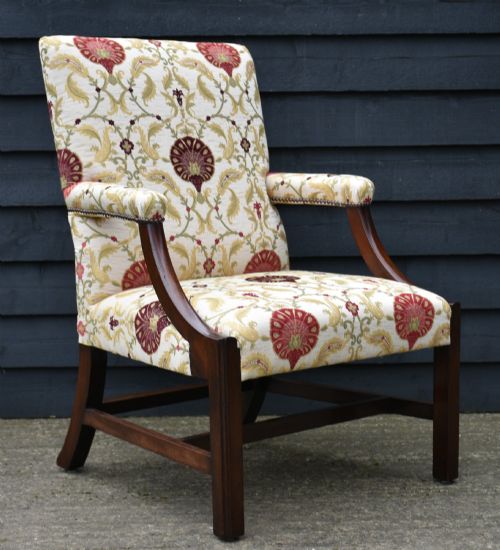
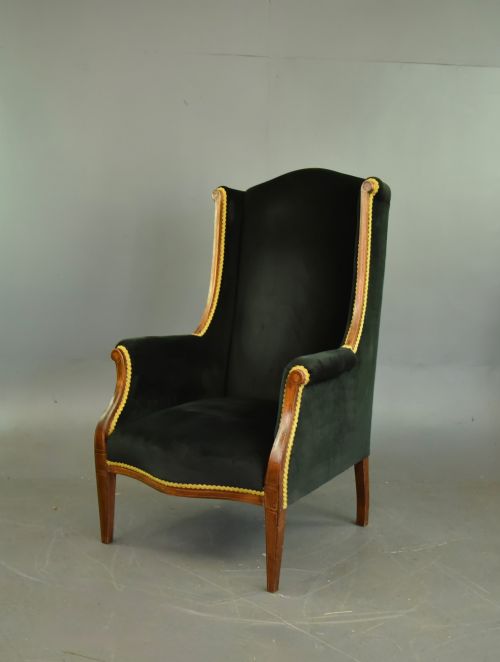
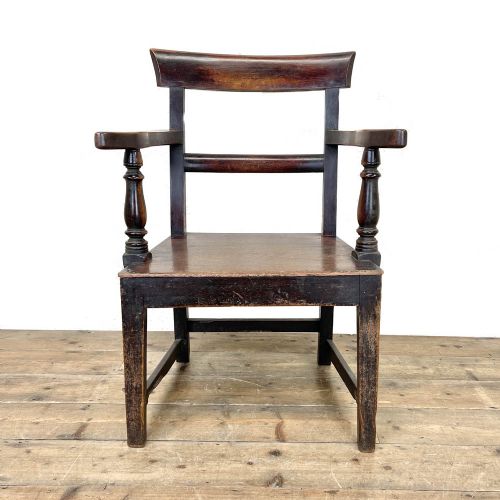
A traditional mahogany arm chair encompasses seating designed for desks, libraries, and formal rooms, appearing in forms such as Gainsborough chairs, wingbacks, carvers, and library chairs.
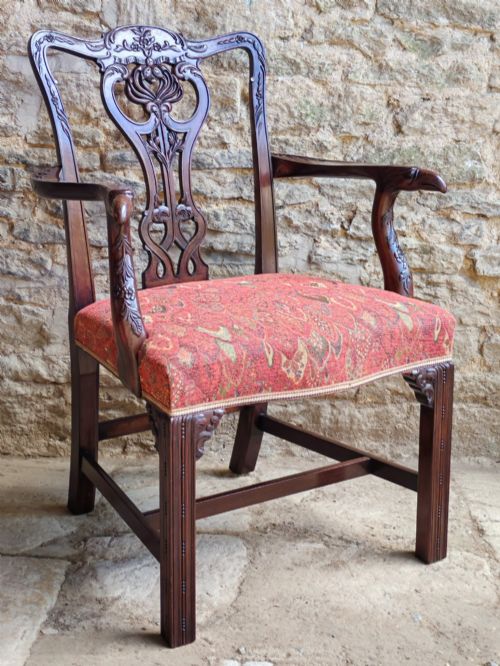
The pieces on this page span the Georgian, Regency, Victorian, and Edwardian eras, alongside later revivals of Chippendale and Queen Anne styles.
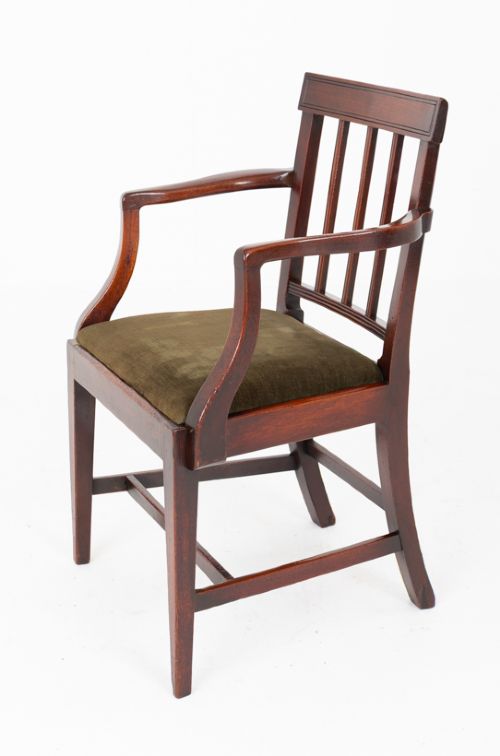
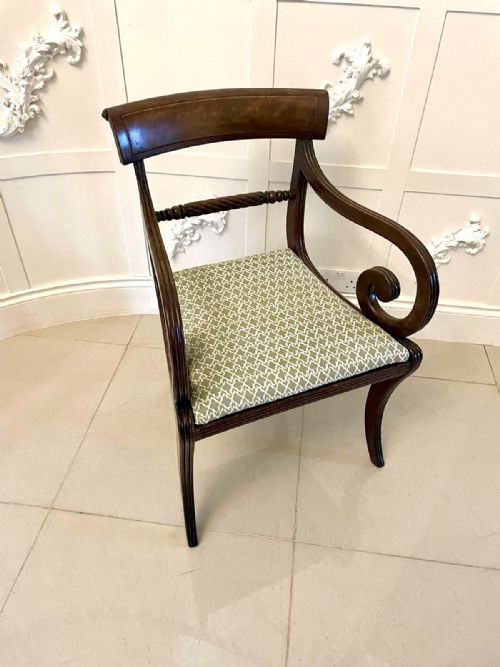
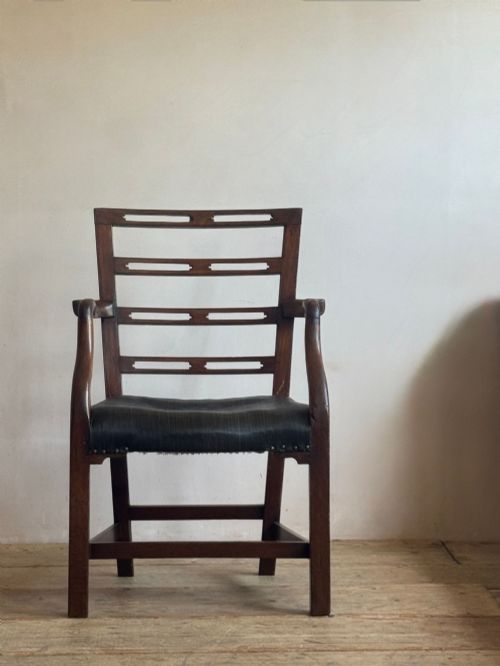
Desk chairs, carver chairs, and open armchairs dominate the selection, built from solid mahogany with various historical upholstery treatments.
Materials and construction
Makers utilised dense mahogany timbers for structural frames, sometimes combining hardwood supports with brass castors and decorative carved detailing.
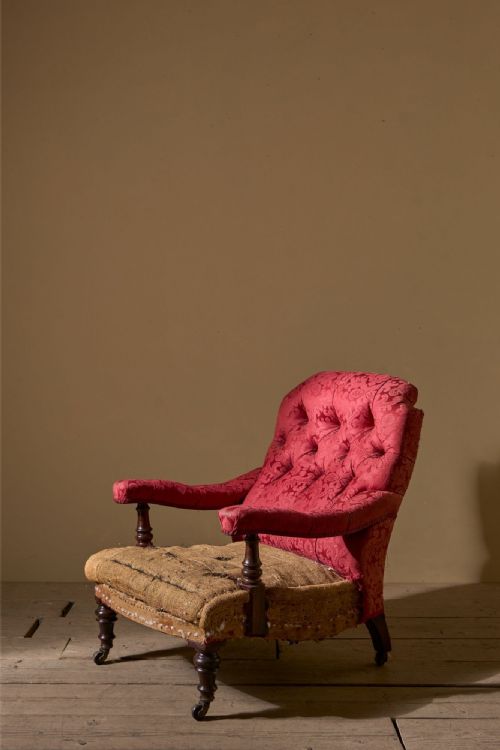
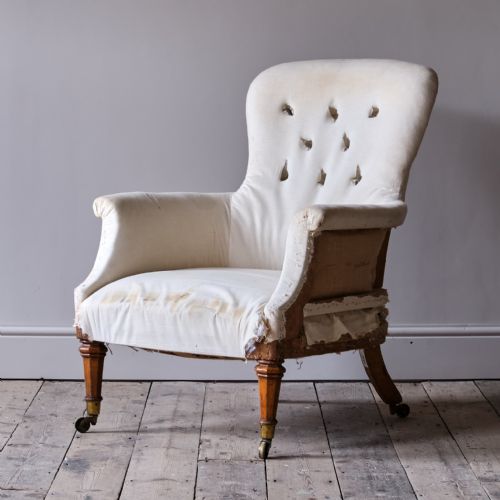
Upholstery relies on traditional materials like leather, velvet, calico, hessian, and fabric webbing fixed over sprung or padded seats.
Listings feature mahogany armchairs spanning the 18th, 19th, and early 20th centuries, alongside Edwardian and Victorian revival styles.
Assessing quality and craftsmanship
Quality rests in the precision of the timber carving, the integrity of the frame joints, and the substance of the mahogany stock.
Fine examples display thoughtful proportion, disciplined scrollwork or reeding, and high-grade leather or fabric coverings appropriate to their period.
Howard and Sons·George Jack·Morris and Co·Hampton and Sons
The Traditional Mahogany Arm Chair Glossary
- Carver chair
- An armchair designed to match a set of dining chairs, typically featuring open arms and a wider seat. These were traditionally placed at the head of a dining table.
- Gainsborough chair
- A wide, upholstered armchair with an open-framed mahogany design, low sides, and a padded back originating in the mid-eighteenth century. It served primarily as a desk or reading chair.
- Bergère
- An enclosed upholstered armchair with wooden framing exposed around the sides and back. The term often denotes French-influenced seating adopted by English makers.
- Reeding
- A decorative moulding consisting of parallel convex strips resembling inverted fluting. Cabinet makers applied this detail to chair legs and arm supports during the Regency and Victorian periods.
- Wingback
- An armchair with high sides attached to the back, designed to shield the occupant from drafts. Early versions were padded and upholstered for fireside use.
Traditional Mahogany Arm Chair: Frequently Asked Questions
How do I identify a Georgian mahogany armchair?
Georgian armchairs often feature straight or subtly curved mahogany legs, carved arm terminals, and proportions suited for formal reception rooms or writing desks.
Look for traditional joinery methods and period-appropriate timber patination rather than machine-cut components.
What is the difference between a carver chair and a desk chair?
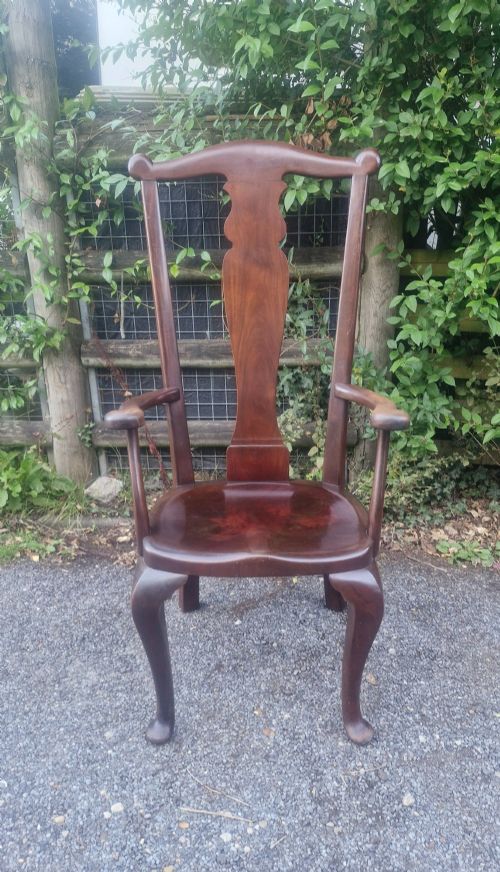
Carver chairs generally feature open arms and were traditionally used as head chairs at a dining table or within a drawing room setting.
Desk chairs tend to incorporate sturdier frames, sometimes with swivel mechanisms or lower profiles designed for writing tables and libraries.
How should I care for antique leather upholstery?
Antique leather requires consistent maintenance using specialist balms to prevent the material from drying and cracking over time.
Keep these chairs away from direct sunlight and excessive heat sources to preserve the natural grain and colour of the hide.
Are these chairs suitable for daily use?
Many traditional armchairs are structurally robust enough for daily seating, provided the internal webbing, springs, and frame joints remain stable.
Checking the condition of the upholstery foundation helps ensure the chair will support regular weight comfortably.