
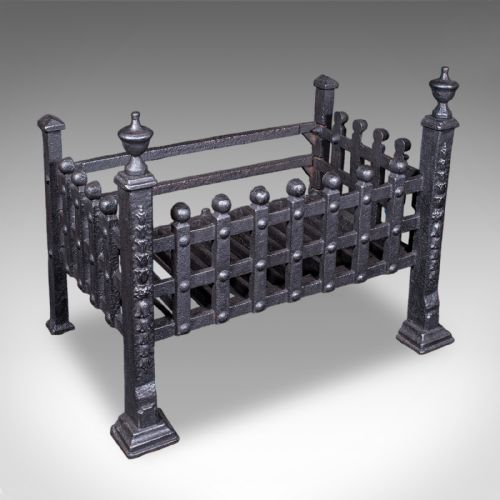


Traditional Log Basket Grate
A traditional log basket grate brings the weight of cast and wrought iron into the hearth, holding fuel safely while anchoring the room.
Traditional Log Basket Grate
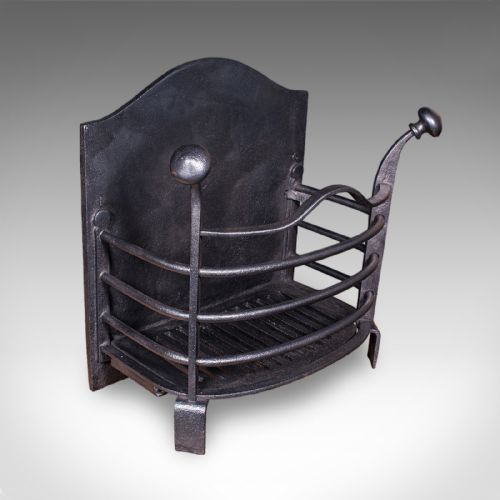
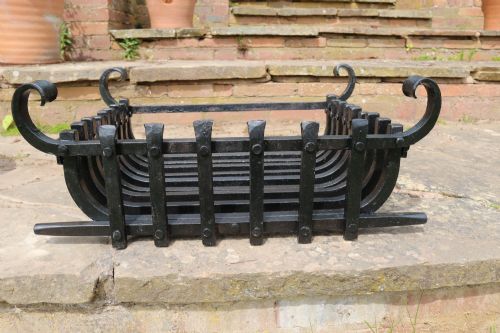
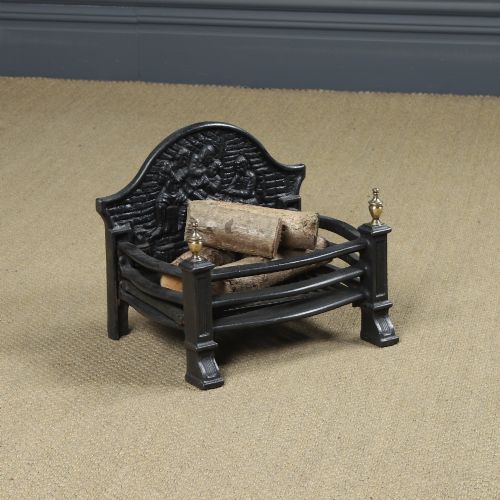
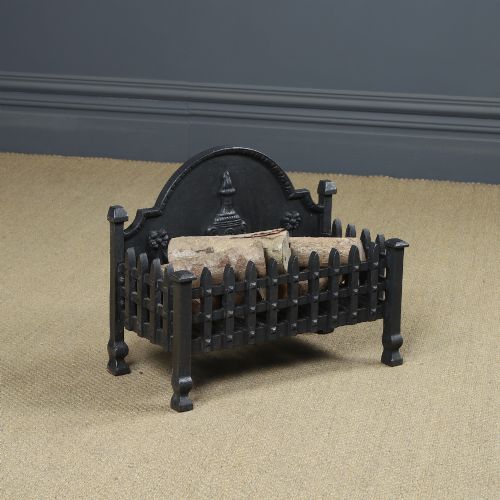
A traditional log basket grate is an open hearth appliance designed to hold fuel off the hearth floor, commonly paired with andirons or fire backs. These pieces appear in forms ranging from compact Victorian grates to heavy nineteenth century inglenook setups.
The versions most frequent here span the Victorian, Edwardian, and Georgian periods, alongside later Arts and Crafts and revival pieces dating into the nineteen-twenties and nineteen-thirties. They take the shape of freestanding baskets or grates set upon dogs.
Makers shaped these ironwork items for coal and wood, incorporating motifs from Gothic revival and neoclassical designs. They serve to structure an open fireplace, whether in a small room or a large inglenook.
How they were made
Foundries cast molten metal into moulds to produce the heavy iron backs, grates, and firebacks seen across these listings. Wrought iron was hammered and shaped by hand for baskets, adding structural resilience.
Brass fittings and firebrick elements appear alongside iron components, providing contrast and heat retention within the hearth. These materials were combined using bolts, rivets, or integral casting.
The construction relies on solid metal thickness to withstand intense hearth temperatures over decades of use.
Several fire sets include cast iron dragons standing guard by the hearth.
What varies in quality
Quality rests in the weight and thickness of the metal, distinguishing heavy, solid castings and hand-forged wrought iron from lighter reproductions. Substantial pieces hold heat better and endure the pressures of wood and coal fires.
Design execution separates standard grates from finer examples, seen in crisp dragon motifs, Adams style detailing, or medieval revival strapwork. The integration of matching andirons or fire backs indicates a more complete and considered hearth set.
The Traditional Log Basket Grate Glossary
- Andirons
- Supports placed on either side of a hearth to hold logs or raise a fire basket. They often feature decorative fronts that match the grate.
- Fire back
- A heavy iron plate placed at the back of an open fireplace to reflect heat into the room and protect the masonry wall. These are frequently cast with relief decoration.
- Inglenook
- A large recessed fireplace space designed to accommodate heavy grates and seating within the chimney breast. Nineteenth century examples often require substantial ironwork.
- Gothic Revival
- A design style drawing on medieval architecture, featuring pointed arches and tracery. This aesthetic appears on numerous cast iron grates from the Victorian era and later.
Traditional Log Basket Grate: Frequently Asked Questions
What is a log basket grate?
A log basket grate is an open metal container designed to hold firewood or coal inside a fireplace. It lifts the fuel above the hearth floor to improve airflow.
These pieces often combine with andirons, fire backs, and fenders to complete an open hearth arrangement.
How do I date a cast iron grate?
Dating relies on the stylistic details, such as neoclassical urns, Gothic revival tracery, or Arts and Crafts hand-forged elements. Period markers range from Georgian elegance to Edwardian production.
Construction methods also help, as nineteenth century pieces typically show heavier casting and specific assembly techniques compared to later items.
Can I use an antique grate for fires?
Most traditional grates were built for actual hearth use, utilising durable cast and wrought iron. Inspecting the thickness of the metal and the presence of firebricks helps determine suitability for burning.
Many listings describe solid construction or refurbished conditions intended for functional hearths.
What is the difference between a grate and an andiron?
A grate is the basket or frame that directly contains the fuel, whereas andirons are the two individual fire dogs that support logs or sometimes hold the grate itself.
Many antique fireplace sets include both components working together in the hearth.