
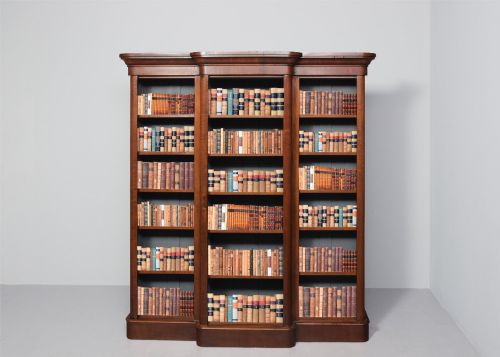
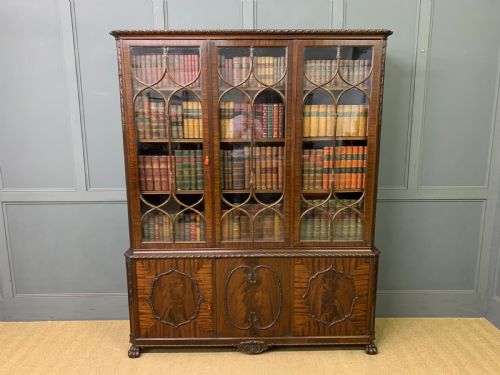
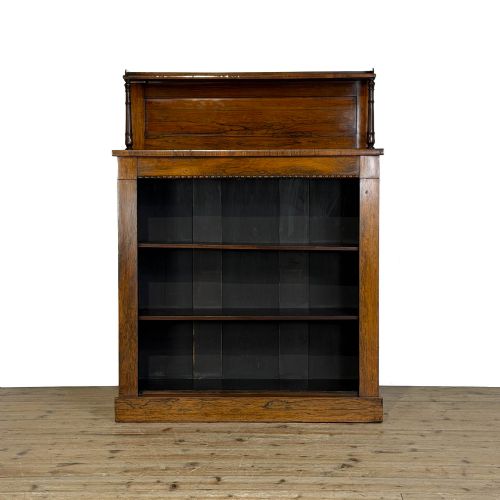
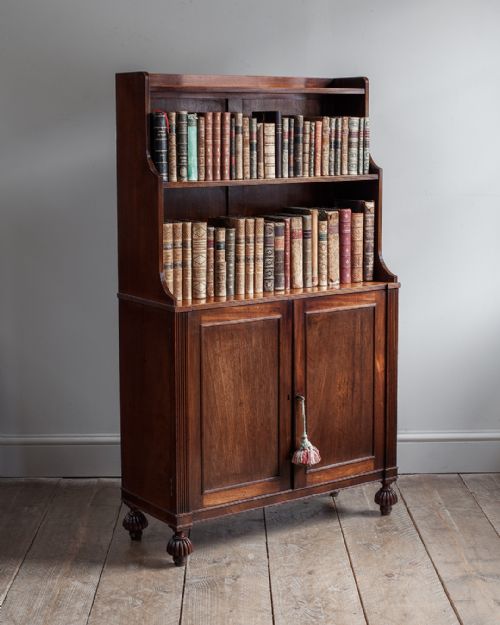
Traditional Library Cabinet
A traditional library cabinet holds volumes and papers with dignity, offering sturdy shelves and enclosed storage suited for serious study.
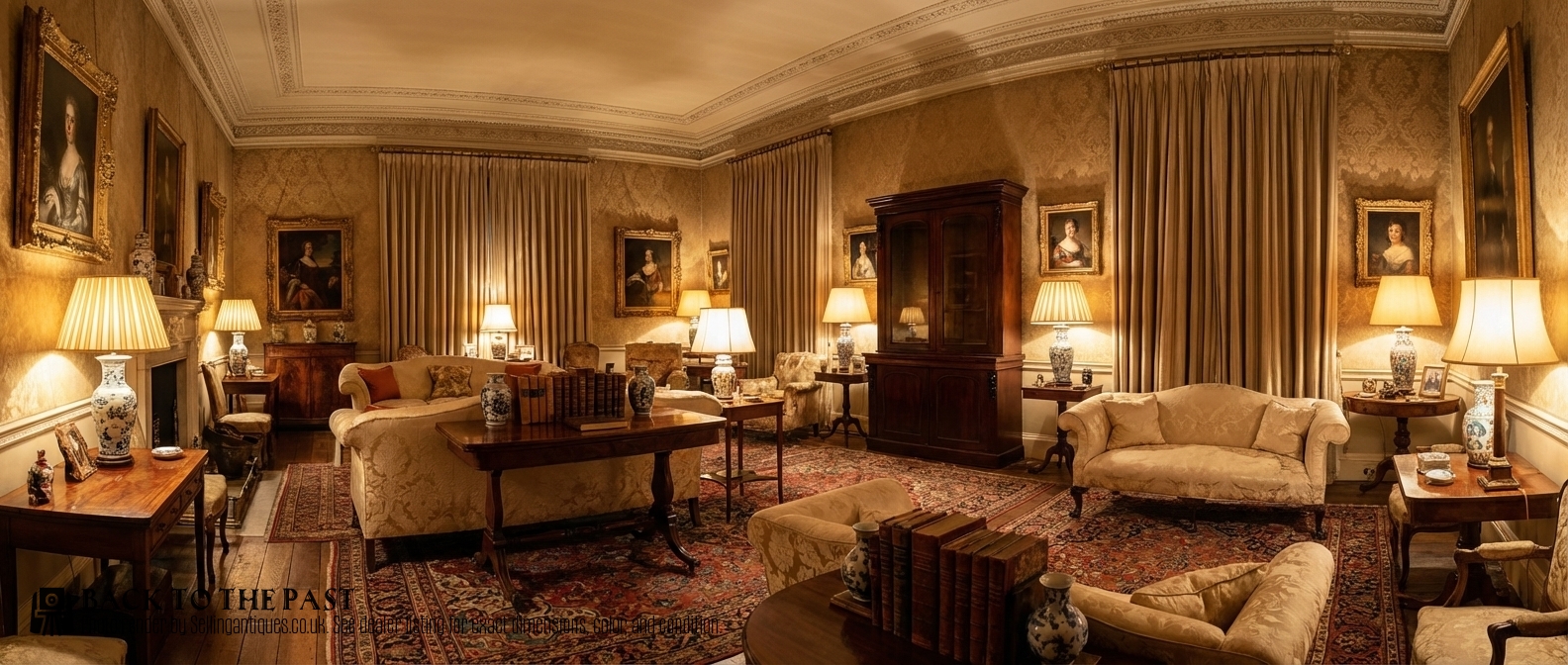
Traditional Library Cabinet
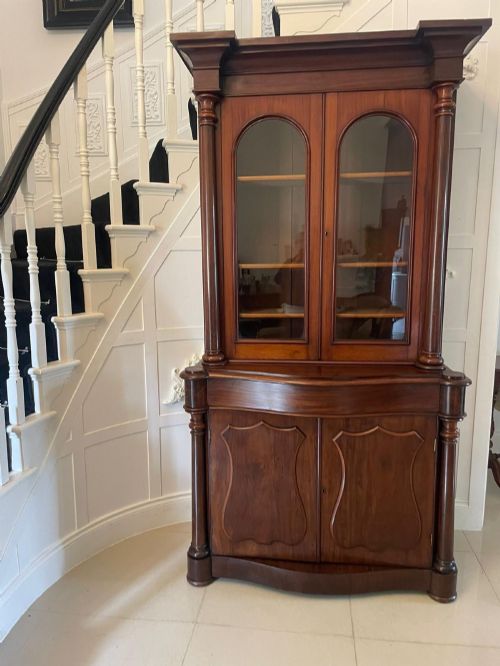
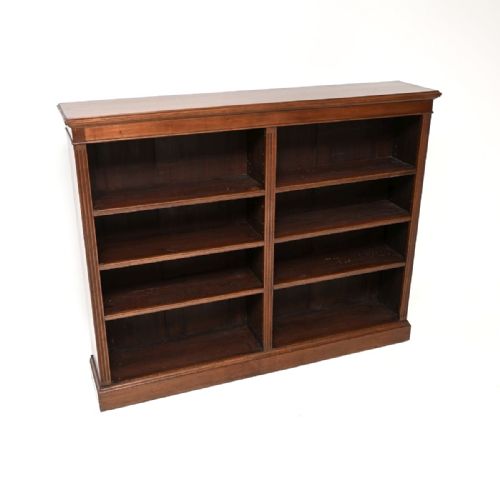
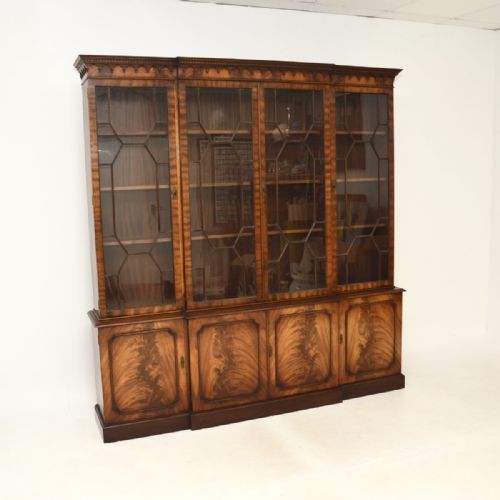
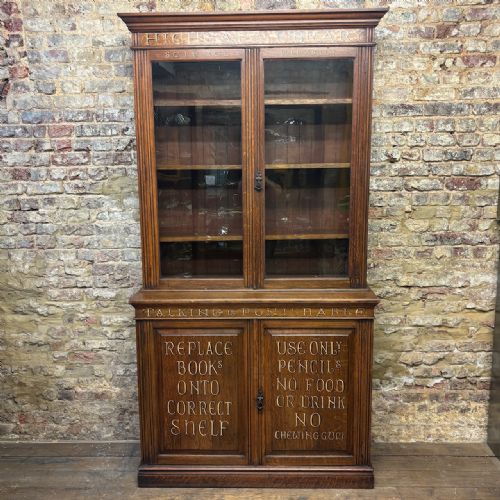
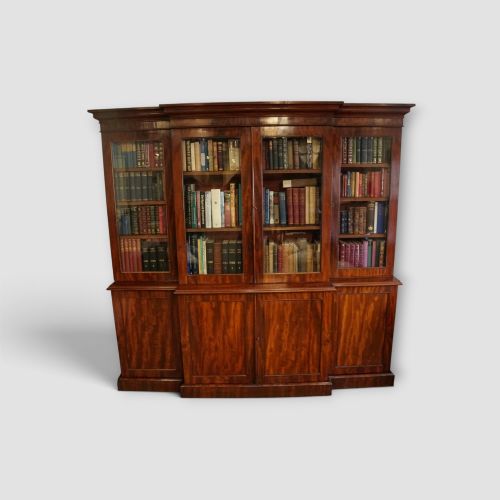
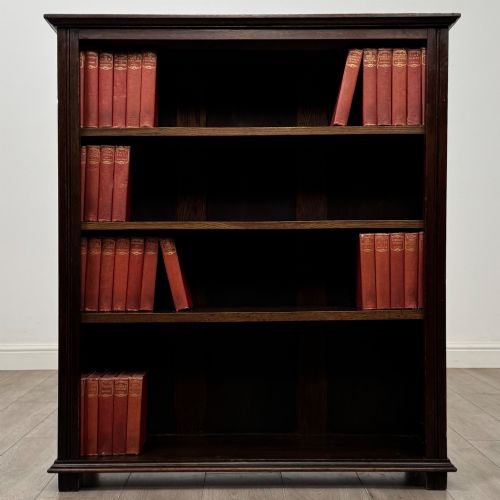
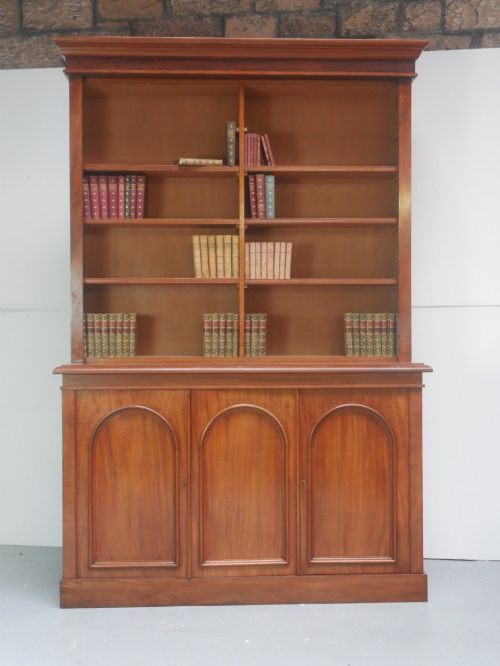
A traditional library cabinet encompasses large breakfront bookcases, open shelving units, secretaire desks and glazed display pieces designed to organise books. These items appear across the nineteenth century, the Edwardian era and the early twentieth century.
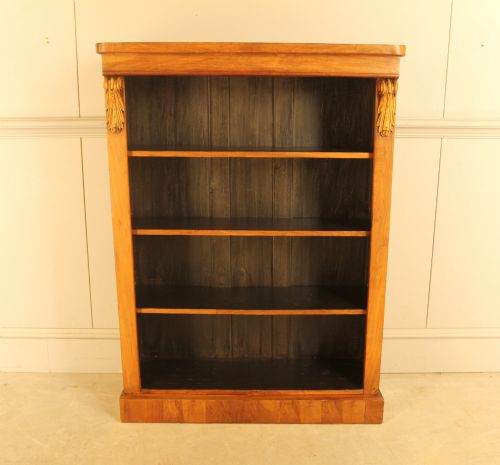
The most common examples on this page are mahogany and oak bookcases from the Victorian and Edwardian periods, often featuring adjustable shelving and glazed doors. Pieces from the Regency and Georgian eras also appear, alongside revival styles and occasional walnut constructions.
How they were made
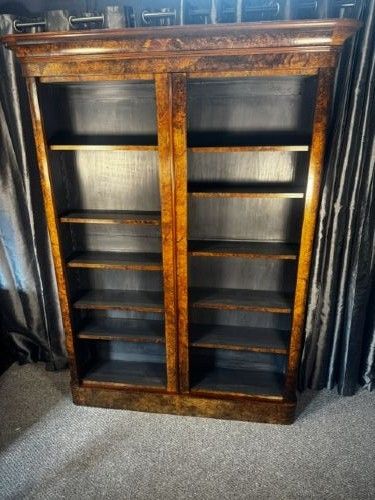
Cabinet makers utilised timber such as mahogany, oak, pine and walnut, frequently applying flame mahogany veneer or burr walnut for decorative surfaces. Solid construction methods ensure durability across multi-section breakfronts and stacking barrister designs.
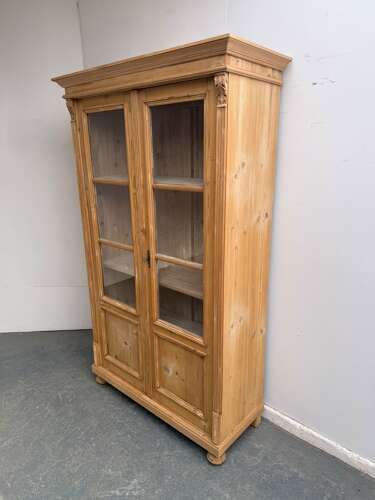
Fittings include brass hardware for handles and locks, alongside glass panels for cabinet doors that protect volumes from dust while maintaining visibility. Pine often appears in internal carcases and backing boards, particularly on knockdown versions.
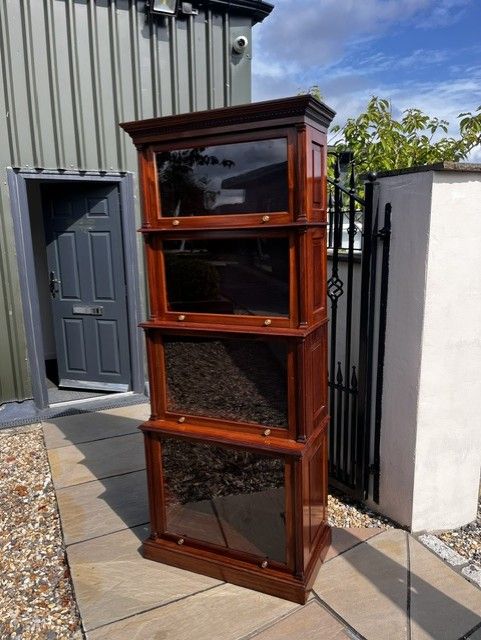
Some stacking barrister bookcases allowed scholars to add new tiers upwards as their book collections expanded without buying a whole new piece.
What varies in quality
The standard of timber selection and veneer matching defines the upper tier of these pieces, where figured grains and cohesive wood selection elevate the visual impact. Lesser examples rely on plain pine or unfigured secondary woods without the same depth of finish.
Construction details such as adjustable shelf mechanisms, solid brass fittings and well-fitted breakfront cornices separate standard utility items from finer cabinet work. The precision of joinery in glazed doors and drawer linings further indicates the maker's hand.
The Traditional Library Cabinet Glossary
- Breakfront
- A piece of furniture with a central section that projects forward from the flanking wings. This architectural arrangement creates depth and scale.
- Secretaire
- A cabinet or desk incorporating a pull-down writing flap that conceals small drawers and pigeonholes. It combines storage for books with a writing surface.
- Barrister bookcase
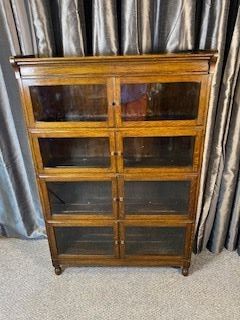
- A modular shelving unit with stacking sections, each featuring a glass door that lifts and slides upwards into the cabinet. This design allows units to be stacked vertically.
- Waterfall bookcase
- A set of open shelves where each tier steps back progressively from bottom to top, creating a profile resembling falling water. It is typical of the Regency period.
Traditional Library Cabinet: Frequently Asked Questions
What is a traditional library cabinet?
A traditional library cabinet is a piece of wooden furniture designed for storing books, featuring open shelves, glazed doors, or enclosed lower cupboards.
These pieces originate from the nineteenth and early twentieth centuries, constructed in mahogany, oak, walnut, or pine by period cabinet makers.
How do I adjust the shelves?
Many period bookcases feature internal vertical wooden rack strips or brass studs that allow shelves to be moved to different heights.
This system accommodates books of varying sizes, from small octavos to large folio volumes.
Are these cabinets suitable for modern homes?
These cabinets provide practical vertical storage for books and display items, fitting easily into home offices or living rooms.
Their substantial timber construction and classic proportions complement both traditional and contemporary interiors.