


Traditional Leather Top Table
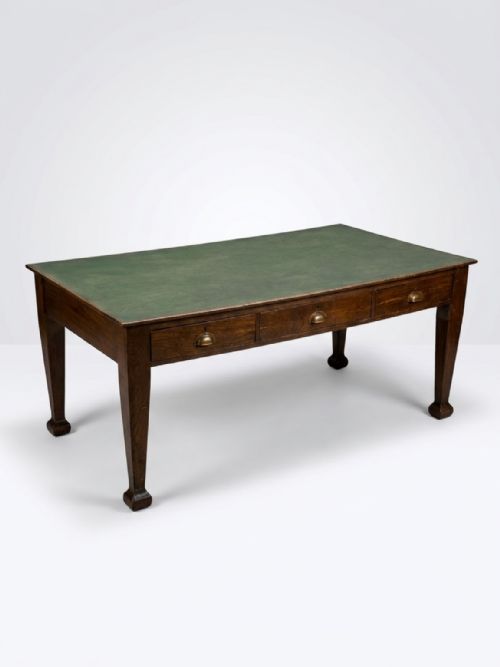
A traditional leather top table brings tactile writing surfaces and warm timber tones into a room, spanning pedestal desks and writing tables.
Traditional Leather Top Table
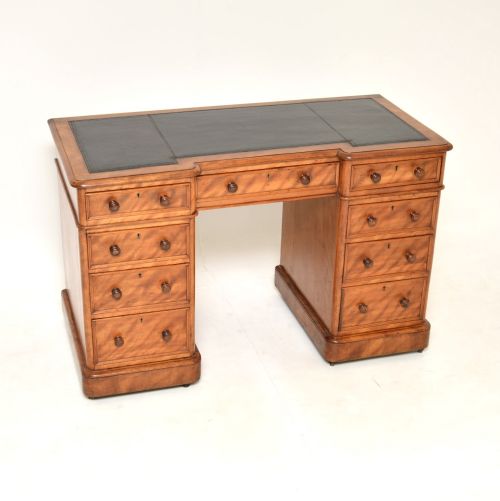
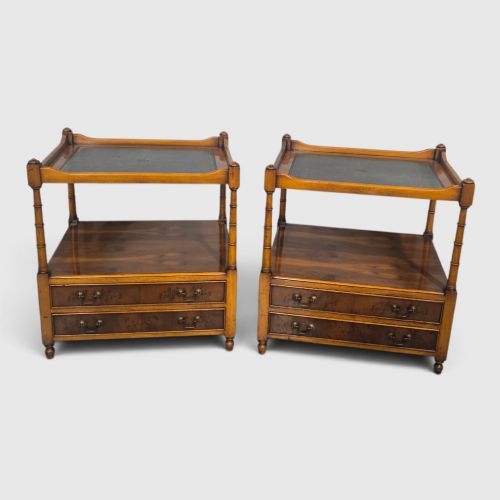
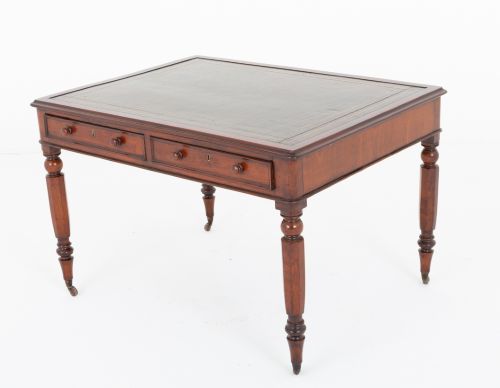
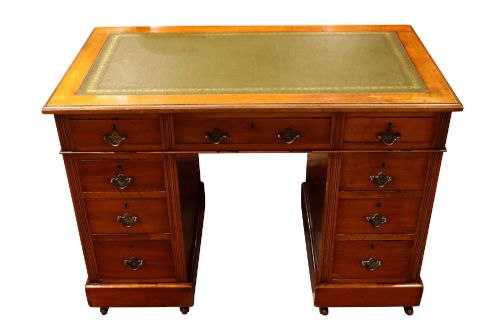
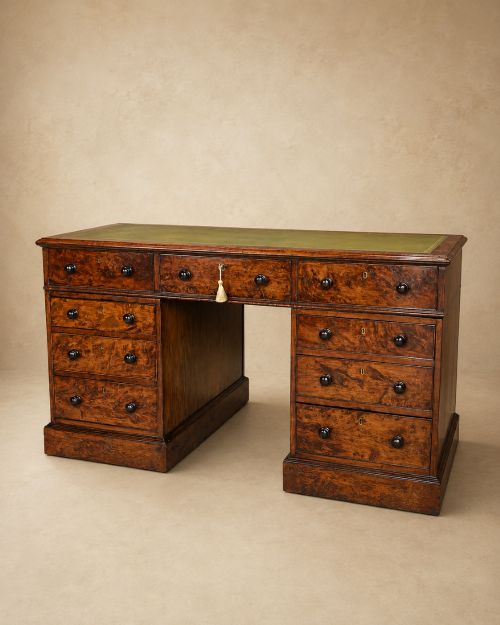
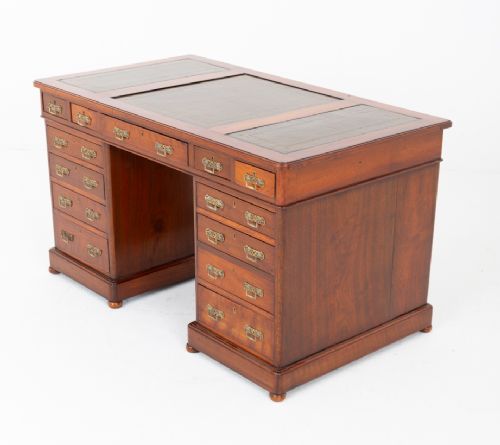
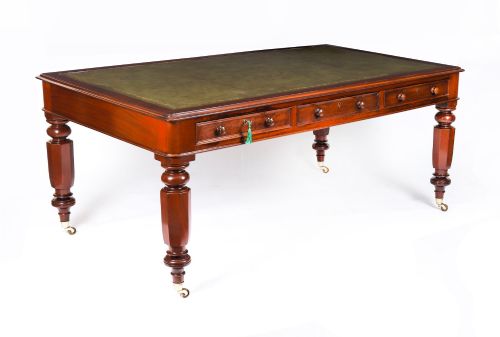
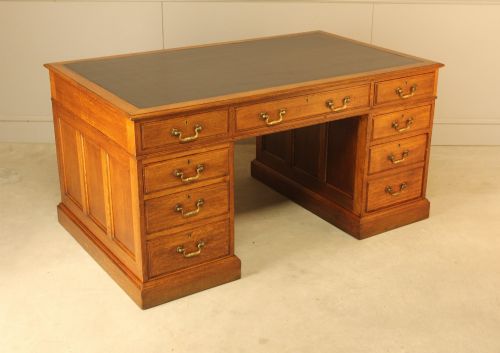
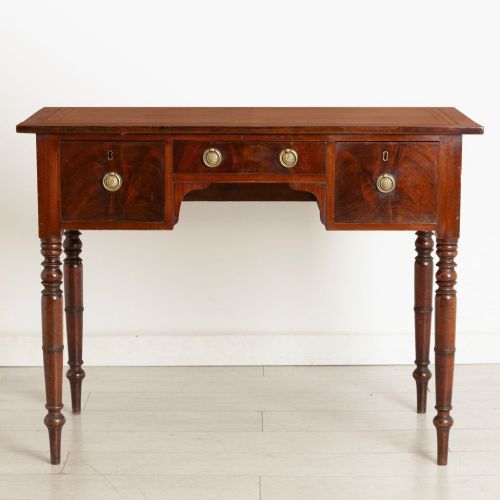
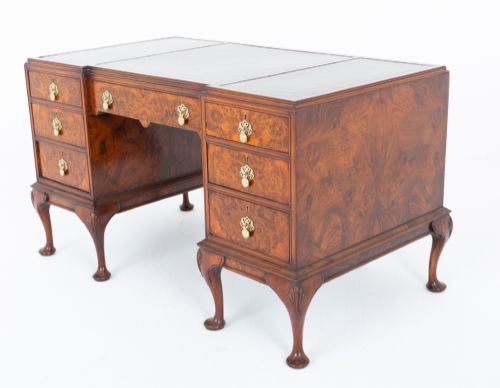
A traditional leather top table encompasses pedestal desks, partners writing tables, and occasional lamp tables designed for writing and study. You will most frequently encounter nineteenth-century Victorian mahogany and walnut pedestal desks alongside early twentieth-century examples.
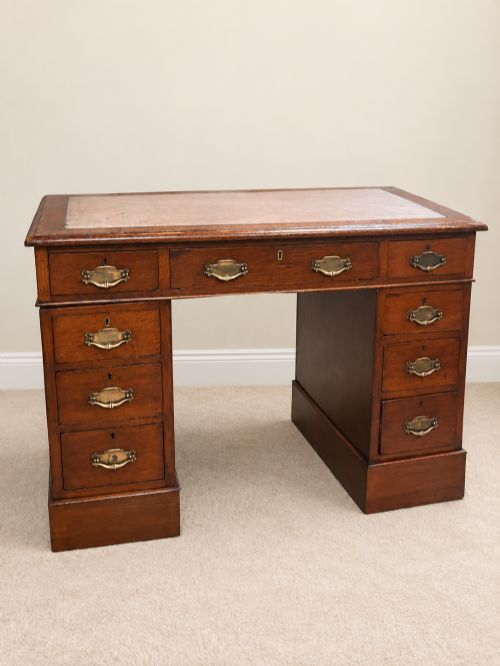
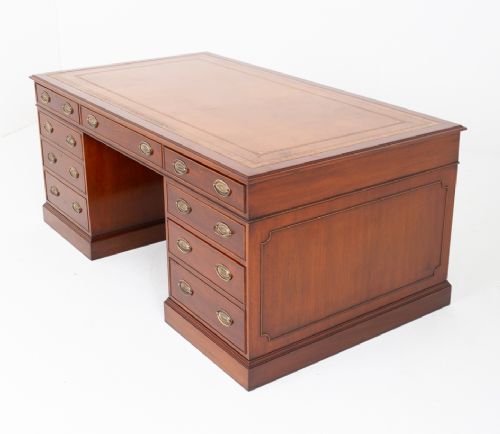
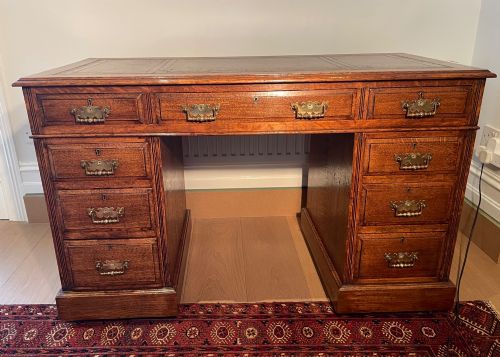
The selection ranges from large freestanding partners tables to compact kneehole desks and nineteenth-century oak wages desks. Makers drew upon Georgian, Regency, and Queen Anne styles, adapting classic proportions for practical domestic and office interiors.
Materials and Construction
Cabinet makers utilised dense hardwoods including mahogany, burr walnut, oak, satinwood, and yew to build robust frames and drawer carcasses. Writing surfaces were finished with inset leather, frequently complemented by subtle blind tooling.
Structural integrity relied on solid timber construction, dovetailed drawer joints, and brass hardware such as drop handles and castors. Surviving pieces often retain their original brass fittings and leather inserts.
Timber selections across the inventory include mahogany, burr walnut, oak, satinwood, and yew alongside brass and leather.
Distinctions in Standard
Quality rests upon the selection of timber veneers, such as richly figured burr walnut or carefully matched satinwood, and the crispness of carved details in styles like Chippendale or Queen Anne. Superior execution shows in the precision of drawer dovetails and the integration of secondary timbers.
The treatment of the leather insert and the presence of original brass handles distinguish standard utility pieces from finer library tables and partners desks made for prominent Victorian interiors.
Trollope & sons·Wylie & Lochhead Glasgow
The Traditional Leather Top Table Glossary
- Partners Desk
- A large double-sided desk designed so two people could work opposite each other, featuring banks of drawers on both sides.
- Pedestal Desk
- A heavy writing desk consisting of a top slab resting on two separate pedestals containing drawers.
- Kneehole Desk
- A smaller flat-topped desk with a central recess for the legs, flanked by single or double banks of drawers.
- Tooling
- The decorative gold or blind-stamped border pressed into the leather writing surface using heated brass rolls.
Traditional Leather Top Table: Frequently Asked Questions
What is a partners desk?
A partners desk is a large writing table built with drawer pedestals on both sides, allowing two individuals to sit opposite each other and work independently.
These pieces were traditionally utilised in libraries, banks, and large estate offices where professional associates needed shared access to workspace and storage.
How do I identify a Victorian desk?
Victorian desks are typically constructed from heavy mahogany, walnut, or oak, often featuring deep pedestal configurations and hand-tooled leather surfaces. Examining the drawer construction reveals hand-cut dovetails and solid secondary timbers consistent with nineteenth-century cabinet making.
Stylistic cues draw upon earlier Georgian and Regency motifs, combined with the robust proportions characteristic of the Victorian era.
What wood was used for these tables?
Cabinet makers relied primarily on dense hardwoods such as mahogany and oak for structural durability, alongside decorative veneers like burr walnut and satinwood. Yew and walnut also appear frequently across writing tables and occasional lamp tables.
These timbers were chosen for their strength and grain patterns, which responded well to polishing and created durable surfaces for writing.
Are leather inserts original?
Many nineteenth and twentieth-century desks retain their original leather writing surfaces, though some have undergone careful replacement during conservation. Original leather often displays a mature patina with subtle surface wear and faint gold tooling along the borders.
Inspecting the edge bindings and the way the leather meets the timber rebate helps determine whether the material is period-correct.