




Low Mahogany Bench Table
A low mahogany bench table offers a versatile blend of seating and surface utility, prized for bringing warmth and utility to traditional interiors.
Low Mahogany Bench Table
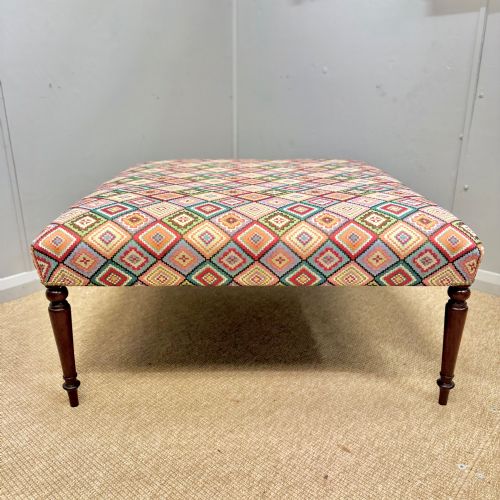
When searching for a low mahogany bench table, you are looking at sturdy wooden frames that double as seating or occasional surfaces, spanning periods from the Victorian era into the early twentieth century. These pieces appear under various designations such as dressing table stools, large footstools, ottomans, and caned square tables.
The pieces you are most likely to meet on this page hail from the nineteenth century or the decades leading up to 1930, exhibiting styles from English Country House and Arts and Crafts to Regency and Queen Anne revivals. They serve equally well at the foot of a bed, beside a fireplace, or functioning as a low coffee table.
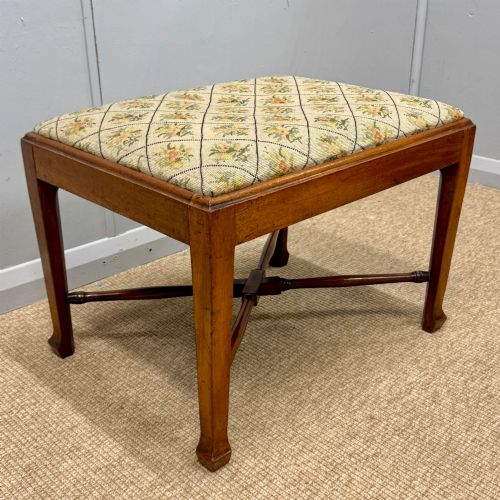
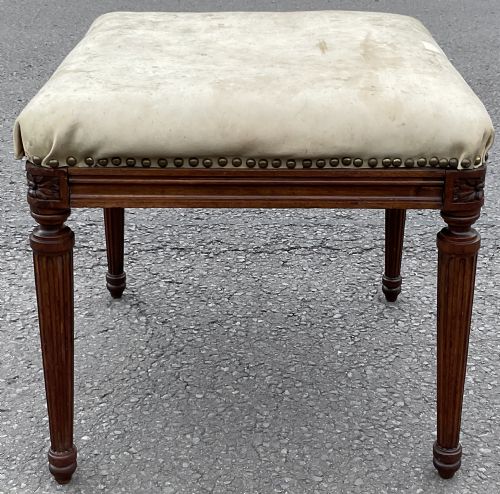
Makers and craftsmen of these periods utilised rich mahogany to build robust frames supported by cabriole legs, cross stretchers, and occasionally castors. Their versatility lies in the interchangeable nature of their tops, which range from exposed timber and cane to deeply buttoned leather and woven fabric.
Materials and construction methods
The primary structural material across these listings is mahogany, selected for its durability and deep reddish-brown grain. Frameworks frequently incorporate brass fittings, particularly castors on Victorian iterations, adding mobility to heavier designs.
Top surfaces showcase a variety of traditional upholstery and weaving techniques, utilising leather, wool, tapestry, and woven cane. Caned panels are meticulously interlaced within wooden borders, whilst upholstered variants employ deep buttoning and fabric coverings over padded foundations.
Current listings span the nineteenth century up to 1930, featuring mahogany frames paired with brass, leather, wool, and woven cane.
Judging the grade and craftsmanship
Quality in these pieces is dictated by the integrity of the timber frame and the precision of the joinery, particularly around the leg junctions and cross stretchers. Finer examples display cleanly carved cabriole legs and tightly fitted caning or robust leather hide rather than loose joints or brittle webbing.
The distinction between standard utility items and superior pieces often rests on decorative restraint and secondary materials, such as heavy-gauge brass castors and dense hardwood foundations. Well-preserved upholstery textiles and intact deep buttoning also separate well-kept specimens from those requiring complete restoration.
The Low Mahogany Bench Table Glossary
- Cabriole leg
- A furniture leg that curves outward and then tapers inward, mimicking an animal's curving leg. This shape is commonly found on Victorian and revival period frames.
- Cross stretcher
- An X-shaped wooden brace connecting the legs beneath a table or stool to provide structural rigidity. These often feature a central finial or hub.
- Caning
- A weaving technique utilising thin strips of rattan or cane to create a supportive, patterned seat or surface. It appears on lighter square table and stool designs.
- Deep buttoning
- An upholstery method where twine is pulled tightly through padding and secured with buttons to create a diamond pattern. This technique adds both resilience and texture to leather and fabric tops.
Low Mahogany Bench Table: Frequently Asked Questions
How were these low tables originally used?
These items functioned primarily as dressing table seats, footstools, or occasional resting places in country house drawing rooms. Their low profile made them practical for putting on shoes or resting feet.
Over time, many sturdy stool forms transitioned into low coffee tables or flexible seating solutions around the hearth. Their compact height allowed them to sit comfortably in front of low upholstery.
Are these pieces strictly tables or stools?
They occupy a hybrid category between seating and surface furniture, depending entirely on the top surface. Caned and wooden tops lean toward table usage, while leather and fabric tops suggest seating.
Many examples were built robustly enough to serve both functions interchangeably. A flat wooden top easily doubles as a small table for books or tea.
How do I identify a Victorian piece?
Victorian examples often feature dense mahogany timbers, heavy frames, and sometimes brass castors on the feet. Stylistic cues include cabriole legs and deep buttoned upholstery.
Later pieces from the early twentieth century often lean toward simpler Arts and Crafts or Edwardian revival aesthetics. Examining the interior joinery and hardware helps confirm the nineteenth-century origin.
Can I use a caned stool as a coffee table?
Caned stool tops provide a sturdy, flat surface suitable for holding trays, books, and decorative objects. The woven cane is surprisingly resilient under normal daily use.
Care should be taken to distribute weight evenly and avoid puncturing the cane lattice with sharp corners. A glass top is sometimes added to protect the fragile weave.