
Traditional Leather Reading Chair
A traditional leather reading chair offers deep-seated comfort paired with period timber framing, built for serious study or fireside ease.
Traditional Leather Reading Chair
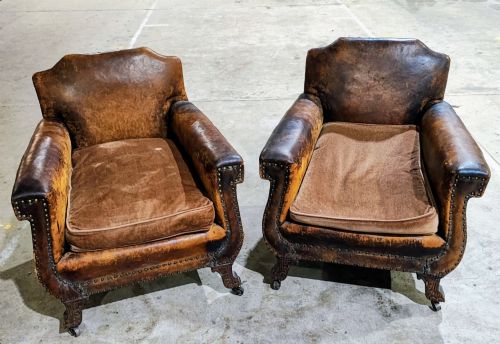
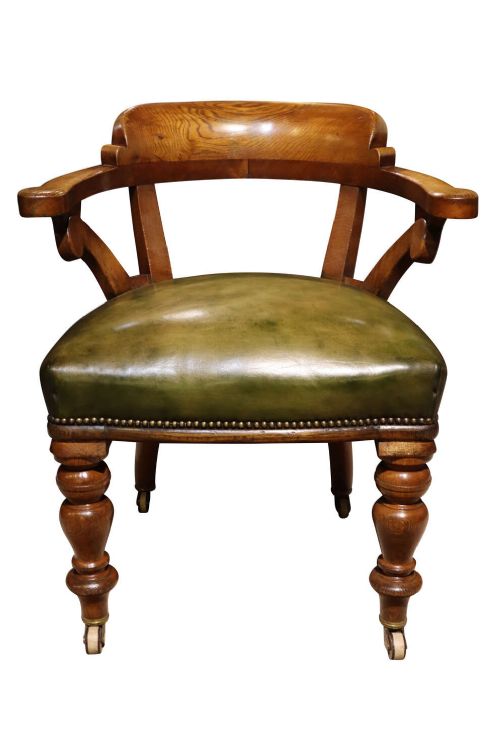
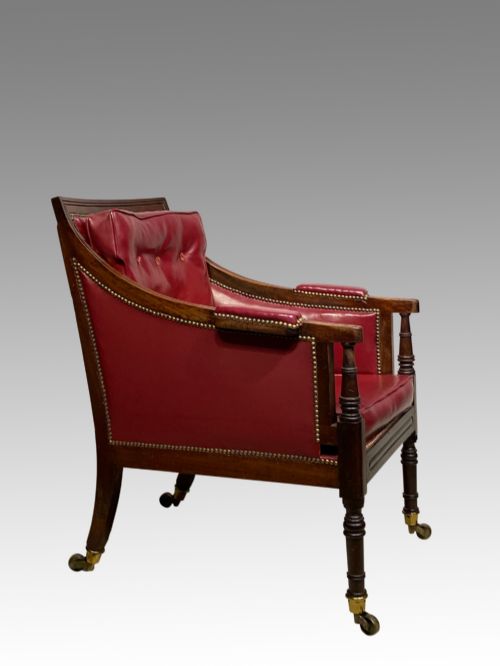
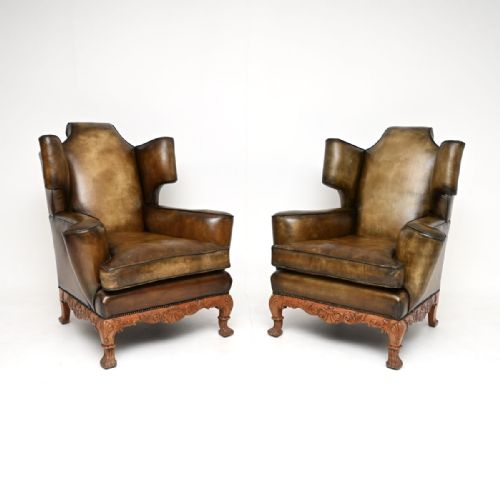
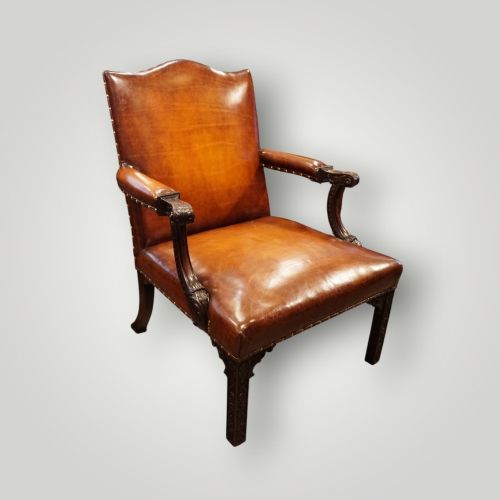
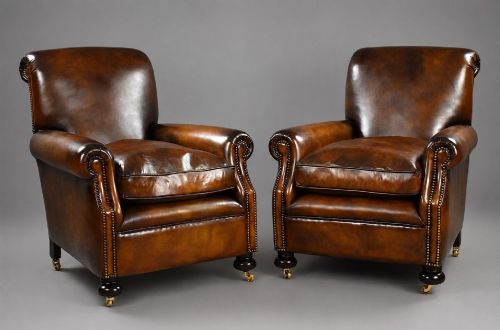
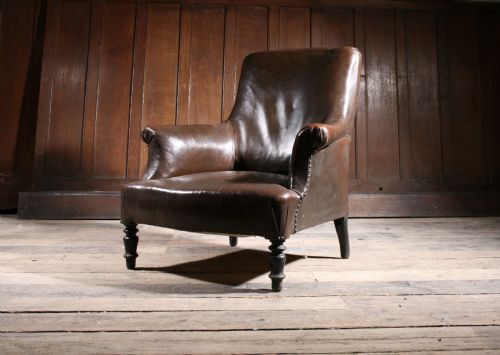
A traditional leather reading chair typically takes the form of a library armchair, a wingback, a club chair, or a Gainsborough chair. These pieces emerge from periods ranging from the Georgian and Regency eras through the Victorian age into the Edwardian decades and the early twentieth century.
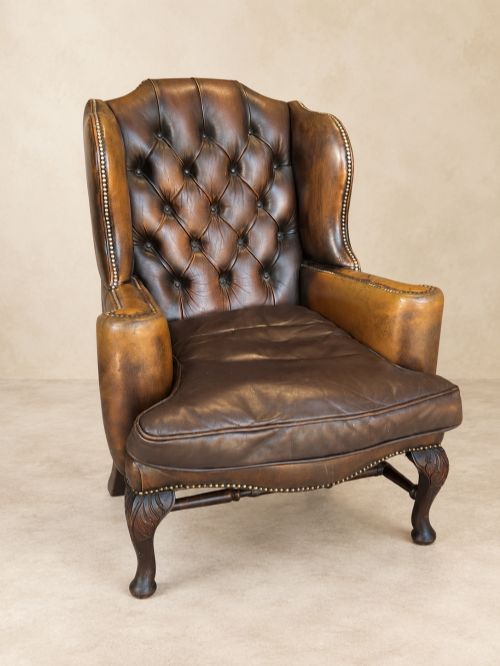
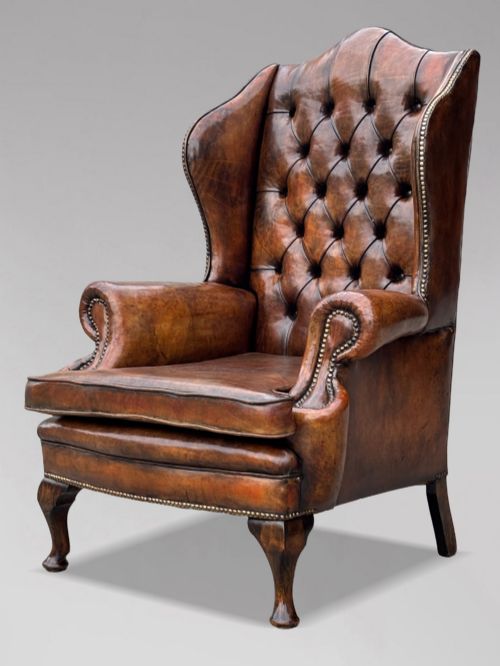
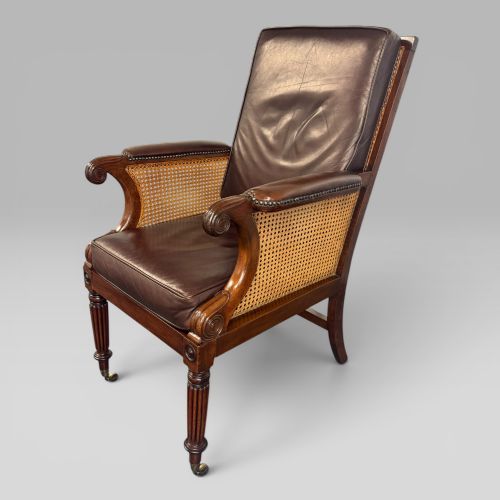
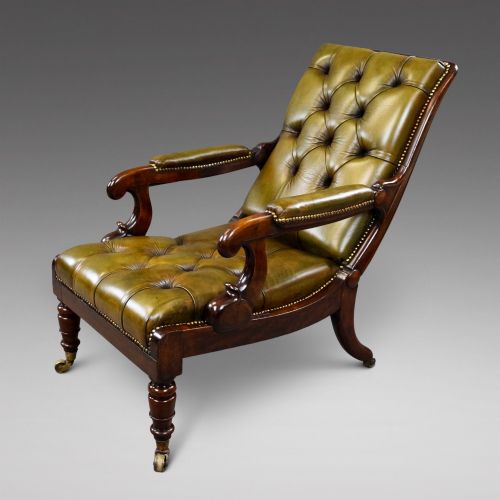
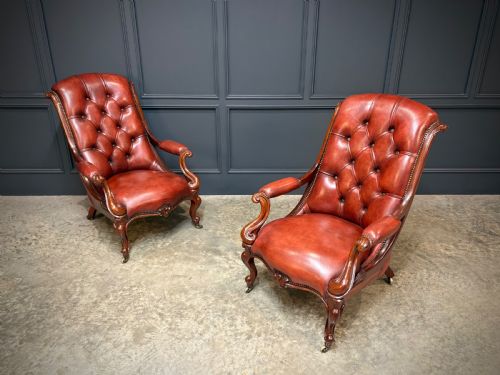
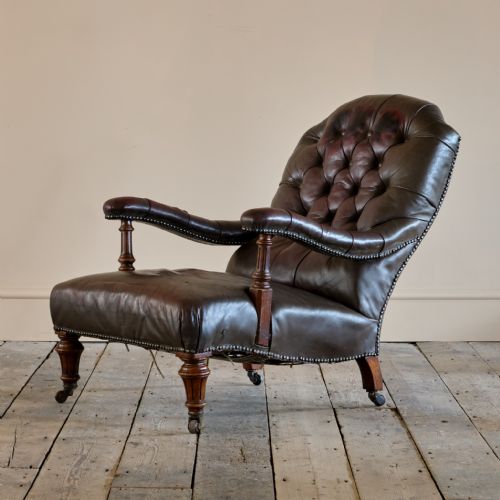
The version most commonly met on this page is the nineteenth-century library chair or the early twentieth-century leather club chair. Buyers encounter buttoned backs, open mahogany arms, and substantial upholstered wings designed to block draughts in large rooms.
Origins stretch across English workshops and country houses, alongside French examples in walnut and oak. Armchairs and desk chairs dominate the selection, built for utility in studies, libraries, and drawing rooms.
Distinctions in craftsmanship
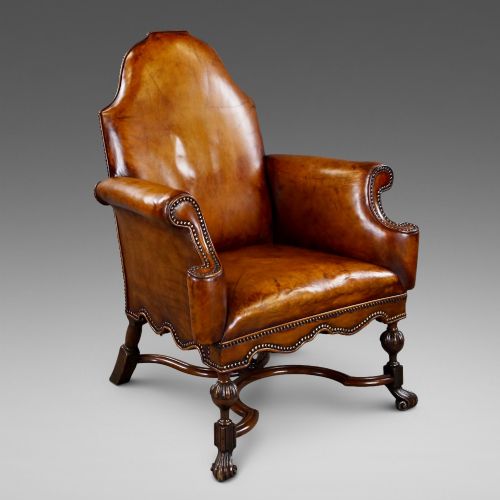
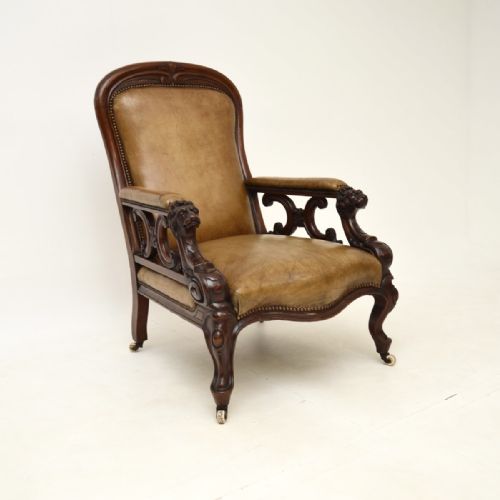
Quality in a traditional leather reading chair rests upon the depth of the timber carving and the integrity of the frame. Pieces with hand-carved mahogany details, such as Chippendale blind carving, or substantial golden oak structures represent a higher tier of workmanship than simpler club forms.
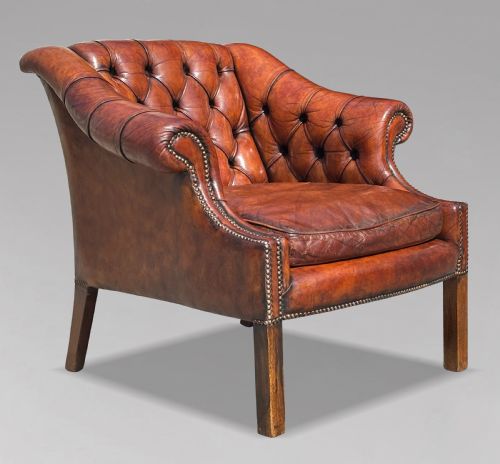
The finish and treatment of the hide also separate standard examples from finer ones. Hand-dyed English hide leather with buttoning and careful patination commands greater appreciation than plain modern upholstery replacements.
Listings on this page span the Georgian, Victorian, and Edwardian periods, utilising mahogany, oak, rosewood, and cane.
Howard And Son
The Traditional Leather Reading Chair Glossary
- Wingback armchair
- An upholstered seat featuring protective side panels designed originally to shield the sitter from draughts. These chairs often incorporate deep buttoning and leather upholstery.
- Gainsborough chair
- A type of open-armed armchair with a wide seat and upholstered back, popular during the Georgian period. They frequently stand on carved mahogany frames.
- Library chair
- A heavy, comfortable armchair designed for reading rooms and studies, usually upholstered in leather. They often date from the Victorian and Regency periods.
- Club chair
- A deep, low-slung upholstered armchair originating in France and England during the early twentieth century. They are typically covered in soft brown or tan leather.
- Bergère
- An enclosed armchair with cane or upholstered sides and a loose seat cushion. The wooden frame is often exposed and carved.
- Buttoning
- An upholstery technique where indentations are formed by pulling twine through the padding and securing it with buttons. This creates a diamond pattern across the leather back.
Traditional Leather Reading Chair: Frequently Asked Questions
What is a traditional leather reading chair?
A traditional leather reading chair is a sturdy upholstered seat designed for studies and libraries, combining a hardwood frame with leather covering.
These pieces encompass styles like the Georgian Gainsborough, the Victorian library chair, and the twentieth-century club chair.
How do I date a leather armchair?
Dating relies on examining the timber frame, the style of the legs, and the method of upholstery. Georgian and Regency pieces feature mahogany frames with specific carving styles, while Victorian examples often show deep buttoning and turned legs.
Edwardian and 1930s versions tend toward club shapes and simpler oak or hardwood structures.
Where should I place a library chair?
A library chair suits studies, home offices, and living rooms where its supportive back and arms provide comfort for long periods. Pairing the chair with a floor lamp creates an ideal reading corner.
Because these chairs are substantial, they require adequate floor space to sit comfortably away from walls.
What is the difference between a club chair and a wingback?
A club chair is typically low, deep, and fully upholstered with soft leather designed for relaxed lounging. It lacks the tall protective wings found on a traditional wingback.
Wingback chairs feature high backs and side panels that enclose the head and shoulders, offering a more upright sit.