
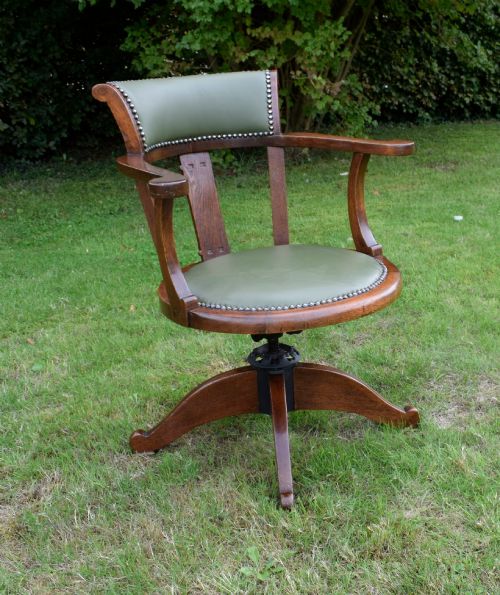
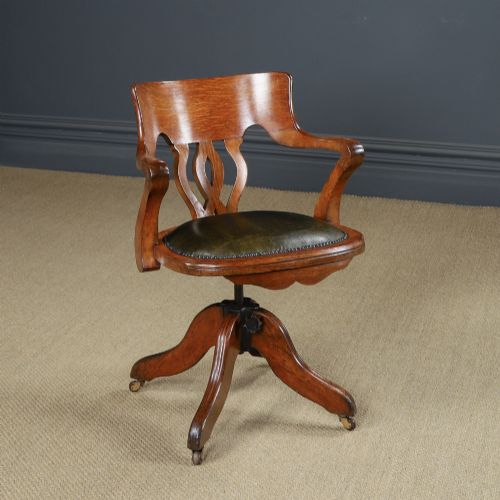
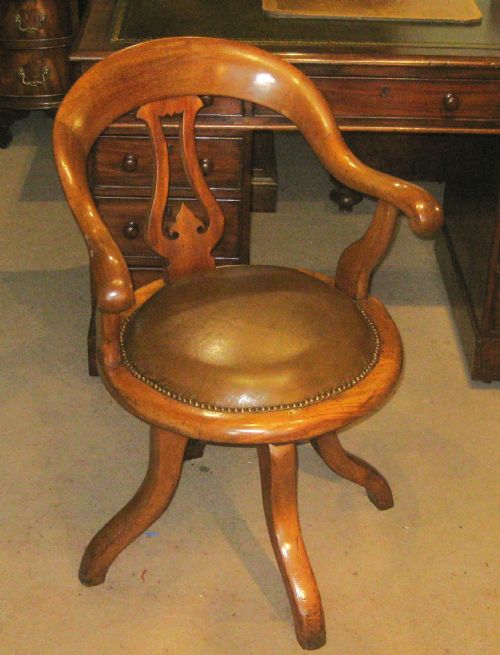
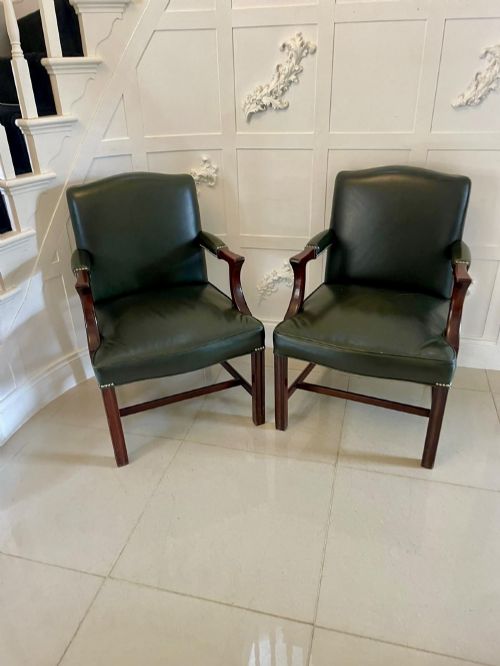
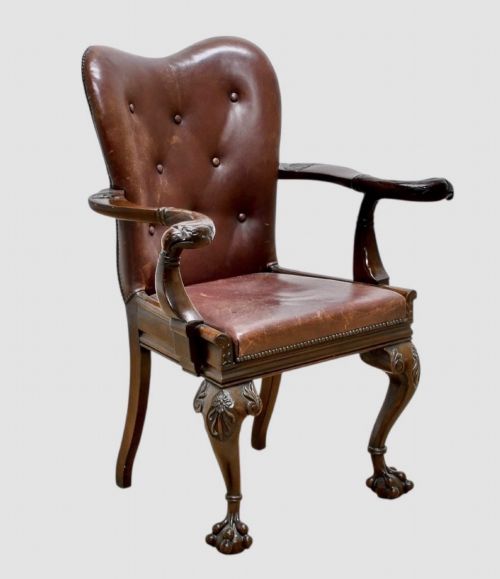


Traditional Leather Captains Chair
A traditional leather captains chair is a robust, revolving or stationary seat designed for long hours at a desk, bringing sturdy timber frames and hide upholstery to a study.
Traditional Leather Captains Chair
When you search for a traditional leather captains chair, you encounter a form deeply rooted in nineteenth and early twentieth century workspaces. These seating options include swivel desk chairs, library armchairs, and smoker bows designed to support the user through heavy daily administrative tasks.
The versions most commonly met on this page span the Victorian and Edwardian eras, alongside later pieces made in the early twentieth century. They appear primarily as desk armchairs and revolving office seats, often retaining their original structural function.
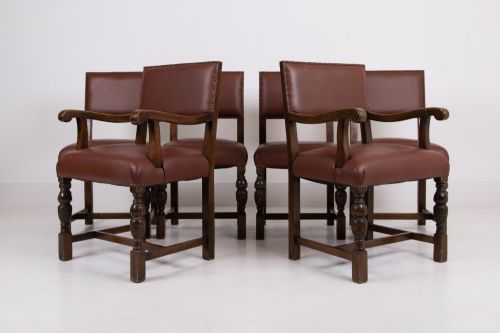
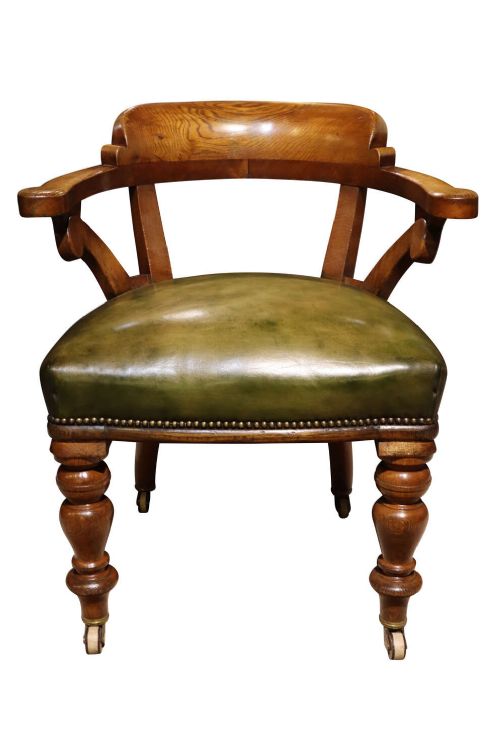
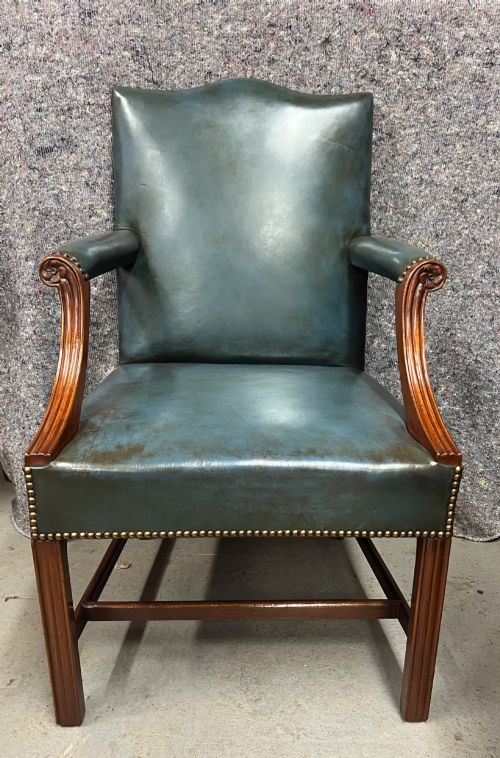
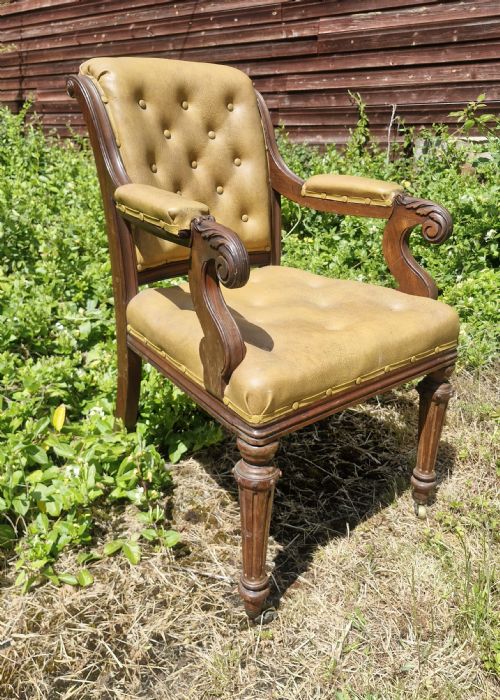
The forms shift from sturdy oak frameworks to rich mahogany frames, frequently paired with green, brown, or tan hide seats. Makers adapted these chairs for writing rooms, offices, and libraries, resulting in diverse functional interpretations of the form.
Construction and materials
Cabinet makers built the frames of these chairs using dense timbers such as mahogany, oak, beech, and walnut, often employing turned spindles and carved scroll arms for support. These hardwoods provided the necessary structural integrity to withstand constant movement and weight.
Upholsterers integrated leather seats and backrests, securing the hide with brass tacks or studs around the edges. This combination of resilient timber and durable leather ensured the furniture survived decades of heavy use in offices and libraries.
Listings feature pieces spanning the nineteenth century through the Edwardian period and into the 1930s, constructed in oak, mahogany, walnut, and beech.
Distinctions in quality
The refinement of the timber carving and the choice of primary wood set exceptional examples apart from utilitarian workshop pieces. Richly grained golden mahogany and well-figured oak demonstrate superior material selection by the original maker.
The sophistication of the revolving mechanisms and the integration of swivel and tilt functions define the upper tier of office seating. Smoother mechanical action and robust underpinnings indicate careful engineering during the construction process.
The Traditional Leather Captains Chair Glossary
- Captain's chair
- A sturdy wooden armchair with a rounded back rail supported by spindles, frequently adapted with a revolving base for office use.
- Smoker's bow
- A low-backed wooden armchair related to the Windsor tradition, featuring a continuous bentwood rail and a saddle seat.
- Carver chair
- An armchair designed to match a set of dining chairs, typically positioned at the head of a table or utilised as a desk seat.
- Revolving mechanism
- The internal iron and brass hardware allowing an office chair to rotate and tilt while supporting the weight of the sitter.
- Hide
- The durable animal skin used to upholster the seats and backrests of nineteenth and early twentieth century library and desk chairs.
Traditional Leather Captains Chair: Frequently Asked Questions
What is a traditional leather captains chair?
It is a sturdy wooden armchair, often featuring a revolving base and a leather-upholstered seat, designed for use at a desk or in a library.
These pieces combine functional mechanics with traditional cabinet making, utilising timbers like mahogany and oak to support long periods of sitting.
How do I date an antique desk chair?
Dating relies on observing the timber species, construction techniques, and stylistic revival influences present in the frame and legs.
Victorian and Edwardian examples often display specific turning patterns, hardware styles, and upholstery methods characteristic of their production era.
Can I use an office chair at a modern desk?
Many antique desk chairs fit standard modern working environments, provided the seat height matches your workspace requirements.
Revolving and stationary models from the nineteenth and early twentieth centuries offer practical seating solutions for contemporary studies.
What wood types are most common?
Mahogany and oak dominate the surviving examples, accompanied occasionally by beech, walnut, and metal hardware.
Cabinet makers selected these dense hardwoods to ensure the frame could endure the daily stress of movement and weight.