
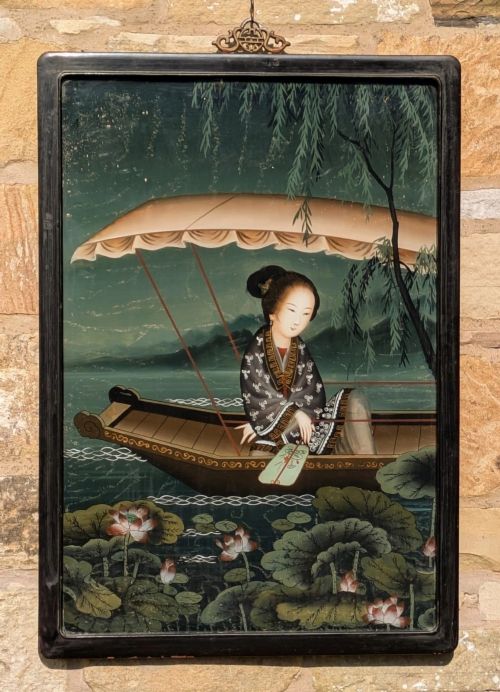


Traditional Lake Scene Painting
Traditional lake scene painting captures water and mountainous horizons, bringing peaceful pastoral views into your home.
Traditional Lake Scene Painting
Traditional lake scene painting brings water, mountains, and quiet shores into interior spaces through oil paint, canvas, and framed artwork. When buyers search for traditional lake scene painting, they encounter nineteenth century Scottish highlands, Austrian alps, and Italian school landscapes.
The pieces on this page span the eighteenth century, Victorian era, and Edwardian periods, often framed in giltwood or gesso. Oil on canvas dominates the selection, alongside reverse painting on glass and stained glass panels depicting boats and figures by the water.
Makers and artists range from named painters like Frank Hider, Giulio Cecchini, and Benjamin Williams Leader to works from the Italian School. Collectors find both expansive mountain vistas and intimate pastoral river views among these historic fine art paintings.
Materials and technique
Artists built these works utilising oil paint applied to canvas or wood panels, capturing light across water and distant mountain peaks. Brushes laid down pigment to render atmospheric effects in alpine and highland settings.
Frames utilise wood, gesso, and gilt finish to enclose and protect the artwork. Specialised techniques also include reverse painting on glass and hand painted leaded glass windows depicting countryside lake scenes.
Listings feature oil paint, canvas, gesso, and giltwood across Victorian and Edwardian periods.
Quality and execution
Depth of pigment and confident brushwork distinguish the finer canvases from simpler decorative works. Painters who mastered light and shadow give the water and mountains a convincing sense of atmosphere and distance.
The execution of original frames in giltwood and gesso contributes significantly to the overall integrity of the piece. Well preserved surfaces on both the canvas and the surrounding frame reflect superior historical care.
Frank Hider·Giulio Cecchini·J Laporte·James Gunson Atkinson·Benjamin Williams Leader·George Harrison·Louis Smets
The Traditional Lake Scene Painting Glossary
- Oil on canvas
- Pigment mixed with drying oil applied to stretched fabric. This medium allowed artists to achieve rich colour blending and lasting durability.
- Giltwood
- Wood carved and covered with a thin layer of gold leaf. It provided opulent framing for important nineteenth century paintings.
- Gesso
- A paint mixture consisting of a neutral binder mixed with chalk, gypsum, or pigment. It formed the smooth base for ornate gilded frame moulding.
- Reverse painting on glass
- An image applied directly to the back of a glass panel to be viewed from the front. This technique produces a glossy, reflective surface finish.
- Pastoral landscape
- An artistic depiction of rural life, nature, and countryside scenery. These views often feature gentle lakes, mountains, and figures resting outdoors.
Traditional Lake Scene Painting: Frequently Asked Questions
What periods do these paintings date from?
The works span from the eighteenth century through the Victorian and Edwardian eras up to nineteen hundred.
Most examples originate in the nineteenth century, showcasing Romanticism and French Impressionism influences.
What materials are used in these frames?
Frames are commonly constructed from wood finished with gesso and gilt. Some pieces retain their original ornate giltwood presentation.
Glass panels and leaded windows also appear among the non-canvas formats.
Who painted these lake scenes?
Makers include named artists such as Frank Hider, Benjamin Williams Leader, and Giulio Cecchini. Other works originate from the broader Italian School.
Signed impressionist landscapes and regional Scottish and Alpine views are well represented.
How should I display a lake painting?
These works suit traditional wall art placement in living spaces or studies where they introduce natural light and scenery. Ensure they hang away from direct moisture and strong sunlight.
Matching the giltwood or wood frame to your room's existing decor helps anchor the piece.