




Green Lake Landscape Painting
Green lake landscape painting brings the quiet stretch of water and wooded shore indoors, offering a calm window into nineteenth and twentieth century scenery.
Green Lake Landscape Painting
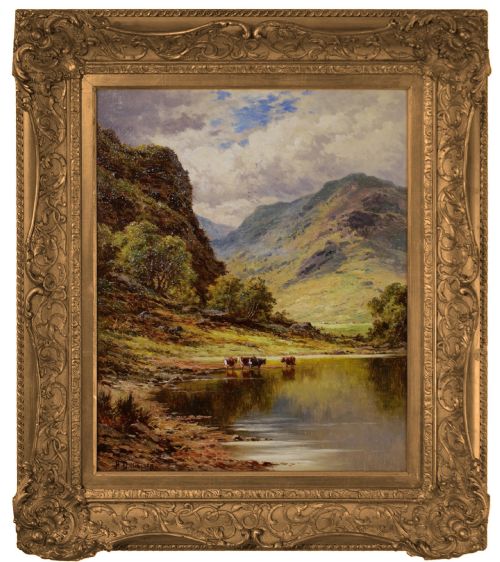
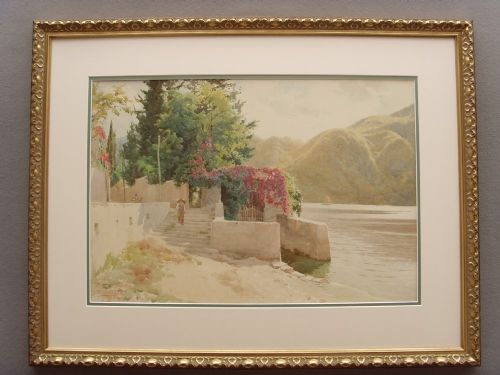
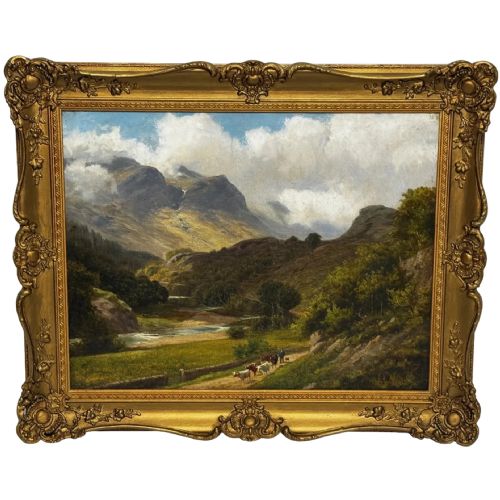
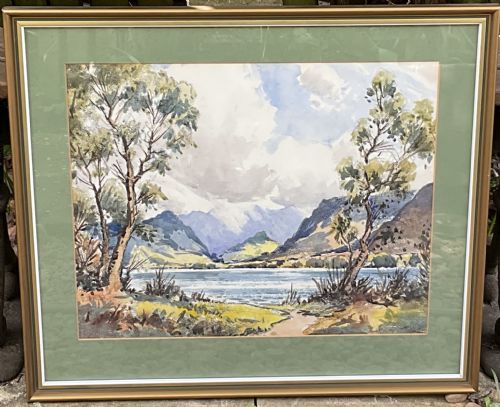
A green lake landscape painting captures topographical views of water, fells, and shores, most frequently rendered in oil or watercolour. You encounter these works across various periods, from eighteenth century views to mid twentieth century impressions of the Lake District and continental waters.
The works on this page lean heavily towards nineteenth century oils and twentieth century watercolours, often framed under glass or in gilt wood. Painters use these mediums to record specific locations such as Windermere, Ullswater, and Scottish highland waters with varying degrees of topographical detail.
Subjects range from tranquil pastoral scenes with figures by the water to dramatic mountain backdrops reflecting on the surface. Collectors select these pieces for their atmospheric rendering of light and shadow across rural landscapes.
How they were made
Artists painted primarily with oil paint on canvas or watercolour on paper, sometimes mounting works on wood panels. Canvas supports allowed for heavier impasto and layered brushwork, while paper lent itself to the fluid washes characteristic of topographical watercolours.
Frames typically consist of gilt wood or simple moulded timber, occasionally glazed to protect delicate watercolours from environmental moisture and dust.
Geese frequently paddle across these waters, seemingly determined to photobomb nineteenth century artists long before the invention of the camera.
What varies in quality
Quality rests on the confidence of the brushwork and the artist's command of light across water and distant hills. Stronger examples capture the specific atmosphere of a location rather than relying on formulaic tree placement or repetitive palette choices.
The handling of depth and the integration of figures into the natural surroundings separate routine topographical records from more accomplished landscape art.
Henry H. Parker·Robert George Talbot Kelly·Helen Layfield Bradley·Gabriel Dauchot·Frank Hider·J Laporte·Edward Horace Thompson·Joseph Farrington·Stephen Enoch Hogley·R.L. Howey·Claude Muncaster·T.B. Garvie·Antoine Bouvard·William Mellor·Samuel Hart Turpin·George Neil·Robert Thomas Buttery·William Green·W T Longmire
The Green Lake Landscape Painting Glossary
- Impasto
- Paint applied thickly to a canvas or panel, leaving visible brush or palette knife marks that stand proud of the surface. This technique adds tactile texture and catches the light in landscape foliage and water.
- Gilt wood
- Timber carved or moulded and coated with a thin layer of gold leaf or metallic gilt finish. It is commonly found on traditional frames enclosing nineteenth century oil paintings.
- Watercolour
- Paint consisting of pigment suspended in a water-soluble binder, traditionally applied to paper. It allows for translucent washes that suit atmospheric depictions of mist over water.
Green Lake Landscape Painting: Frequently Asked Questions
How do I date an antique lake painting?
Dating relies on stretcher construction, canvas types, framing styles, and artist biographical dates recorded on the work or in signatures. Stylistic shifts between Victorian academic realism and later post war impressionism also help narrow the decade.
Signatures, exhibition labels on the reverse, and written inscriptions naming specific topographical locations provide further historical anchors for attribution.
Were these paintings made on site?
Many artists produced initial watercolours or oil sketches outdoors directly in front of the subject to capture accurate light and topography. Finished oil paintings on canvas were frequently completed back in the studio using these field studies as reference.
Topographical accuracy was highly prized by nineteenth century buyers who recognised specific Cumbrian fells, lakeshores, and architectural landmarks.
How should I hang and light these watercolours?
Watercolours and works on paper require protection from direct sunlight to prevent fading of pigments and discolouration of the paper support. Position them away from bright south facing windows and sources of high heat.
Use directional picture lights with low heat UV filtered bulbs to illuminate the canvas or framed paper without causing long term material degradation.
What is the difference between oil and watercolour lake scenes?
Oil paintings on canvas offer a robust textured surface with rich impasto and deeper colour saturation that handles dramatic mountain and water contrasts. They are typically stretched and framed without glass.
Watercolours on paper achieve luminous transparent washes and delicate atmospheric effects of mist and rain, requiring protective glass framing to preserve the paper.