


Traditional Ladder Back Carver
A traditional ladder back carver offers robust seating rooted in centuries of vernacular craftsmanship.
Traditional Ladder Back Carver
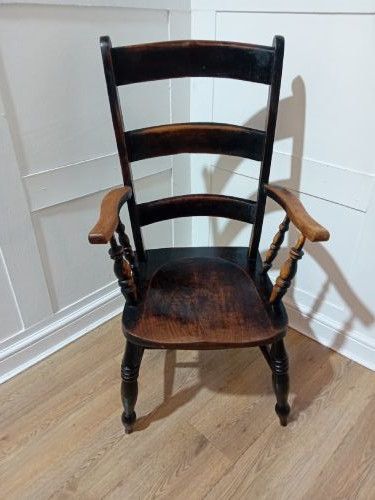
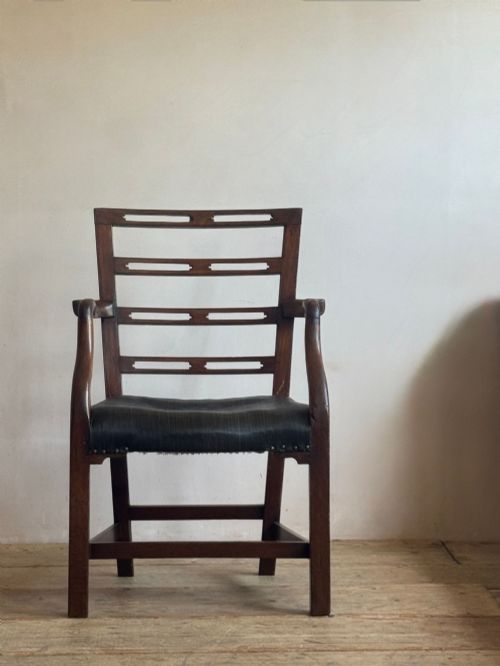
A traditional ladder back carver is an armchair featuring horizontal slats across the backrest, designed for dining or parlour use. These chairs emerge from periods spanning the eighteenth century through to the early twentieth century.
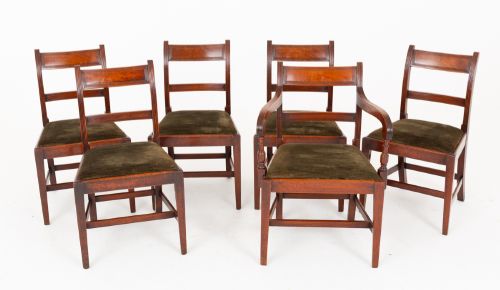
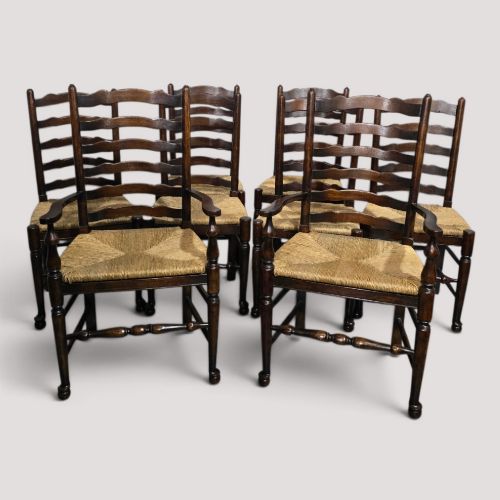
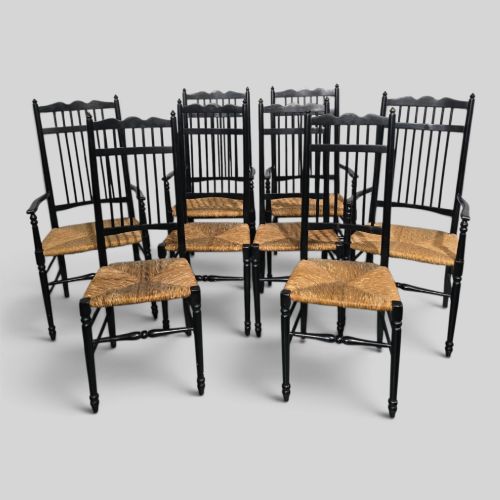
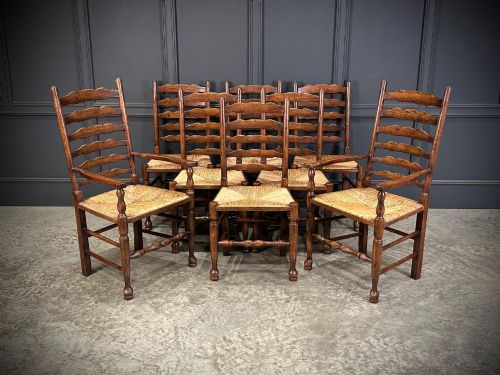
Buyers commonly encounter country vernacular pieces alongside revival designs, reflecting regional English traditions. The selections on this page range from single armchairs to larger dining sets including carvers.
Makers utilise sturdy regional woods like ash, elm, and oak, frequently paired with woven seating. The form prioritises functional strength and simple horizontal lines over excessive ornamentation.
Materials and construction
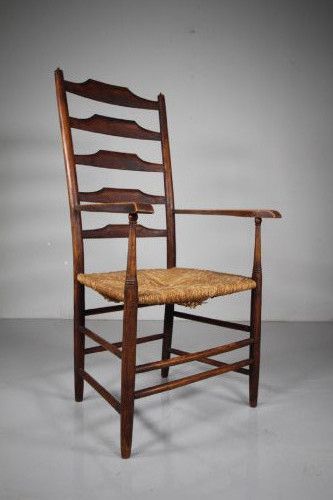
Craftsmen built these armchairs using solid regional timbers such as ash, elm, oak, and beech for the frames. Turned supports and uprights provide structural integrity while maintaining a slender profile.
Seats are traditionally woven from natural rush, offering a resilient surface that supports daily use. Turned rungs reinforce the legs below, binding the frame together without metal fasteners.
The documented periods span the eighteenth century, the Victorian era, Arts and Crafts, and the early twentieth century.
Distinguishing quality
Quality rests in the balance of the proportions and the crispness of the turned wood components. Earlier regional pieces show deliberate hand-shaping in the spindles and uprights.
The integrity of the original rush seating and the stability of the pegged joints determine the lasting value of the chair. Retaining an early or untouched finish elevates the character of the piece.
Philip Clissett·Dicon Nance·Liberty and Co
The Traditional Ladder Back Carver Glossary
- Carver
- An armchair designed with open sides to accommodate clothing styles, usually matching a set of dining chairs.
- Rush
- Natural sedge grass woven tightly to form a durable, textured seat surface.
- Vernacular
- Everyday utilitarian objects built by regional makers following local traditions rather than academic design books.
- Spindle
- A slender, turned wooden rod used as a structural or decorative vertical member in the backrest.
- Revival
- A later design style that recreates the forms of an earlier historical period, such as Chippendale or Arts and Crafts.
Traditional Ladder Back Carver: Frequently Asked Questions
What is a carver chair?
A carver is an armchair designed to match a set of dining chairs, traditionally placed at the head of a table.
These chairs feature open arms and substantial frames suited for daily use.
How do I date a ladder back?
Dating relies on timber selection, tool marks, and the turning style of the upright posts.
Earlier nineteenth-century and eighteenth-century examples display hand-shaped components and distinct regional characteristics.
Are rush seats durable?
Natural rush seating is surprisingly tough and flexible when treated with care.
Avoiding excessive moisture helps preserve the tightly woven fibres over decades of domestic use.
How do I style these chairs?
These armchairs suit rustic dining tables or serve as standalone accent seating in a living space.
Their simple vertical slats complement both contemporary interiors and traditional rooms.