
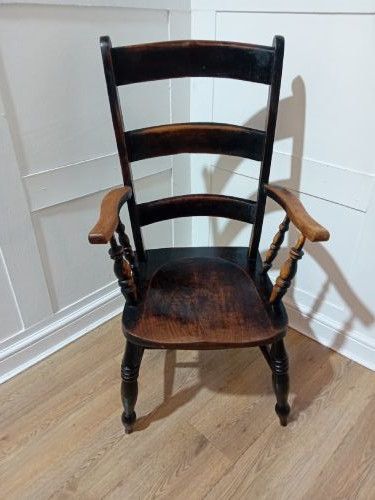
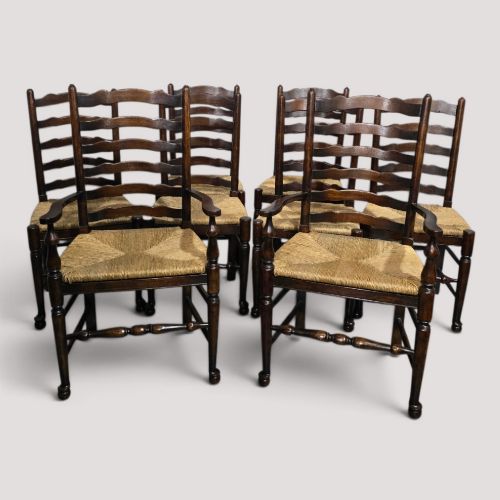


Oak Ladder Back Armchair
An oak ladder back armchair offers sturdy vernacular comfort, built from honest timber and woven rush to suit traditional interiors.
Oak Ladder Back Armchair
An oak ladder back armchair combines a timber frame with horizontal slats across the backrest and a woven seat. These chairs emerge from country vernacular and Arts and Crafts traditions, prioritising utility alongside straightforward construction.
The versions most common on this page date from the nineteenth and early twentieth centuries, spanning regional English workshops and French provincial designs. Alongside standard armchairs, variations include rocking chairs, high chairs, and carvers meant for dining settings.
Materials and construction
Joiners built these frames primarily using solid oak, frequently supplemented with ash, beech, or elm for turned spindles and structural parts. Timbers were shaped with simple hand tools, relying on mortise and tenon joints to secure the components.
Seats commonly utilise woven rush or split cane, wrapped tightly around the seat rails to provide a resilient platform. Some examples integrate dropped-in fabric or velvet pads, while others retain traces of original paint on the wooden frame.
Some chairs arrived with high backs designed to block cold draughts from chilling the sitter's neck.
Distinctions in craftsmanship
Quality separates chairs retaining their original surface finishes and tight joinery from those rebuilt with modern fasteners. Uniformity in the turned uprights and the balance of the ladder rails indicate the maker's competence.
The integrity of the rush seating and the density of the primary timber dictate durability. Regional idiosyncrasies in carving or turning distinguish mass-produced commercial items from bespoke workshop pieces.
Dicon Nance St.Ives Studio·Liberty & Co
The Oak Ladder Back Armchair Glossary
- Ladder back
- A chair back constructed with multiple horizontal wooden slats positioned between two upright posts. This traditional format distributes support evenly along the spine.
- Rush seat
- A seating surface woven from natural marsh grasses twisted into cords. It provides a flexible, breathable base common in vernacular furniture.
- Carver
- An armchair designed with open sides to accommodate sitters wearing bulky historical garments. These typically match a set of smaller side chairs.
- Vernacular furniture
- Domestic objects built by local craftspeople using regional traditions rather than high-style academic designs. These pieces emphasise practical utility.
Oak Ladder Back Armchair: Frequently Asked Questions
What is an oak ladder back armchair?
An oak ladder back armchair is a traditional wooden seat defined by horizontal slats across the backrest and sturdy arm supports. These chairs stem from regional vernacular traditions.
Craftspeople built them for everyday domestic use, combining solid timber frames with supportive woven seating materials.
How were these armchairs used historically?
These armchairs served as principal seating in kitchens, parlours, and farmhouses. Their sturdy construction suited demanding daily tasks.
Versions with rocking mechanisms or elevated frames accommodated specific household needs, from nursery care to dining.
How do I care for an antique rush seat?
Rush seating requires stable indoor humidity to prevent the natural fibres from becoming brittle. Regular dusting with a soft brush keeps debris from settling between the weaves.
Avoid applying liquid cleaners directly to the woven strands, as moisture degrades the plant material over time.
How can I tell nineteenth century chairs apart?
Nineteenth-century examples vary according to regional turning styles and the specific secondary woods utilised in the undercarriage. Variations in the width and curvature of the ladder rails point to different maker workshops.
Examining tool marks and surface patination helps clarify the age and geographic origin of the frame.