




19th Century Ladderback Armchair
A 19th century ladderback armchair brings honest rural craft into a modern interior, offering structured slat support and turned wooden frames.
19th Century Ladderback Armchair
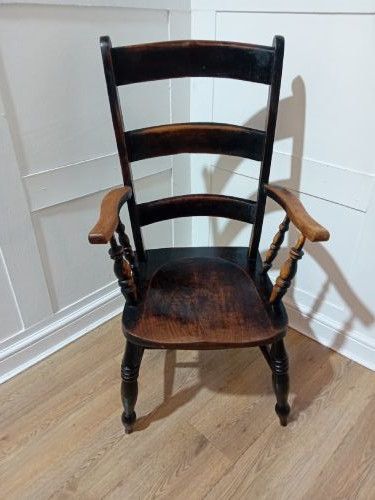
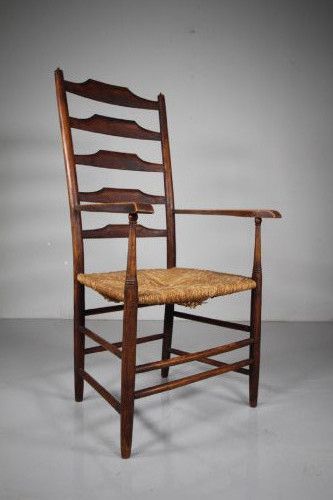
A 19th century ladderback armchair is a sturdy vernacular seat defined by horizontal wooden slats running between the upright rear posts. These pieces range from simple farmhouse kitchen chairs to grander Thames Valley and Lancashire carvers with generous armrests.
Most examples found here hail from the Victorian era and the broader nineteenth century, frequently adopting regional English, French, and Scandinavian country styles. You will encounter standard dining carvers, rocking variants, and low nursing chairs among the selection.
Makers built these chairs for daily domestic labour rather than formal parlour display, resulting in honest proportions and practical construction. The ladderback form provides robust back support through graduated horizontal slats curved to fit the spine.
Materials and construction
Cabinet makers and bodgers relied heavily on native hardwoods such as ash, elm, oak, and beech for the frames, turning the spindles and uprights on pole lathes. Elm frequently provided strong, interlocking timber for solid seats, while ash supplied the flexible strength needed for steam-bent back slats.
Seating surfaces typically utilised woven rush, seagrass, or fabric pads fitted within the wooden rails. Frame joints relied on traditional mortise and tenon construction, often secured with wooden pegs rather than metal fixings.
Some nineteenth century makers added castors to steamer chairs so weary sitters could easily chase the sun across the lawn.
Assessing quality and craftsmanship
Quality in a 19th century ladderback armchair rests on the integrity of the timber selection and the precision of the joinery. Superior examples retain their original surface finishes and tight frame joints without excessive movement in the arms and legs.
The refinement of the slat turning and the symmetry of the horizontal rungs distinguish workshop pieces from basic utilitarian seating. Chairs retaining their original rush or seagrass seating weave command greater interest among collectors of vernacular furniture.
Philip Clissett
The 19th Century Ladderback Armchair Glossary
- Ladderback
- A chair style featuring a backrest composed of horizontal wooden slats set between two vertical rear posts. These slats are often subtly curved or shaped to fit the sitter's back.
- Rush
- Dried marsh grass twisted into a strong cord and woven tightly to form traditional supportive chair seats. This flexible material yields comfortably with use.
- Vernacular furniture
- Everyday objects made by local tradesmen and country joiners using regional materials and traditional techniques. These pieces prioritise functional utility over academic architectural styles.
- Spindle back
- A chair design utilising numerous thin turned wooden rods in the backrest instead of wide solid slats. This method reduces weight while maintaining structural rigidity.
- Carver
- An armchair designed to match a set of smaller dining chairs, traditionally utilised by the head of the household at the table. These frames feature sturdy armrests built into the upper structure.
19th Century Ladderback Armchair: Frequently Asked Questions
How do I care for rush seats?
Keep rush seats clean by gently brushing away dust with a soft bristle brush.
Avoid excessive moisture and direct sunlight to prevent the natural fibres from drying out and snapping.
Are these chairs comfortable for daily use?
Most pieces offer an upright, supportive posture intended for functional tasks rather than deep lounging. Adding a loose linen cushion can soften the wooden seat for longer sitting.
How can I tell the region of origin?
Regional variations often appear in the timber choice, turning profiles, and local seating traditions. Lancashire and Thames Valley makers developed distinct leg and arm geometries.
What is a harlequin set?
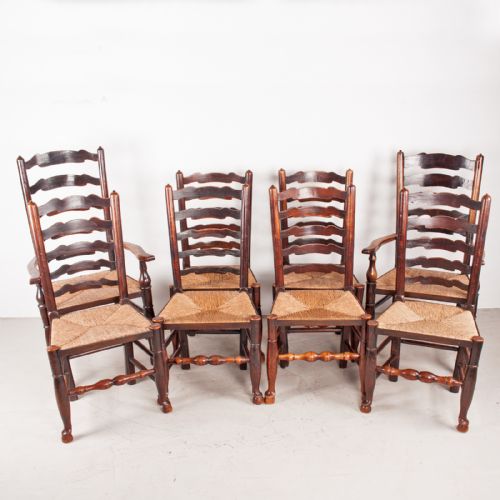
A harlequin set comprises individual chairs sharing a similar period, material, or style rather than originating from a single workshop.
These collections were gathered over time to provide matching seating around a dining table.