

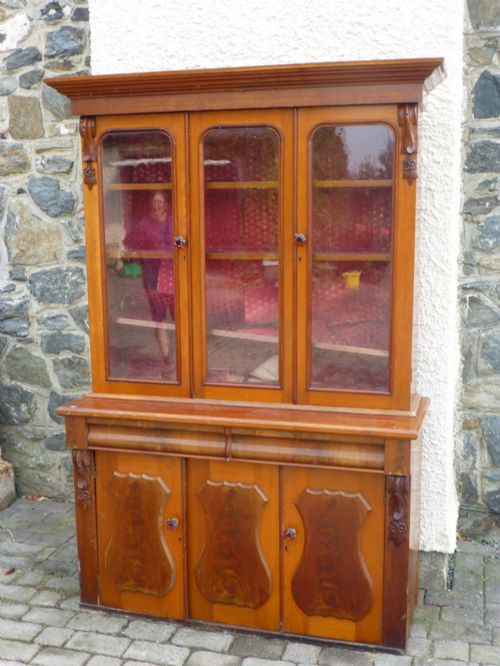
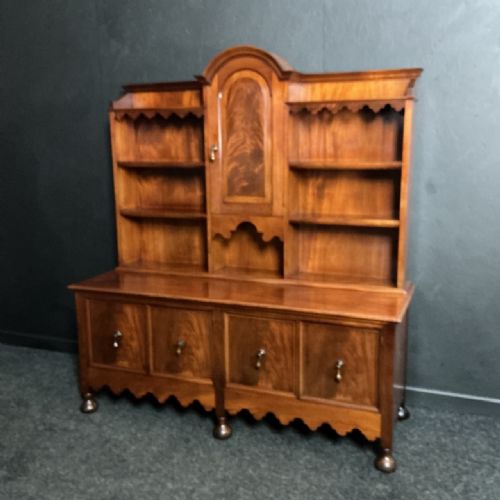
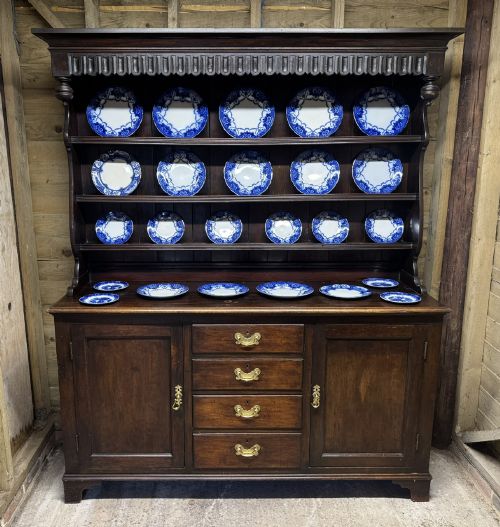
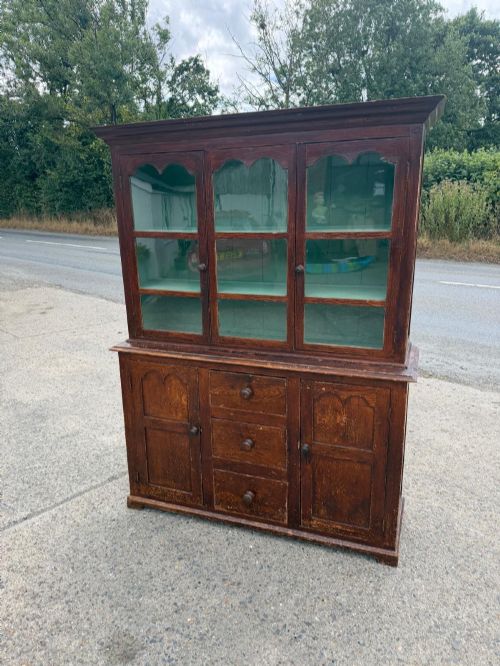
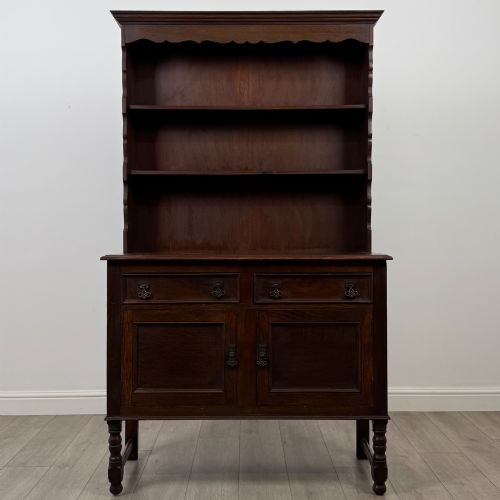


Traditional Kitchen China Cabinet
These traditional kitchen china cabinet pieces are substantial timber storage units designed to display crockery and store provisions, bringing practical farmhouse utility into domestic spaces.
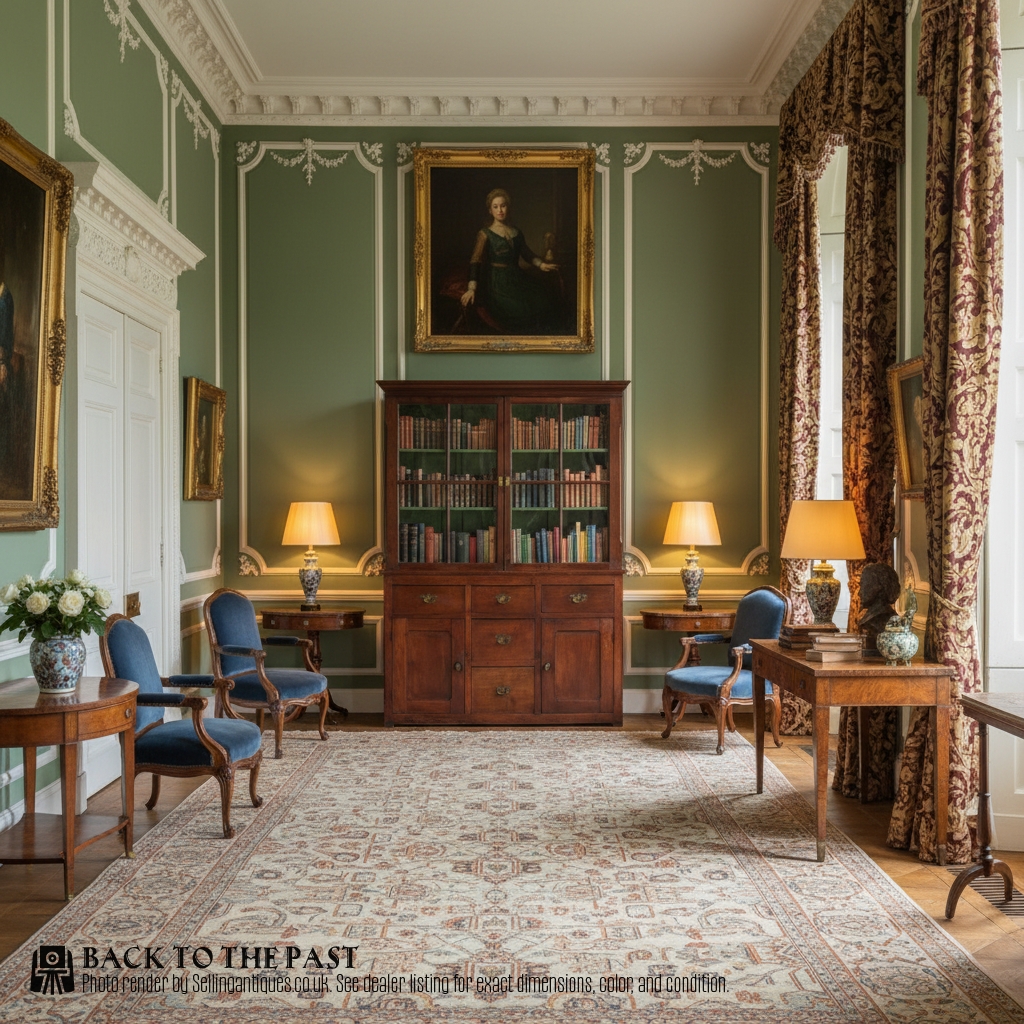
Traditional Kitchen China Cabinet
A traditional kitchen china cabinet typically takes the form of a dresser or a Welsh dresser, combining open plate racks or glazed top cupboards with lower base storage. These units originate from periods spanning the eighteenth, nineteenth, and early twentieth centuries, reflecting domestic life across English and Welsh regions.
Buyers frequently seek these large storage pieces to anchor a kitchen or dining room with authentic period character. They provide both display space for ceramics and enclosed shelving for everyday tableware.
How they were made
Cabinet makers constructed these pieces predominantly using solid timbers such as oak, pine, and flame mahogany, employing traditional joinery techniques suited to heavy domestic furniture. Selected woods were often paired within a single piece, combining structural oak frames with contrasting mahogany details.
Glazing and wire mesh were fitted into the upper cabinet doors to protect and display china, while brass hardware such as hinges and handles secured doors and drawers. Surfaces were finished to highlight the natural grain of the wood, from stripped pine finishes to polished hardwood.
Traditional Kitchen China Cabinet Retail Price Guide 2026
Typical asking prices for traditional kitchen china cabinet among the pieces listed under this phrase on Sellingantiques today, from the lower quarter to the upper quarter. They describe what is for sale here now, not the wider market.
The furniture styles represented range from English country and rustic farmhouse to Edwardian, Victorian, and Jacobean revival forms.
What varies in quality
Quality in these cabinets is determined by the selection of timber and the sophistication of the joinery rather than mere age. Pieces utilising finely figured flame mahogany or dense old-growth oak exhibit a greater visual depth than simpler utility pine versions.
Proportion and architectural detail separate standard regional cupboards from finer workshop productions. The integration of glazed upper racks, panelled lower doors, and original brass fittings indicates a higher grade of cabinet making.
The Traditional Kitchen China Cabinet Glossary
- Welsh dresser
- A traditional kitchen storage unit featuring an open plate rack mounted above a base of drawers and cupboards. These pieces were primarily designed for displaying pottery and storing household provisions.
- Breakfront
- A cabinet design where the central section projects forward from the flanking outer sections. This architectural arrangement creates depth and visual interest on larger furniture forms.
- Flame mahogany
- A decorative wood veneer showing a distinct feather-like flame pattern caused by the intersection of branch growth with the main trunk. Cabinet makers used this timber on prominent surfaces for decorative impact.
- Glazed top
- An upper cabinet section fitted with glass panes to enclose and protect displayed china. This feature distinguishes display cupboards from entirely open plate racks.
- Wire mesh
- Woven metal screening fitted into cabinet doors in place of glass for ventilation. It appears frequently on vernacular kitchen and larder cupboards.
Traditional Kitchen China Cabinet: Frequently Asked Questions
What is a traditional kitchen china cabinet?
A traditional kitchen china cabinet is a large storage furniture piece, commonly known as a dresser, featuring shelving or glazed doors above a base of cupboards and drawers.
These pieces were historically used in domestic kitchens and dining rooms to store and display ceramic tableware while keeping provisions close at hand.
How do I date a wooden dresser?
Dating a wooden dresser involves examining the timber species, construction methods, and overall architectural style of the piece. Earlier eighteenth-century examples often show distinct regional vernacular characteristics, whereas Edwardian and later nineteenth-century pieces display different proportions and machine-assisted joinery.
Hardware styles, timber preparation marks, and secondary woods used in drawer construction also provide reliable clues regarding the period of manufacture.
Where were these dressers made?
These dressers originated primarily across England and Wales, with specific pieces reflecting the distinct regional traditions of areas like the West Country. Local cabinet makers utilised readily available regional timbers such as oak and pine.
Rural workshops produced sturdy cottage furniture, while larger towns saw the creation of more formal breakfront and revival styles.
How do I care for antique timber furniture?
Antique timber furniture requires stable environmental conditions away from direct heat sources and strong sunlight to prevent wood shrinkage and cracking. Regular dusting with a soft, dry cloth preserves the polished surface.
Occasional application of appropriate wax polish helps nourish hardwoods like oak and mahogany without building up heavy residues.