



Traditional Karabagh Runner
These traditional karabagh runner selections bring genuine Caucasian wool weaving into hallways with striking geometric and floral patterns.
Traditional Karabagh Runner
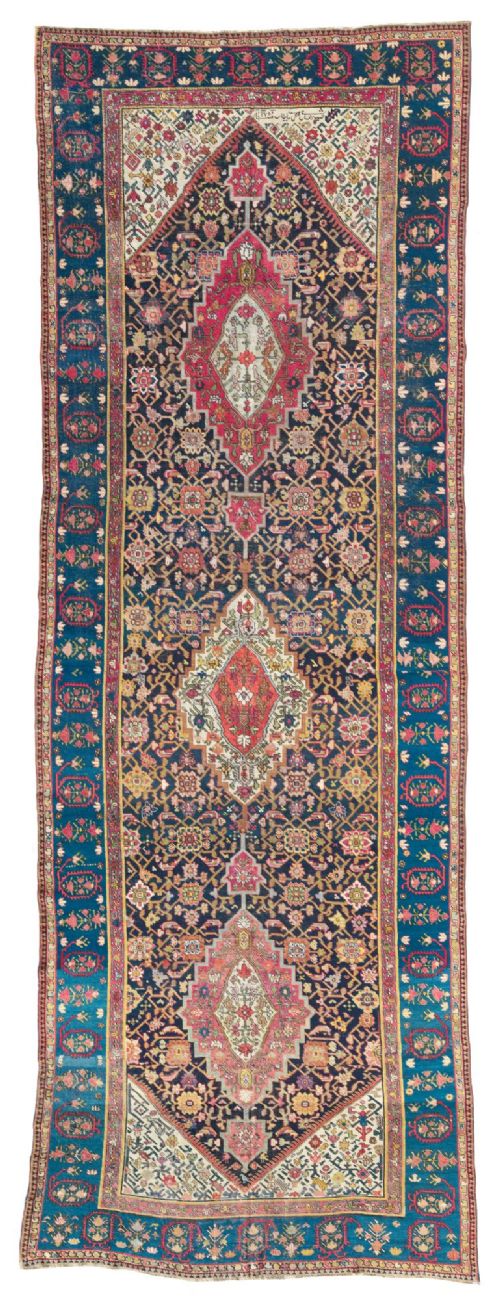
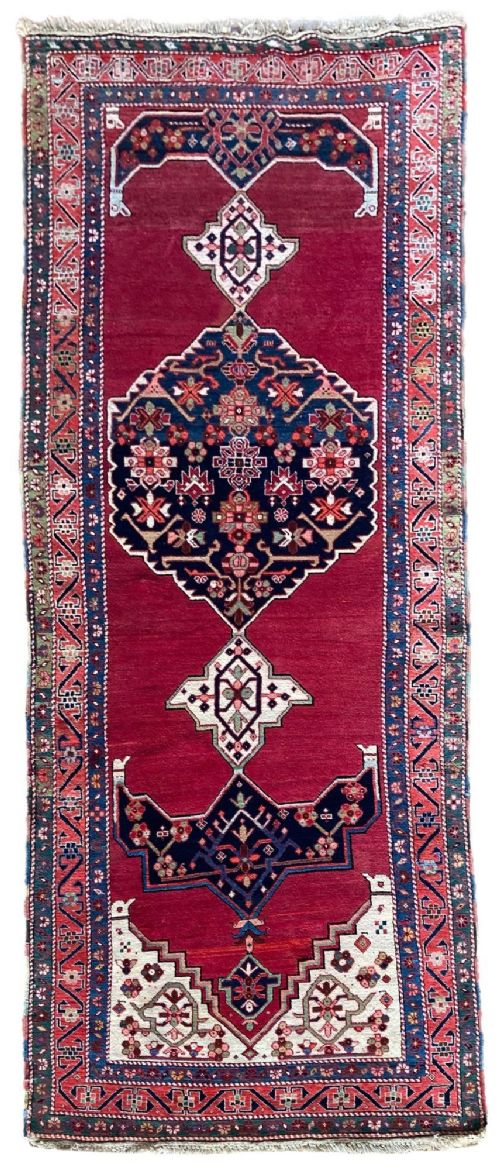
A traditional karabagh runner is a floor covering originating from the Caucasus region, produced in formats suited for hallways and corridors. These textiles appear in various styles including Caucasian Tribal and Caucasian Traditional, often taking the form of long rugs, kelleh pieces, and hallway runners.
The pieces available here date from the mid-nineteenth century through to the early twentieth century, specifically spanning periods such as 1850, 1860, 1890, 1900, 1910, and 1930. Buyers encounter formats like the long rug and the carpet runner alongside standard runner rugs.
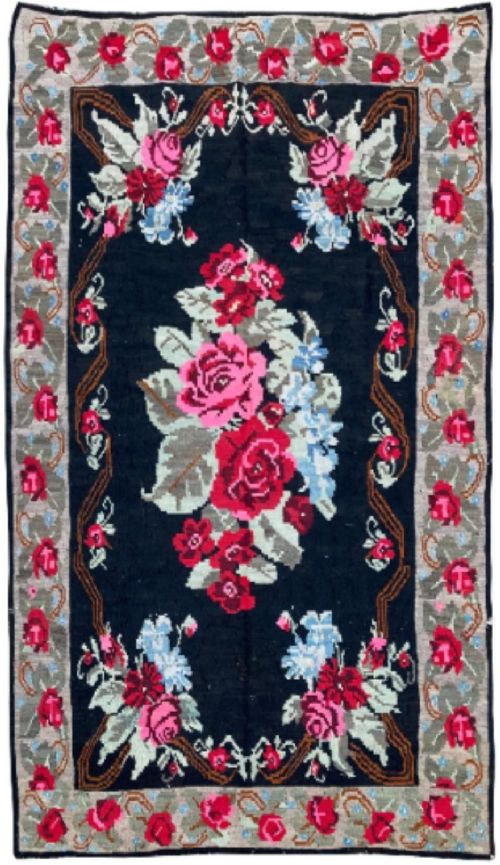
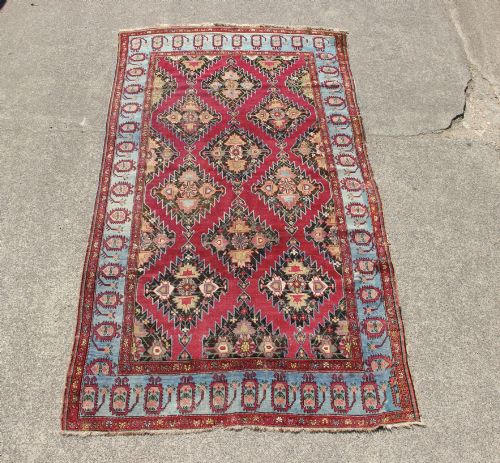
Design vocabulary on these runners encompasses specific regional patterns such as the cloud band design, boteh motifs, French-inspired rose designs, and figural depictions featuring people and animals. Such variety reflects the artistic intersections of the Karabagh region during these decades.
How traditional karabagh runner items were made
Every traditional karabagh runner recorded in the evidence is constructed entirely from wool. Weavers utilised this durable natural material for both the foundation structures and the dense pile.
Production relied on traditional hand-knotting techniques characteristic of Caucasian weaving workshops and nomadic traditions. This method allowed makers to execute intricate geometric layouts and curvilinear floral details with precision.
Traditional Karabagh Runner Retail Price Guide 2026
Typical asking prices for traditional karabagh runner among the pieces listed under this phrase on Sellingantiques today, from the lower quarter to the upper quarter. They describe what is for sale here now, not the wider market.
Some weavers quietly slipped human figures and wandering animals into their traditional geometric borders just to see if anyone was paying attention.
What varies in quality
Quality in a traditional karabagh runner rests upon the clarity of the design work, whether executing a French-inspired rose pattern, a cloud band arrangement, or a pictorial composition of people and animals. Crisp delineation of motifs separates standard weaving from superior examples.
The depth and preservation of the wool pile also dictate the standing of a piece. Tightly packed knots and resilient wool ensure the longevity of the runner under foot traffic in a hallway.
The Traditional Karabagh Runner Glossary
- Karabagh
- A major weaving region in the Caucasus known for producing distinctive carpets and long rugs that blend Persian, Turkish, and European design influences. The style bridges tribal geometry with botanical realism.
- Kelleh
- A large format carpet traditionally longer than it is wide, positioned in larger reception rooms rather than standard corridors. These pieces share the wool construction and regional motifs of smaller runners.
- Boteh
- An almond-shaped or teardrop motif with a curved upper end, frequently seen in traditional textile designs. This ancient symbol represents fertility and life.
- Cloud Band
- A stylized ribbon-like motif originating from Chinese art that appears winding through the field of Caucasian rugs. Weavers incorporated these bands into medallion and runner compositions.
- Kilim
- A flat-woven textile produced without a pile, utilising slit-tapestry weaving techniques. These pieces offer a thinner profile than knotted pile carpets.
Traditional Karabagh Runner: Frequently Asked Questions
Where were they made?
These runners originate from the Karabagh region in the Caucasus, situated at the crossroads of various cultural and artistic traditions.
Local weavers combined indigenous tribal motifs with influences drawn from Persian compositions and French floral aesthetics.
How do I clean my runner?
Maintenance requires gentle vacuuming without a rotating beater bar to protect the wool pile from unnecessary friction.
Professional specialist cleaning is recommended for antique wool textiles to preserve the natural lanolin and dyes.
Can I place it in a hallway?
These formats are specifically suited for corridors, hallways, and narrow spaces due to their elongated dimensions.
Using an appropriate underlay prevents slipping and cushions the wool against hard flooring.
What designs appear on them?
Visual layouts range from geometric tribal patterns and boteh motifs to French-inspired roses and figural scenes with people and animals.
Cloud band designs also occur within the field of specific Caucasian rugs from this region.
How old are these pieces?
The available inventory dates from the mid-nineteenth century through the early decades of the twentieth century.
Specific periods represented include the eighteen-fifties, eighteen-nineties, and nineteen-hundreds up to nineteen-thirty.