
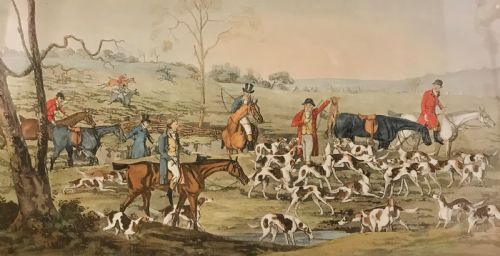


Traditional Hunting Scene Picture
A traditional hunting scene picture captures equestrian pursuits and sporting life across centuries of canvas, paper, and wood.
Traditional Hunting Scene Picture
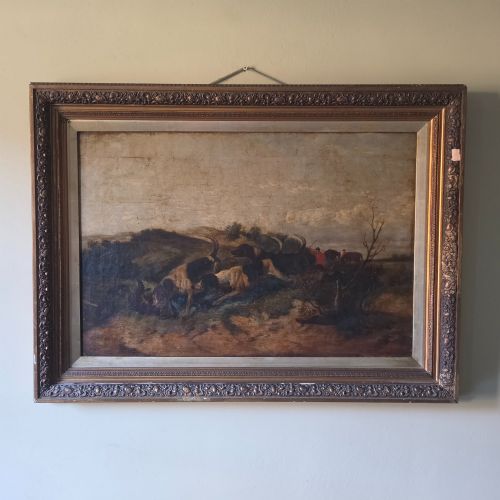
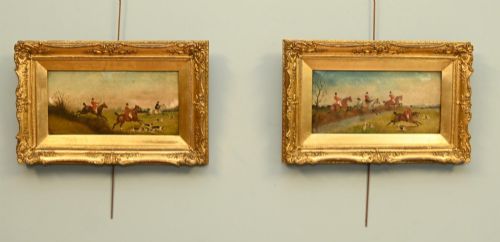
A traditional hunting scene picture depicts hounds, riders, and rural pursuits across various periods, most frequently appearing in nineteenth century oil paintings and watercolours. These works record the gatherings, chases, and countryside landscapes associated with equestrian sport and field sports.
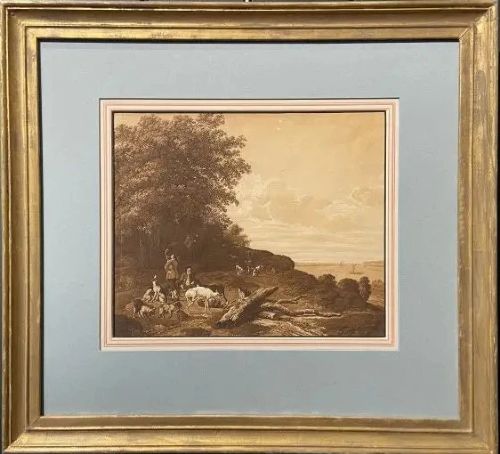
The assortment on this page spans from seventeenth century Dutch works to mid-century sporting art. Buyers encounter framed oil paintings on canvas and wood, alongside hand coloured engravings, lithographs, and pencil drawings.
Subjects range from expansive views of hunts in the field to studies of horses, hounds, and sportsmen in moorland settings. These pieces reflect the enduring popularity of equestrian subjects among Victorian and Edwardian artists.
Materials and techniques
Artists relied primarily on oil paint applied to canvas or wood panels, often building rich textures for horses, coats, and foliage. Watercolours and pencil or chalk drawings on paper offer a lighter alternative, frequently complemented by hand colouring on engravings.
Framing is an integral part of these pieces, utilising gilt wood and gold leaf frames that enhance the depth of the artwork. Lithographs and printed works employ period paper stock and publishing techniques from the nineteenth century.
Materials in these listings include oil on canvas, wood, paper, glass, gilt wood, gold leaf, oil paint, and watercolour.
Distinctions in quality
Quality rests upon the artist's ability to render the anatomy of horses and hounds with anatomical precision and lively movement. Works by established named painters display superior brushwork and compositional balance compared to anonymous studio pieces.
The preservation of the original medium, whether oil on canvas or delicate watercolour on paper, influences the piece. Original gilt wood frames and clear signatures or documentation add considerably to the integrity of the artwork.
Johannes Lingelbach·John Arthur Lomax·Michael Lyne·Charles Faulkner·John Charles Tunnard·John Sanderson Wells·Henri Schouten·Guillaume Urban Regamey·George Goodwin Kilburne·Edgar Hunt·Charles Hunt·Francis Calcroft Turner·Frank Dadd·Samuel John Egbert Jones·Dean Wolstenholme
The Traditional Hunting Scene Picture Glossary
- Lithograph
- A print made from a drawing on limestone or metal plate. This technique allowed for the mass reproduction of popular sporting art in the nineteenth century.
- Gilt wood
- Wood carved and coated with gold leaf or metallic paint. It provides a bright, reflective border commonly found on nineteenth century frames.
- Watercolour
- Pigments bound in a water-soluble binder applied to paper. This medium produces translucent washes favoured by artists depicting outdoor scenes.
- Oil on Canvas
- Pigments mixed with drying oil applied to a stretched woven fabric. It serves as the primary durable medium for large nineteenth century paintings.
- Engraving
- An image incised into a metal plate and printed onto paper. These prints were frequently hand coloured after pressing.
Traditional Hunting Scene Picture: Frequently Asked Questions
What periods do these pictures represent?
The selection spans from seventeenth century Dutch works through Georgian and Victorian periods up to the mid-twentieth century. Most examples date from the nineteenth century.
Victorian and Edwardian sporting art forms the core of the available pieces, reflecting the era's fascination with equestrian pursuits.
How do I care for an antique oil painting?
Keep oil paintings away from direct sunlight and fluctuating humidity to protect the canvas and paint layers. Dust the surface gently with a soft, dry brush.
Avoid using water or chemical cleaners on the paint or the gilt wood frame.
Are these works original or prints?
The listings include both original hand-painted works, such as oil on canvas and watercolours, and period prints. Engravings and lithographs are clearly identified in their titles.
Original paintings feature unique brushwork, while prints utilise ink application methods appropriate to nineteenth century publishing.
What subjects besides fox hunting appear here?
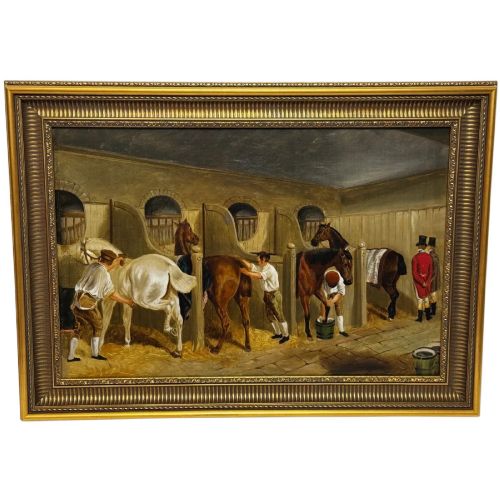
Artists frequently depicted shooting scenes, spaniels and pointers with sportsmen, and stable portraits of individual horses. Domestic animals such as cockerels and chickens also appear.
These varied subjects share a common focus on nineteenth century rural and sporting life.