
Traditional Hall Settle
A traditional hall settle offers sturdy entrance seating with high backs and clever storage, making it both practical and striking.
Traditional Hall Settle
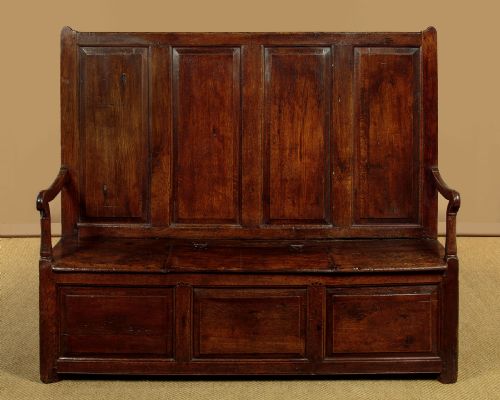
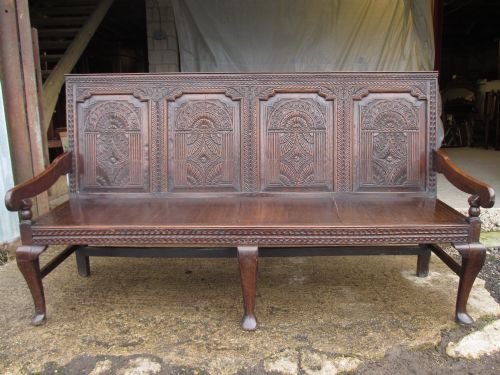
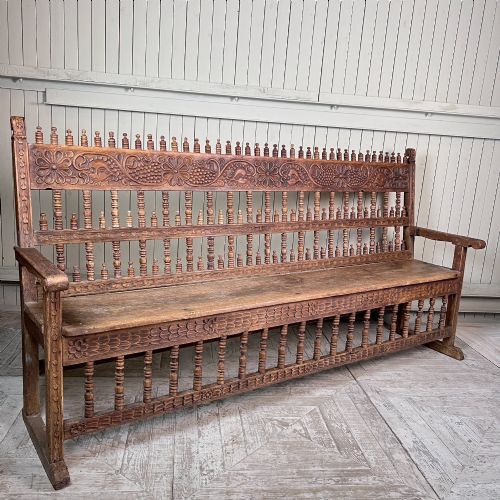
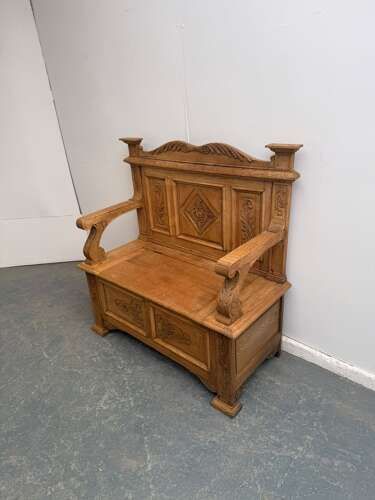
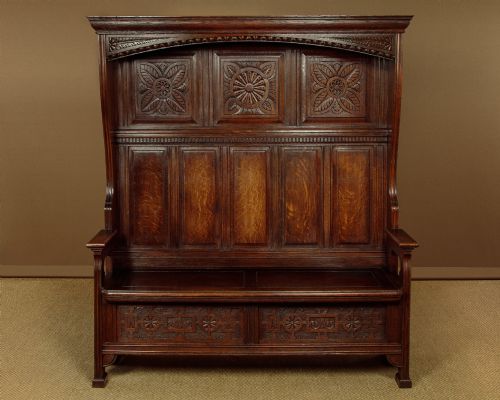
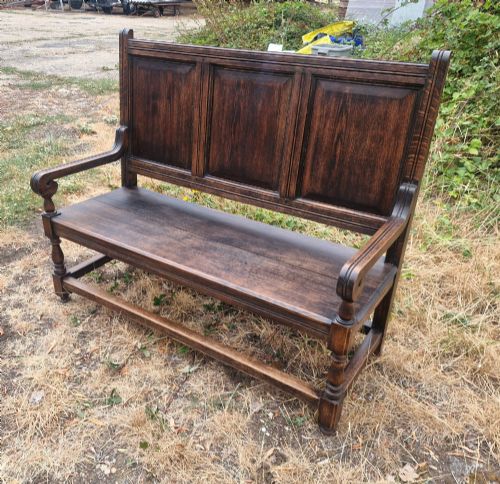
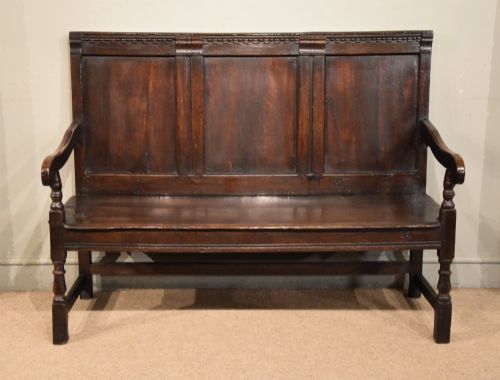
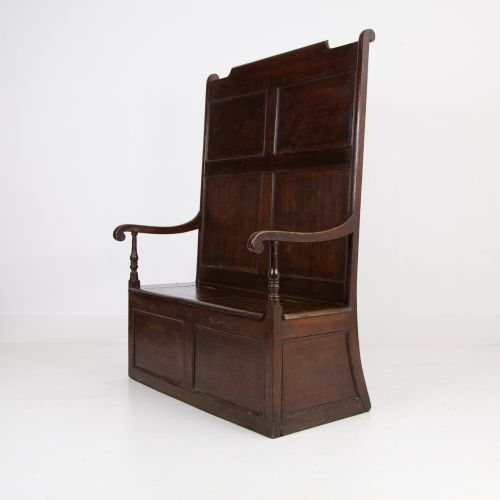
A traditional hall settle is a high-backed wooden bench designed for hallways and entranceways to block cold drafts from doors. These pieces often feature high panelled backs, arms, and enclosed seats that double as storage boxes or lift-up compartments.
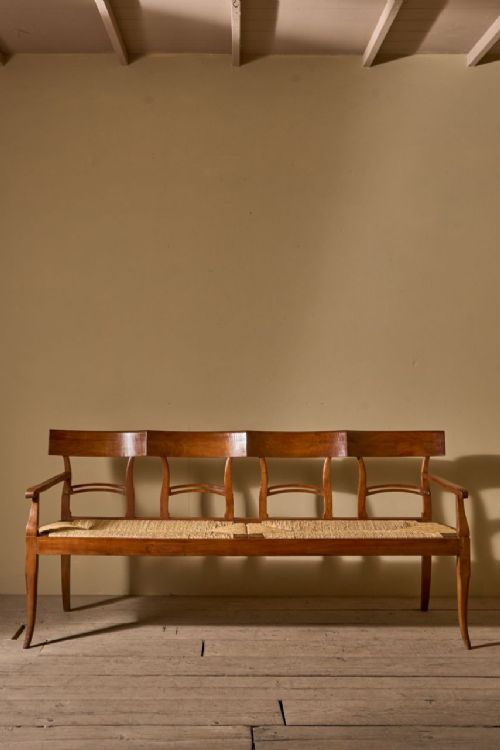
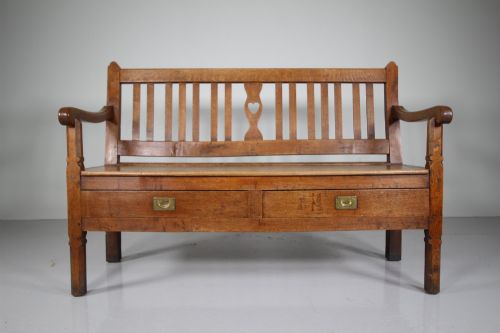
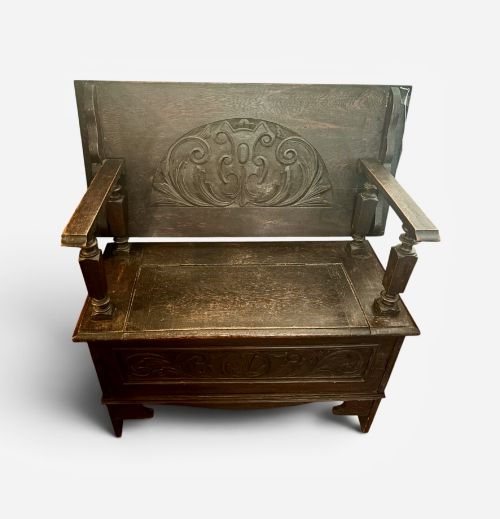
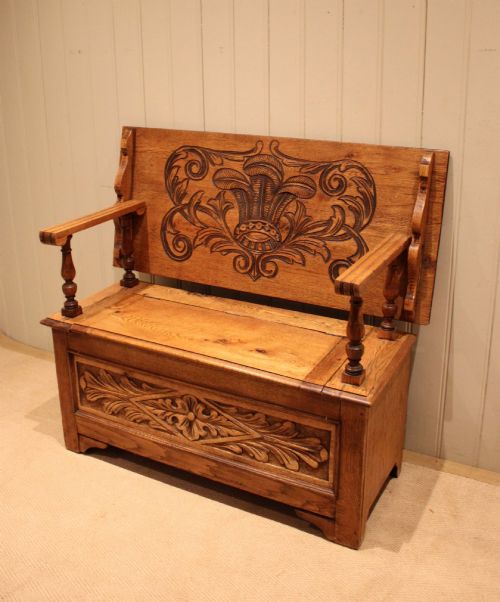
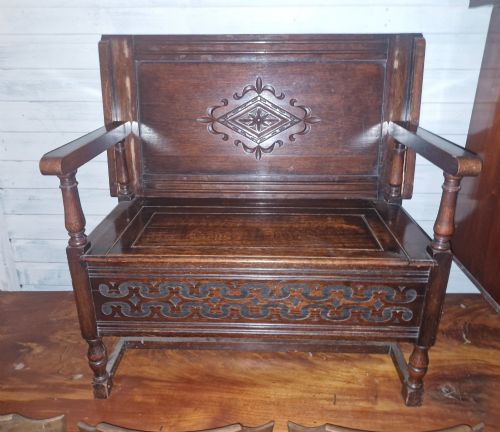
Buyers browsing this selection will encounter various forms, including straightforward benches, box settles with hinged lids, and convertible monk's benches with fold-over tops. Origins span multiple centuries and regions, showing distinct country and regional characteristics.
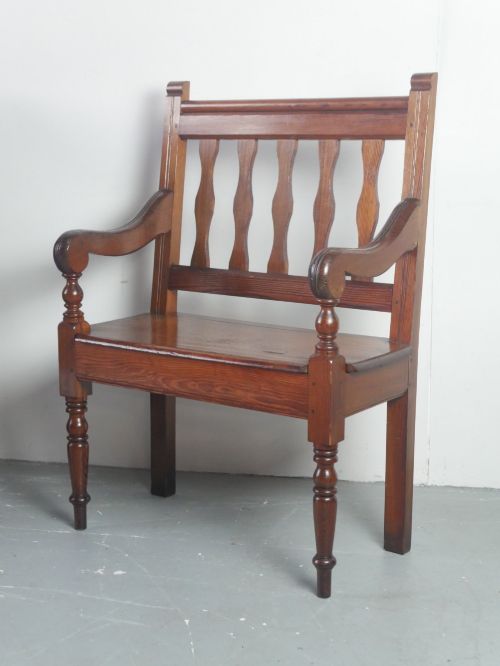
The assortment on this page draws heavily from periods such as the 18th century, Georgian era, and Victorian times. Woods range from native oak and pine to cherrywood, alongside painted finishes and rush seating.
Materials and Construction
Solid timber forms the structural core of these items, with oak and pine appearing most frequently across the inventory. Carpenters utilised sturdy mortise and tenon joints to withstand heavy daily use in busy entrance halls.
Surface treatments vary between plain waxed finishes that highlight natural wood grain and layered painted coats in shades like blue, black, grey, and cream. Additional tactile elements include rush seating, iron hardware, and brass details.
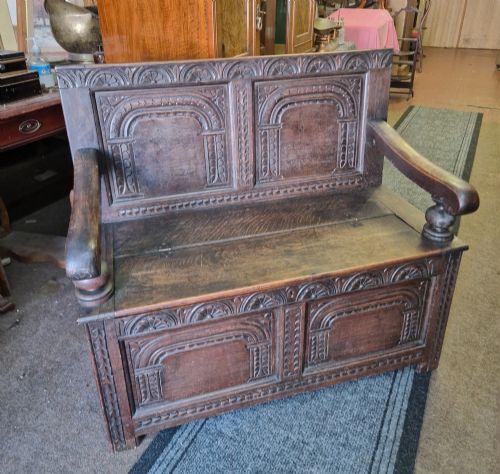
Carved decoration often appears on panelled backs and canopy tops, particularly in Jacobean revival and Victorian pieces. Some examples incorporate clever mechanics, such as fold-over tabletops and lift-up seat storage for boots and tweed.
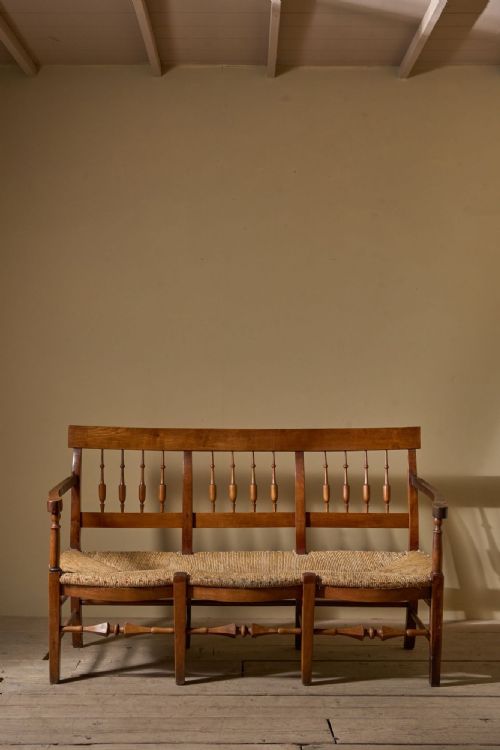
Available forms range from simple rush-seated hall benches to box settles, canopy tops, and convertible monk's benches.
Evaluating Quality and Craftsmanship
Quality rests primarily in the integrity of the timber and the original state of the construction. Superior examples retain their early or original surfaces, whether waxed oak or historic painted finishes, rather than later stripping or repainting.
Structural soundness dictates everyday usability, meaning tight joints, intact storage lids, and stable legs distinguish better specimens. The crispness of hand-carved panels and the retention of original hardware also separate standard items from finer works.
The Traditional Hall Settle Glossary
- Box settle
- A bench featuring an enclosed compartment beneath the seat accessed via a lift-up lid. This design provided secure storage for household goods and winter garments.
- Monk's bench
- A versatile convertible form equipped with a hinged back that folds down flat to transform the seat into a table. These pieces saved space in smaller historic dwellings.
- Canopy top
- An overhead wooden hood attached to the upper back of a settle. This architectural feature trapped heat from hearth fires and blocked incoming draughts.
- Rush seat
- A seating surface woven from dried marsh plants, commonly found on lighter hall benches. It offers a pliable and textured alternative to solid wood planks.
- Ladderback
- A chair or bench back constructed with horizontal wooden slats resembling the rungs of a ladder. This style is frequently paired with rush seating in country furniture.
Traditional Hall Settle: Frequently Asked Questions
What is a traditional hall settle used for?
A traditional hall settle serves as a functional seating option for entryways and corridors. Historically, the high back shielded occupants from cold draughts near front doors.
Modern homes utilise them as striking entrance furniture that offers discreet storage space for shoes, boots, and outdoor accessories.
Where should I place a settle in my home?
These benches fit naturally in hallways, entrance lobbies, and boot rooms where practical seating and storage prove useful. Their high backs also make them suitable for defining zones in larger open-plan living spaces.
Placing one against a hallway wall provides a convenient spot to remove footwear upon entering the house.
What maintenance do wooden settles require?
Waxed wooden surfaces benefit from occasional applications of natural beeswax to nourish the timber and maintain a soft sheen. Painted finishes require gentle dusting and protection from excessive moisture.
Keeping pieces away from direct heat sources prevents the timber from drying out or splitting over time.