


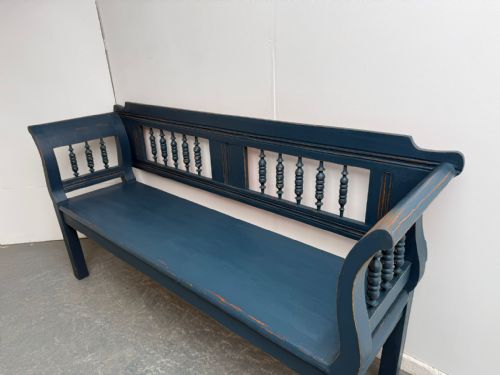


Traditional Hall Bench Chair
A traditional hall bench chair offers practical seating and storage in an entryway, combining historic woodwork with daily utility.
Traditional Hall Bench Chair
A traditional hall bench chair provides a practical entryway seat often incorporating hidden storage beneath the lift-up lid or seat. These items span various periods including the nineteenth century and the early twentieth century.
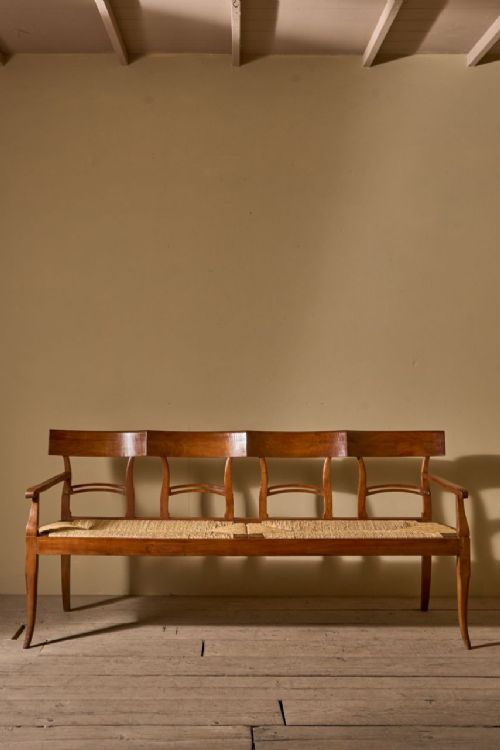
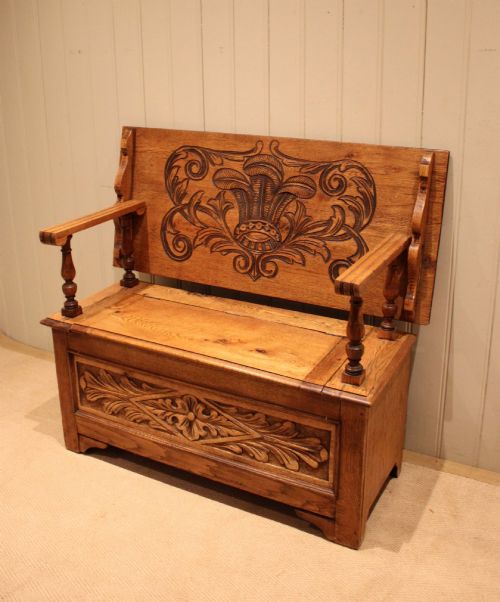
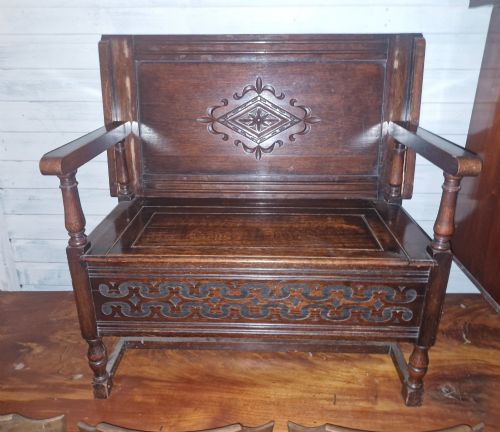
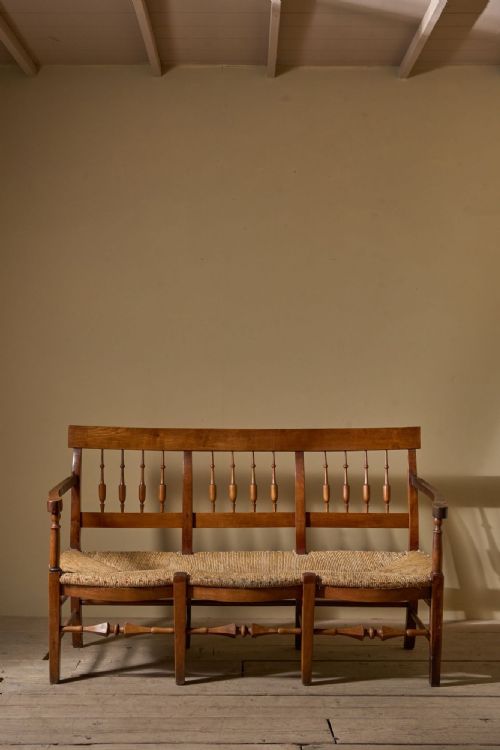
The selections on this page include solid oak monks benches, painted pine Hungarian settles, and mahogany hall chairs. Many pieces reflect revival styles such as Jacobean Revival and Hepplewhite alongside regional European and Chinese designs.
What varies in quality
The standard of timber selection and depth of carving distinguish baseline utility seating from finer examples. Heavier oak construction and sophisticated geometric or figurative carving indicate superior workshop production.
Proportion and scale dictate the visual success of each piece, particularly in convertible monks benches that transform into tables. Original painted surfaces and untouched patination on older timbers carry higher regard among collectors.
Some monks benches double as tables so your hat has a flat surface the moment you take it off.
Richard Bridgens
The Traditional Hall Bench Chair Glossary
- Monks bench
- A multifunctional seat with a hinged back that folds down to form a table. This convertible design proved popular in compact domestic spaces.
- Settle
- A wooden wooden bench featuring a high back and solid arms to block drafts. Settles frequently incorporate box storage beneath the seat.
- Ladderback
- A chair or settle back constructed with horizontal slats resembling the rungs of a ladder. This traditional joinery style appears on various nineteenth-century seating.
- Rush seating
- Woven marsh grass utilised for chair and bench seats. This flexible natural material provides a resilient surface for daily sitting.
- Shield back
- A chair or settee back shaped in the outline of a heraldic shield. This elegant form is characteristic of eighteenth-century and revival-style mahogany seating.
Traditional Hall Bench Chair: Frequently Asked Questions
How do I use a hall bench today?
A traditional hall bench chair fits naturally into an entryway or boot room to provide a sturdy place to sit while managing outdoor wear. The enclosed storage beneath lift-up seats hides away shoes, scarves, and bags.
Smaller models also function effectively in bedrooms as window seats or at the foot of a bed, offering accessible storage for extra linens.
How do I identify a Victorian hall bench?
Victorian hall benches often display dark oak or mahogany timbers with substantial carved panels, linenfold details, or architectural mouldings. Pieces from this era frequently embrace revival aesthetics like the Jacobean style.
Painted pine examples from Hungarian folk traditions also date to this broad period, offering a contrasting aesthetic with bright or muted painted finishes.
Are these benches comfortable for sitting?
Most traditional hall bench chairs are built from solid timber with wooden or rush seats designed for brief seating rather than lounging. Their upright backs and sturdy construction prioritise posture and durability over plush comfort.
Adding a loose squab cushion or textile pad provides extra softness while preserving the historic appearance of the wooden frame.