
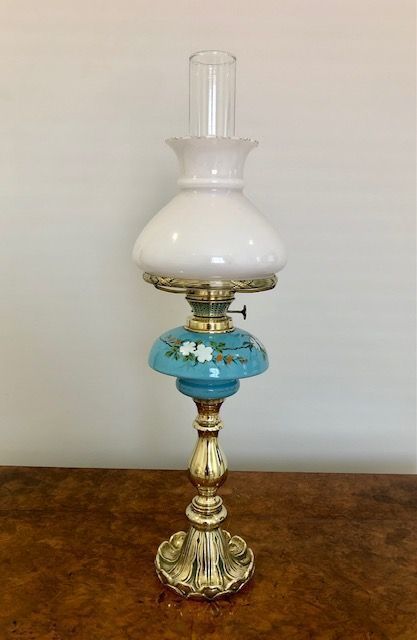

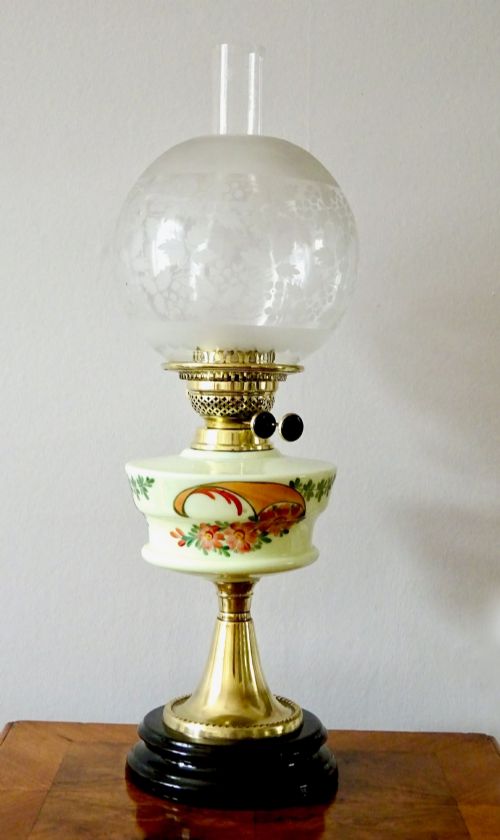


Traditional Glass Oil Burner
These traditional glass oil burner lamps bring genuine period illumination and Victorian character to any room.
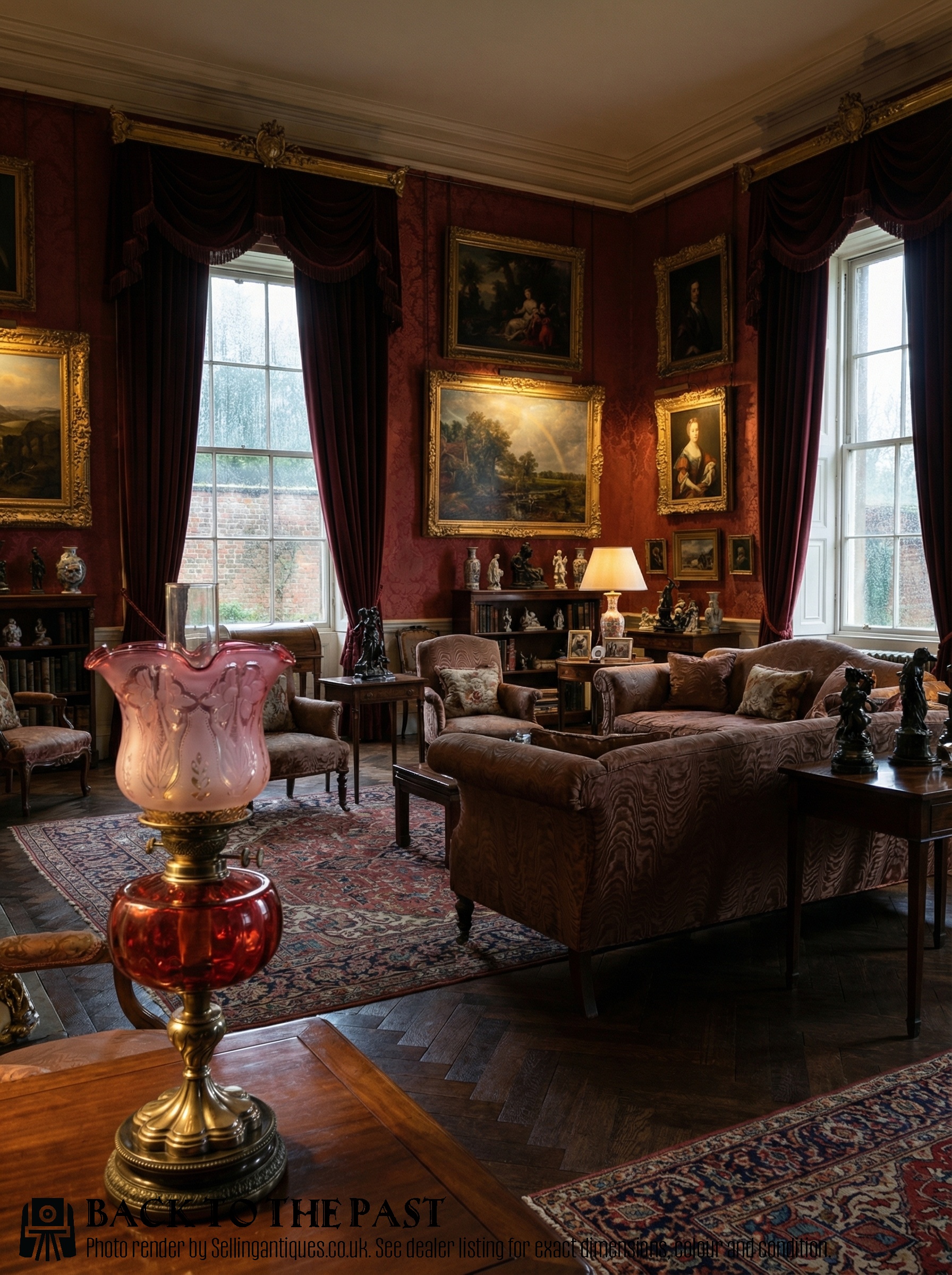
Traditional Glass Oil Burner
A traditional glass oil burner primarily takes the form of an oil lamp, designed to burn paraffin or lamp oil for domestic lighting during the nineteenth and early twentieth centuries. These functional items combine a heavy metal base with a glass font or shade, merging utility with decorative appeal.
Makers and retailers such as Young's, Messengers, and Harrods produced these dependable lighting items for British homes. Buyers typically select these pieces for their combination of warm metallic columns and coloured glass elements.
How they were made
Brass and copper form the sturdy structural columns and bases of these lamps, providing a stable foundation to support the fuel reservoir above. Manufacturers often mounted these metal stems upon ebonised wood or heavier stepped platforms to ensure stability.
The upper sections utilise glass in various forms, including cut glass, opaline glass, and cranberry glass for the fonts and shades. Etched glass tulip shades and frosted bowls were frequently paired with brass burners to diffuse the light effectively.
Listings feature brass and copper alongside cranberry, opaline, and cut glass across Victorian and Edwardian periods.
What varies in quality
Quality separates simple utility lamps from elaborate parlour pieces through the selection and treatment of materials. Heavier brass castings, Corinthian column details, and deeply etched glass shades indicate a higher grade of manufacture intended for prominent reception rooms.
The choice of font glass also determines the desirability of the piece, with richly coloured cranberry glass or intricate cut glass commanding greater attention than plain clear vessels. Finer examples retain their original matching shades and signed burner mechanisms.
Young's·Messengers·Harrods
The Traditional Glass Oil Burner Glossary
- Duplex
- A type of twin-wick burner mechanism designed to produce a brighter flame than single-wick alternatives. This system required a wider gallery and specific shade fitting.
- Font
- The oil reservoir of the lamp, commonly fashioned from coloured, opaline, or cut glass. It holds the paraffin or oil safely beneath the burner.
- Opaline glass
- An opaque or translucent pale glass used extensively for lamp shades during the Victorian period. It softens the light emitted from the burner.
- Cranberry glass
- A rich red glass created by adding gold chloride to the molten batch. It appears frequently in the fonts of finer Victorian lamps.
Traditional Glass Oil Burner: Frequently Asked Questions
How do I date a traditional glass oil burner?
Dating relies upon examining the materials, burner mechanisms, and stylistic clues present in the metalwork and glass. Victorian pieces often feature heavy brass Corinthian columns, whilst Edwardian examples lean towards simpler forms.
Maker marks stamped onto the brass burner knobs provide a more precise indication of production dates. Comparing the font glass style and shade etching helps narrow the decade further.
Were these lamps used for lighting or heating?
These pieces served primarily as domestic lighting devices before widespread household electricity. They burned paraffin or lamp oil to provide illumination in Victorian and Edwardian rooms.
While they generate some heat through the flame, their main purpose was functional lighting. Today they serve as decorative interior items rather than active light sources.
How do I clean the glass shade safely?
Cleaning requires warm water and mild soap, avoiding harsh abrasives that might damage etched patterns or coloured finishes. Removable shades should be taken off the brass gallery before washing.
Care must be taken with antique glass, particularly around delicate top rims and decorated surfaces. Drying thoroughly with a soft cloth prevents water spots on clear or opaline glass.
Can I still burn oil in these lamps?
Most collectors choose to display these items unlit as decorative objects rather than functional burners. Using them requires checking the integrity of the glass font and ensuring the burner mechanism functions correctly.
Modern safety standards mean many buyers prefer to keep them dry. If utilised, appropriate lamp oil and fresh wicks are essential for safe operation.