

Traditional Genre Scene Artwork
Traditional genre scene artwork captures everyday human moments in oil paint, watercolour, and print, bringing Victorian and nineteenth-century domestic life directly onto the wall.
Traditional Genre Scene Artwork
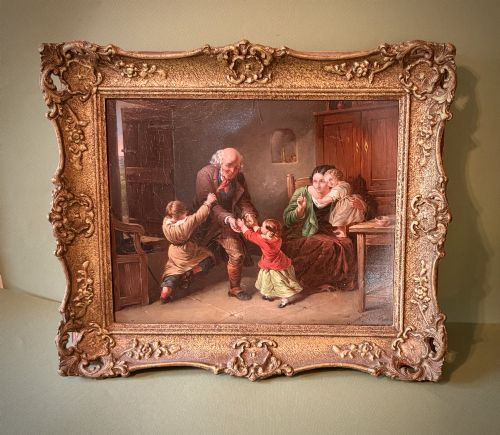
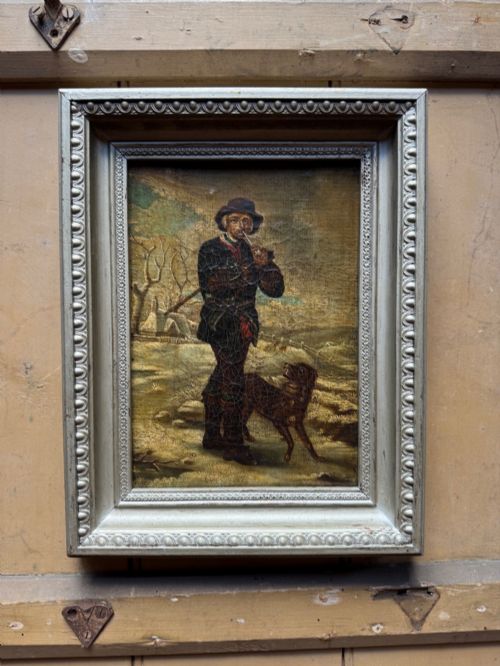
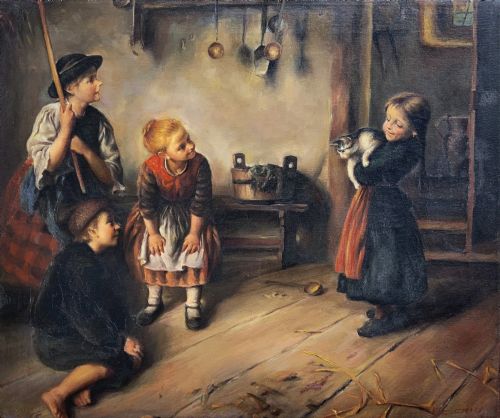
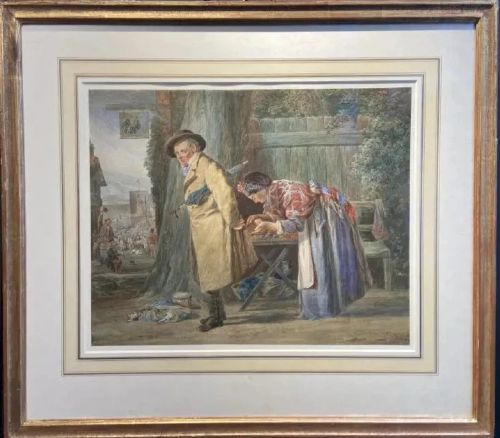
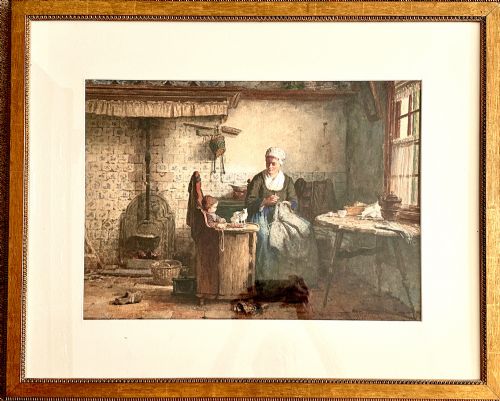
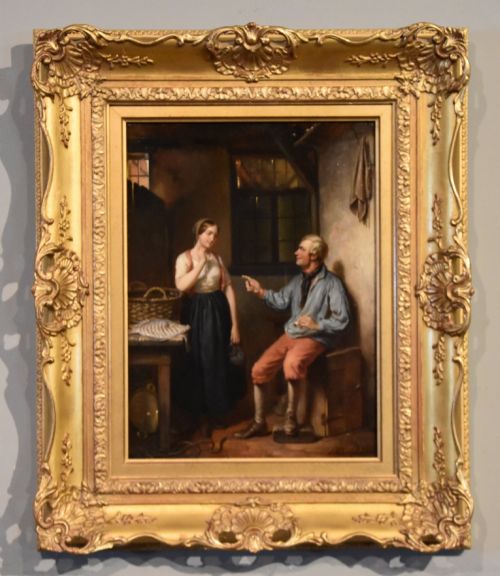
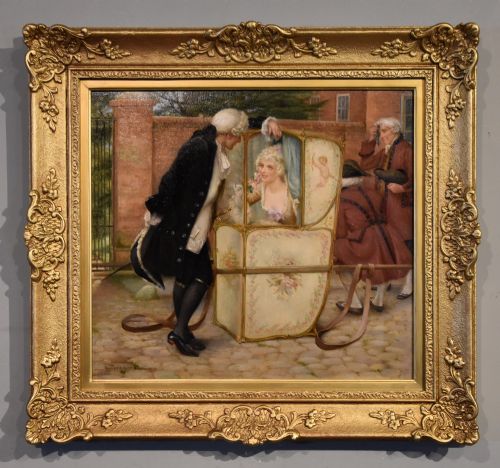
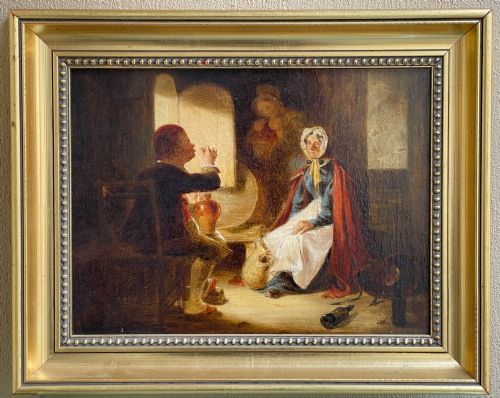
Traditional genre scene artwork depicts ordinary people engaged in daily activities, from cottage interiors and tavern gatherings to street sellers and children playing. These pieces record human stories across the nineteenth century, including Victorian works and Edwardian compositions.
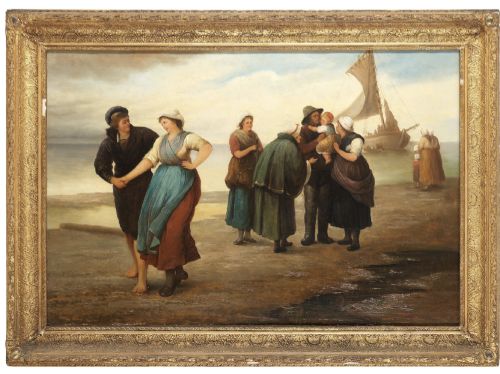
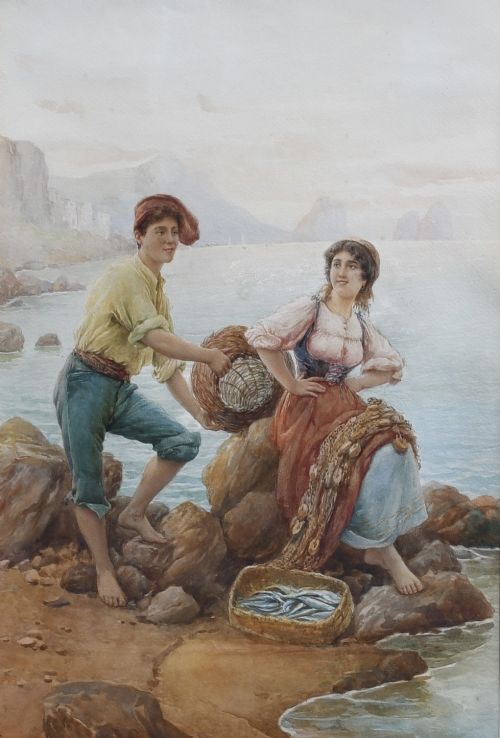
Buyers encounter oil paintings on canvas and board alongside watercolours and framed prints. Scenes range from British and French village life to Dutch-inspired interiors and Italian coastal views.
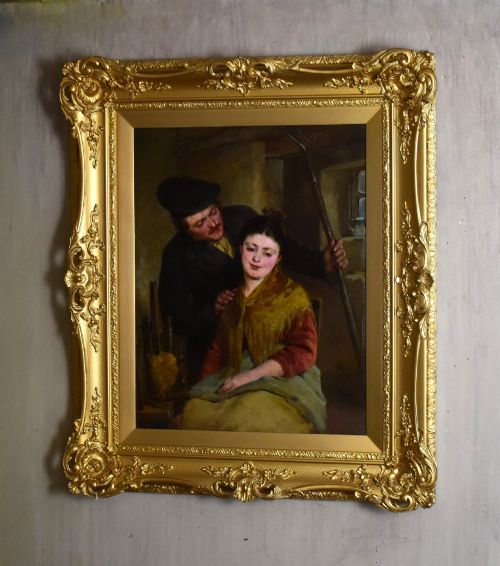
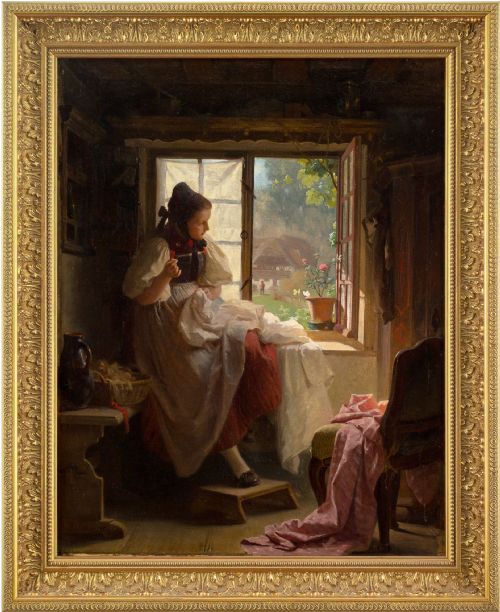
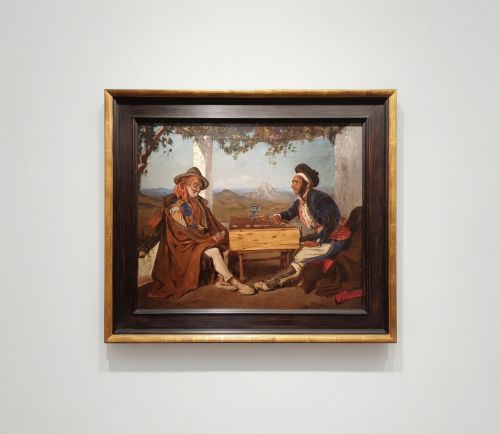
Domestic settings, card players, blacksmiths, and market scenes form the core subjects of these pieces. Figures appear in intimate domestic rooms or bustling rural landscapes, painted by named artists and regional schools alike.
How they were made
Artists applied oil paint and watercolour onto stretched canvas, wooden panels, and heavy paper supports. Canvas pieces often retain their original texture beneath layers of pigment and varnish.
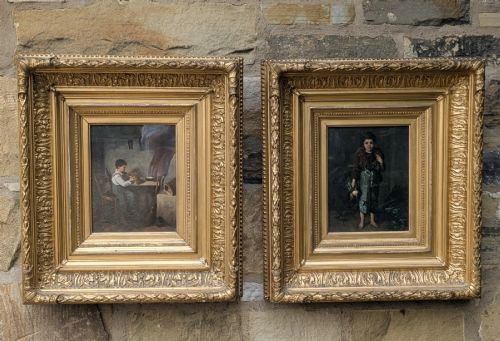
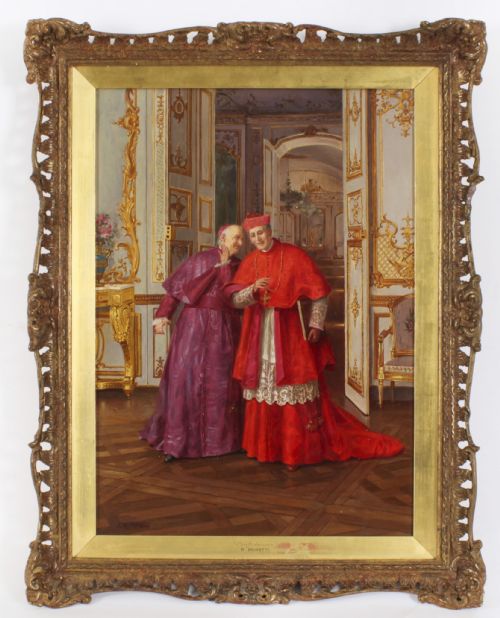
Many works sit within period gilt wood and gesso frames embellished with gold leaf. These frames provide structural housing and reflect the aesthetic standards of the Victorian era.
Several canvases record everyday Victorian pastimes, including children playing by cottages and gentlemen enjoying games of bowls.
What varies in quality
The sophistication of brushwork and the handling of light separate standard decorative examples from masterworks. Nuanced facial expressions, detailed interior props, and convincing fabric textures elevate an artist's output.
The integrity of the original support surface and the preservation of the paint layer dictate the condition of a piece. Intact original gilt frames add considerable integrity to the artwork they enclose.
Howard Helmick·Max Kaltenmoser·Hendrik Valkenberg·Carlo Ferranti·Renato Moretti·Jacob Akkersdijk·Delapoer Downing·Miles Birkett Foster·Harry Brooker·Alexander Rosell·David Teniers·John Arthur Lomax·Haynes King·John Sanderson Wells·Thomas G Appleton·James Kyd·James Hardy Junior·Arthur Longley Vernon·Edward Brice Stanley Montefiore·Frank Moss Bennett·Heywood Hardy·David Woodlock·Ludolf de Jongh·Charles H Poingdestre
The Traditional Genre Scene Artwork Glossary
- Genre painting
- Artwork depicting scenes from everyday life, involving ordinary people in domestic or public settings. This category avoids historical, mythological, or purely landscape subjects.
- Oil on canvas
- Pigment suspended in a drying oil applied to a woven fabric stretched across a wooden frame. This medium allowed artists to build rich textures and deep colour gradations.
- Gesso
- A paint mixture consisting of a neutral binder mixed with chalk, gypsum, and pigment. Craftsmen applied this substance to wooden frames before gilding them with gold leaf.
- Mezzotint
- A printmaking process of the drypoint method allowing halftone gradients and subtle tonal variations. Artisans scraped and burnished the copper plate to produce velvety darks and luminous highlights.
Traditional Genre Scene Artwork: Frequently Asked Questions
What subjects appear in these genre scenes?
These artworks focus on human activities such as children playing, card players, street sellers, and cottage interiors. Scenes range from quiet domestic moments to bustling village gatherings.
Artists drew inspiration from British, French, Dutch, and Italian rural and urban life. Every piece records a specific slice of nineteenth-century society at work or rest.
How do I care for an oil painting?
Keep oil paintings away from direct sunlight and steady humidity fluctuations to protect the canvas and pigment. Dust the surface gently with a soft, dry brush without applying pressure.
Avoid hanging pieces near active heat sources which can dry out the wood panel or canvas stretcher. Professional conservators should handle any cleaning or varnish removal.
Are these works signed by the artist?
Many of the oil paintings and watercolours bear the artist's signature or monogram within the composition. Some pieces remain attributed to specific schools or follow historical masters.
Signatures help establish the authorship and date of the work, connecting individual pieces to recorded Victorian painters.
What framing comes with these artworks?
Pieces frequently arrive in period gilt wood frames ornamented with gesso moulding. These frames often show the original gilding applied during the nineteenth century.
The combination of the painting and its historic frame preserves the complete presentation intended by the Victorian maker.