





19th Century Tavern Art
These 19th century tavern art pieces capture spirited social gatherings and rustic interiors to bring authentic period character into your room.
19th Century Tavern Art
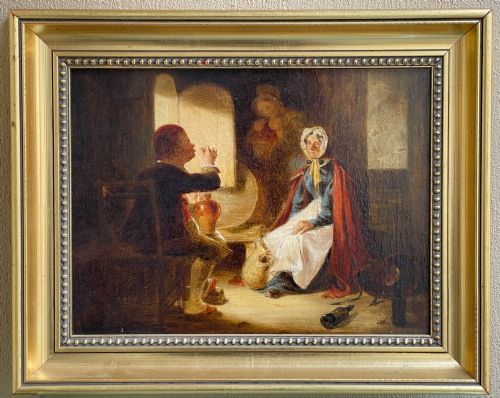
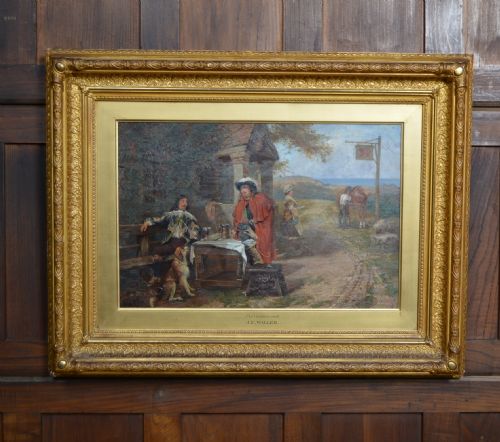
When you search for 19th century tavern art, you encounter oil paintings, watercolours, and ink drawings that depict public houses, cards players, and rural life. These works span the Victorian era, bringing social scenes and interior moments from the nineteenth century directly to the wall.
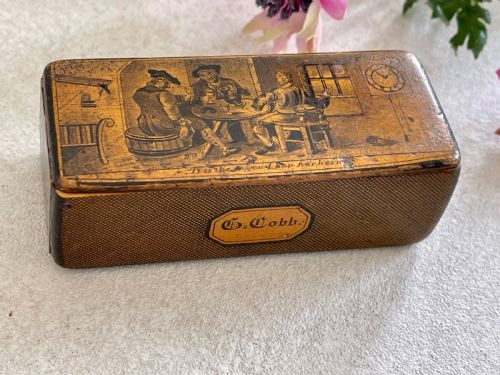
The objects combine narrative oil paintings with related items like dining tables and snuff boxes from the same period. Each piece preserves a slice of nineteenth-century social history through depictions of everyday indoor and outdoor village life.
How they were made
Artists painted these scenes using oil on canvas, applying pigment to capture the warm, shadowed light of nineteenth-century interiors. Others employed watercolour or pen and ink on paper to render finer details in portraits and narrative illustrations.
Makers shaped wooden snuff boxes using careful pen work and decorated larger items with gesso and gold leaf frames. These traditional materials define the physical presence of the paintings and decorative objects found here.
Materials appearing across these items span canvas, gesso, gold leaf, and various woods used in frames and furniture.
What varies in quality
The skill of the brushwork and the expressiveness of the figures separate standard decorative works from accomplished genre paintings. Master painters capture gesture, atmosphere, and light with precision, whereas lesser works rely on stiff poses and flat surfaces.
The preservation of the original canvas, oil pigments, and period frames influences the integrity of each piece. Intricate pen work on smaller items like snuff boxes displays a level of craftsmanship that distinguishes finer studio output from ordinary production.
Johann Hamza·G Cobb·Hermann Armin Kern·Robert Richard Scanlan·J. E. Waller·Francesco Bergamini·John Holland Snr·Frank Dadd
The 19th Century Tavern Art Glossary
- Genre painting
- A style of art that depicts aspects of everyday life by portraying ordinary people in work or recreation settings. These scenes often take place in village taverns or domestic interiors.
- Gesso
- A plaster-like mixture applied to wood or canvas as a base for painting or gilding. It provides a smooth surface for ornate frame mouldings.
- Giltwood
- Wood that has been coated with a thin layer of gold leaf. It is commonly found on the antique frames surrounding nineteenth-century canvases.
- Pen work
- A detailed decorative technique using ink on small objects such as snuff boxes. It creates fine linear designs and miniature portraits.
- Watercolour
- A painting method where the pigments are suspended in a water-based solution. Artists use this medium on paper for delicate illustrations and studies.
19th Century Tavern Art: Frequently Asked Questions
What is 19th century tavern art?
These works are paintings, drawings, and decorative objects that depict social scenes, public houses, and daily life from the nineteenth century. They include oil paintings of card players, village tavern landscapes, and framed watercolours.
Created across the Victorian period, these pieces reflect the artistic interest in genre realism and storytelling through visual art.
How were these paintings displayed originally?
Nineteenth-century genre paintings typically hung in domestic reception rooms and parlours where guests gathered. Their narrative subjects provided lively conversation topics for visitors.
Today, they serve a similar purpose in living spaces, offering warmth and character through traditional oil and watercolour mediums.
How do I identify a Victorian genre painting?
Victorian genre paintings usually feature human figures engaged in everyday activities, such as smoking, playing cards, or dining. Look for interior lighting effects and expressive character studies.
Signatures, dates, and canvas stamps often help attribute the work to specific artists or regional schools of the nineteenth century.
Can I mix these paintings with modern decor?
These traditional artworks pair well with contemporary interiors by adding historical depth and rich colour palettes. The dark tones of nineteenth-century oil paintings anchor minimalist or bright spaces.
Framed in period wood or gilt frames, they introduce texture and narrative interest to any room.