






Traditional French Bedstead
A traditional french bedstead brings the sculptural presence of walnut, brass, and carved timber directly into a bedroom.
Traditional French Bedstead
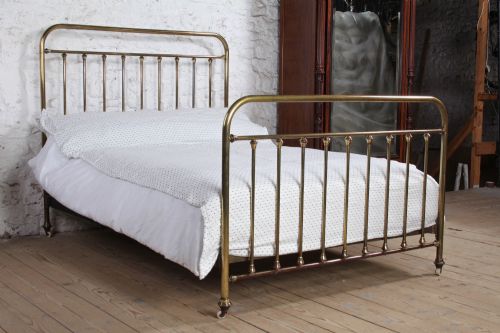
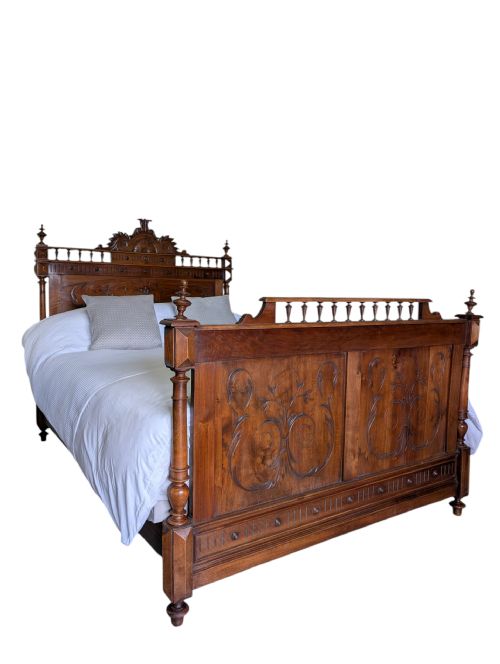
A traditional french bedstead covers substantial timber and metal sleeping frames originating from periods spanning the nineteenth century through the early decades of the twentieth century. Buyers seeking this style encounter diverse forms ranging from robust walnut king-size frames to detailed brass constructions and wrought iron designs.
The selection includes specific configurations such as double beds, single beds, and larger emperor sizes reflecting French provincial, chateau, and neoclassical aesthetics. Common stylistic variations incorporate curved headboards, hoop details, and carved woodwork typical of historical European cabinetmaking.
Many examples utilise rich timbers like mahogany, burr walnut, and oak alongside contrasting black or polished metal components. These pieces serve as focal points in period bedrooms, combining historical character with functional proportions.
Materials and Construction Methods
Construction relies heavily on solid hardwoods including walnut, oak, and mahogany, often enhanced by decorative burr veneers and fruitwood details. Joinery techniques from the Victorian and Edwardian eras involve traditional framing methods designed to support substantial mattresses.
Metal frames incorporate cast iron, wrought iron, and polished brass tubes, frequently detailed with distinct cast junctions and hoop motifs. Painted finishes and applied surface treatments provide the characteristic decorative appearance seen on many period examples.
Several beds feature integrated hoop details on brass tubing, offering a delightfully whimsical touch to otherwise formal sleeping quarters.
Factors That Determine Quality
Quality in a traditional french bedstead rests upon the depth of the timber carving, the substance of the brass or iron casting, and the overall balance of the proportions. Superior pieces display crisp detailing on wooden mouldings and robust structural connections that ensure long-term stability.
The selection of cabinet timbers also dictates value, with figured walnut, burr mahogany, and heavy gauge brass standing apart from simpler painted or plain iron variations. Integrity of original surfaces and harmonious scale further distinguish finer examples.
The Traditional French Bedstead Glossary
- Bedstead
- The framework of a bed consisting of headboard, footboard, and rails. It supports the mattress and forms the primary decorative structure.
- Burr Walnut
- A specialised wood grain figure obtained from the burl growths of walnut trees. It provides a highly decorative and patterned surface on panelled headboards.
- Neoclassical
- A style drawing inspiration from classical antiquity. It emphasises clean lines, symmetry, and restrained classical ornamentation.
Traditional French Bedstead: Frequently Asked Questions
What sizes do these beds come in?
These frames appear in single, double, king, super king, and emperor proportions. The actual dimensions often require careful measurement to accommodate standard modern mattresses.
Historical sizing conventions differ slightly from current standards, meaning some platforms require bespoke or adjusted base supports.
How do I assemble an antique bedstead?
Most frames use traditional side rail hooks or bolts that lock into the headboard and footboard posts. Proper assembly requires a square floor space and careful tightening of visible metal or wooden fasteners.
Checking the diagonal alignment ensures the frame remains square before placing any weight inside.
Are these beds compatible with modern mattresses?
Many examples accommodate modern mattress dimensions when paired with a suitable slatted base or platform insert. Some listings include the necessary base system to simplify setup.
Internal rail dimensions should be verified against the intended mattress width and length prior to purchase.
How do I care for the wood and metal?
Wooden surfaces benefit from periodic waxing with traditional beeswax to nourish the timber grain and maintain a natural sheen. Metal components, particularly brass and iron, require gentle dusting and occasional cleaning with non-abrasive cloths.
Avoiding excessive moisture and direct sunlight preserves the original finishes over decades of daily use.