


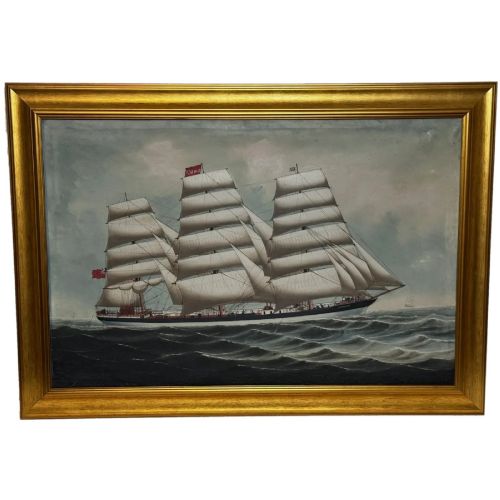
Traditional Framed Landscape
A traditional framed landscape brings the country or coast indoors, offering an enduring window into past vistas through skilled brushwork and period frames.
Traditional Framed Landscape
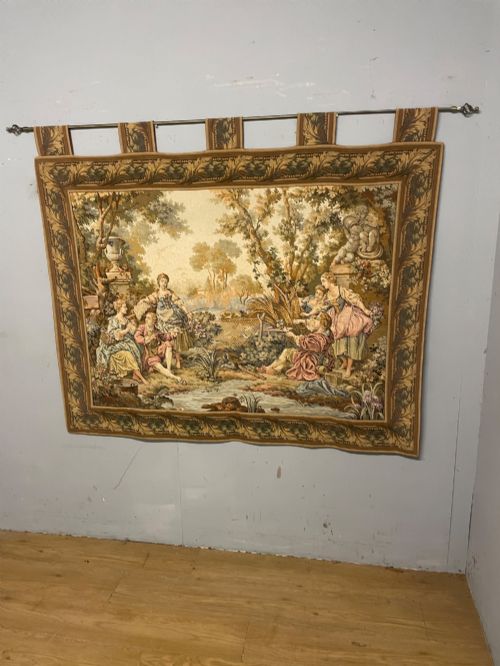
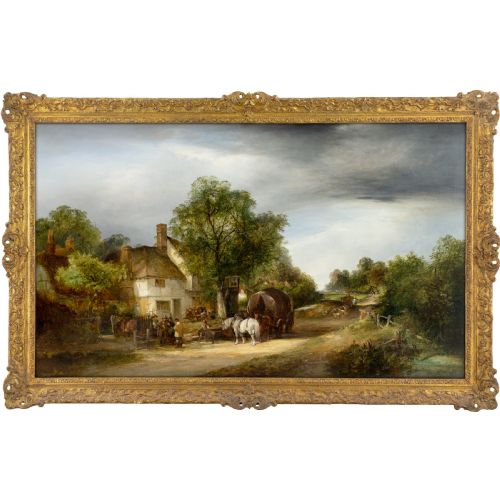
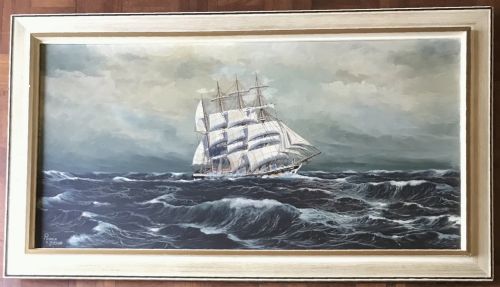
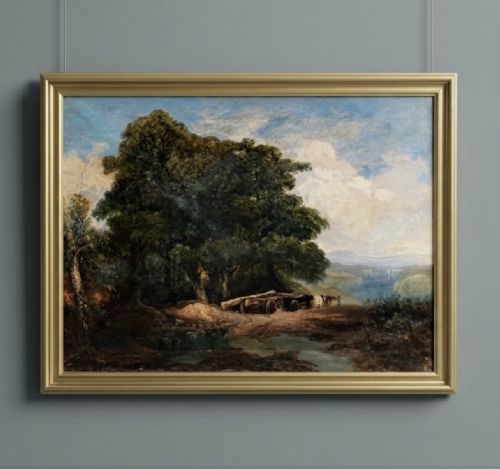
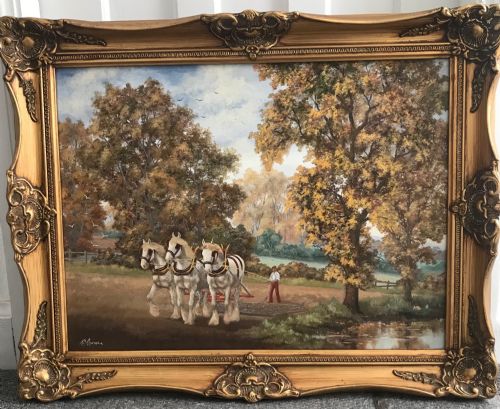
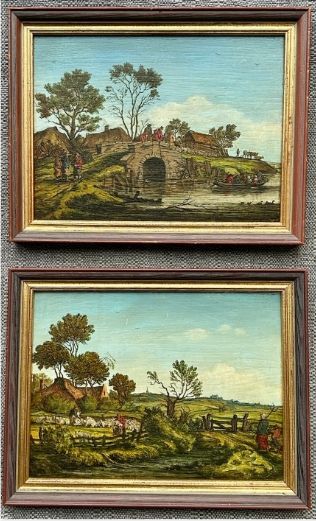
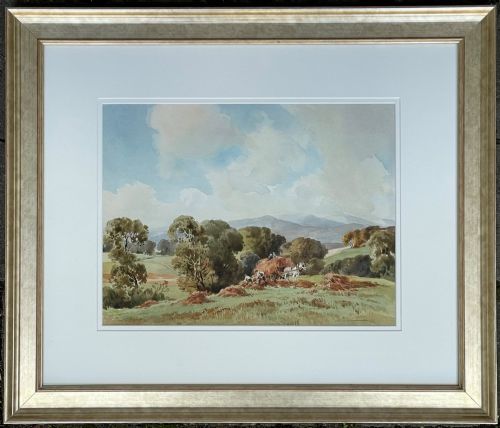
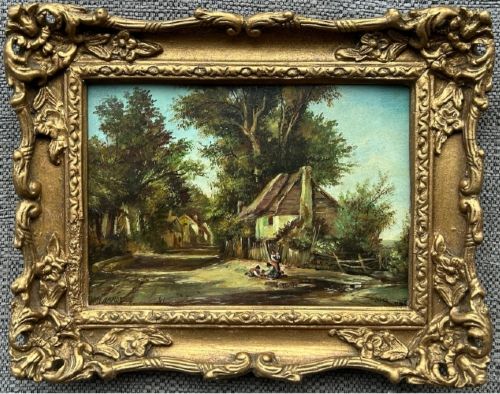
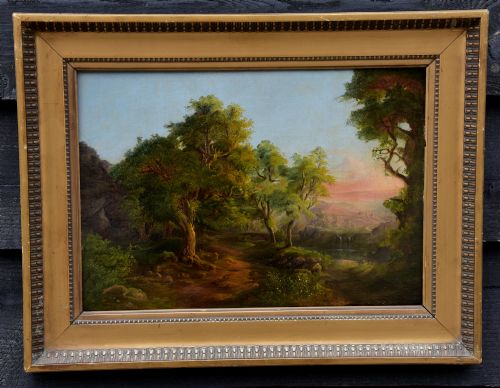
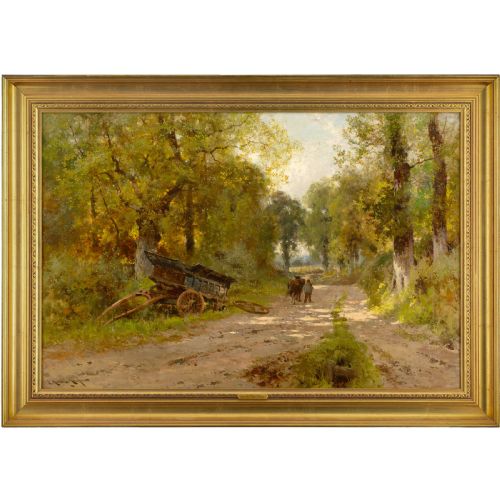
A traditional framed landscape depicts pastoral scenes, woodlands, harbours, and rural life created primarily during the nineteenth and early twentieth centuries. These works capture the changing moods of the countryside through oil on canvas, wood panels, and delicate watercolours.
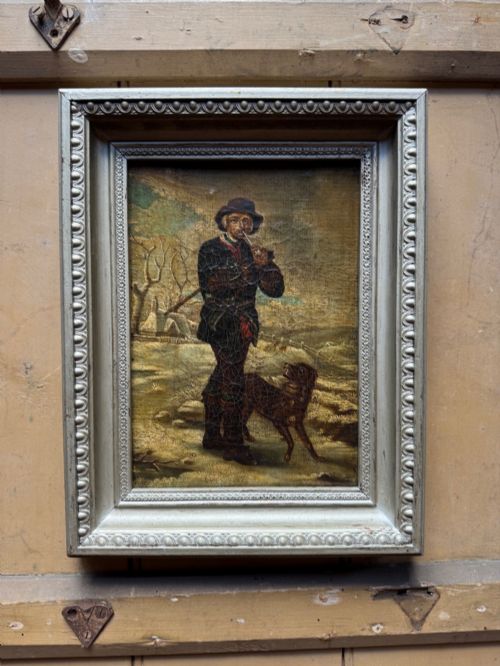
Buyers frequently encounter Victorian and Edwardian examples featuring rural workers, livestock, and tranquil riversides enclosed in their original protective surrounds. The selection spans domestic British scenes alongside continental views shaped by established schools of painting.
Materials and technique
Artists applied rich oil paint or translucent watercolour onto prepared canvas, wood panels, paper, or card to build up depth and luminosity. Many works retain their period wooden surrounds, frequently finished in giltwood that enhances the visual warmth of the composition.
Makers utilised traditional pigments and varnishes that have matured over generations, giving surfaces their characteristic historical patina. The marriage of the artwork and its period frame forms an integrated whole that reflects the craft standards of the era.
Watch closely for hidden livestock tucked into quiet corners, as Victorian artists loved inserting stray sheep into otherwise solemn woodlands.
Factors that define quality
The distinction between ordinary and exceptional pieces rests upon the confidence of the brushwork and the handling of light and atmosphere within the composition. Masterful artists captured natural movement and anatomical accuracy in figures and animals with notable precision.
The integrity of the original support and the survival of the matching period frame strongly influence the overall standing of an artwork. Superior examples demonstrate a harmonious relationship between the painted scene and its protective moulding.
Richard Sebastian Bond·William Beattie-Brown·William H Myers·George Graham·Percy Lancaster·William Howard Hardy·John Horace Hooper·Reginald Arthur Borstel·Alfred Fontville de Breanski Jr·George Houston·William Banks Fortescue·Thomas Barker of Bath·Thomas W Lascelles·William Joseph Boyes·David Bates·Thomas Smythe·Walter Heath Williams·Robert Thorne Waite·John Smith Atherton
The Traditional Framed Landscape Glossary
- Oil on Canvas
- Pigments bound in drying oil applied to a woven fabric stretched across a wooden frame. This medium allowed artists to achieve rich textures and deep colour blending.
- Gilt Wood
- Timber carved and coated with a thin layer of gold leaf or metallic powder. It provides a reflective border that isolates and elevates the painted image.
- Watercolour
- A paint consisting of colour pigments suspended in a water-based solution applied to paper or card. It produces luminous, transparent washes favoured for atmospheric sketches.
- Wood Panel
- A flat piece of timber used as a rigid painting surface before the widespread adoption of stretched canvas. Panel paintings often survive from earlier periods with remarkable stability.
- Pastoral
- A genre of art depicting rural life, shepherds, and idealized country settings. These scenes were immensely popular for bringing a sense of calm domesticity into urban homes.
Traditional Framed Landscape: Frequently Asked Questions
How do I care for my landscape?
Keep the painting away from direct sunlight and steady humidity fluctuations to protect the canvas and wood panel from warping or cracking. Dust the surface and the frame gently with a dry, soft cloth without applying cleaning liquids.
Ensure the artwork hangs securely away from direct heat sources such as radiators. Professional conservators can periodically check the tension of canvases and clean accumulated surface grime safely.
Are these paintings original works?
The selection comprises original hand-painted artworks created directly by artists rather than modern mechanical reproductions. Each piece bears the unique brushstrokes and individual touches of its creator.
Signatures, artist ciphers, and exhibition labels on the reverse frequently help confirm the authenticity of these historical paintings. Examining the pigment layers under magnification reveals the authentic application of period materials.
How do I date a landscape painting?
Dating relies upon a combination of stylistic clues, artist biography records, and the physical construction of the canvas support and frame. Costume details, agricultural equipment, and architectural elements depicted in the scenery often point to a specific decade.
Stamps from nineteenth-century colourmen on the back of canvases or panels provide reliable chronological markers. Period framing styles also evolve predictably through the Victorian and Edwardian eras.
Can I reframe an antique landscape?
Collectors generally prefer to keep traditional paintings in their original surrounds because the frame and artwork share a unified history. Altering or replacing the housing can diminish the historical character and visual balance of the piece.
If structural damage requires intervention, a specialist restorer can repair the existing timber and gilding rather than discarding the period mount. Preserving the original ensemble maintains the integrity of the antique.