

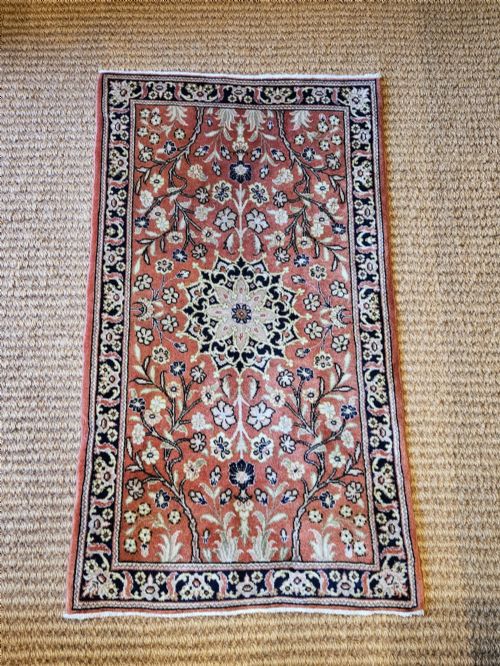
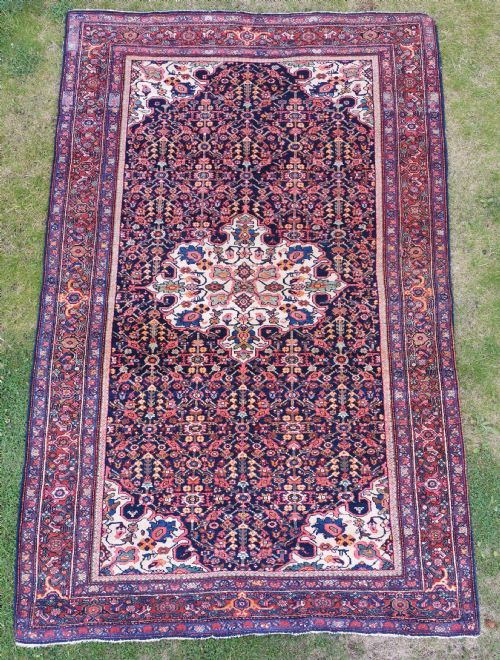
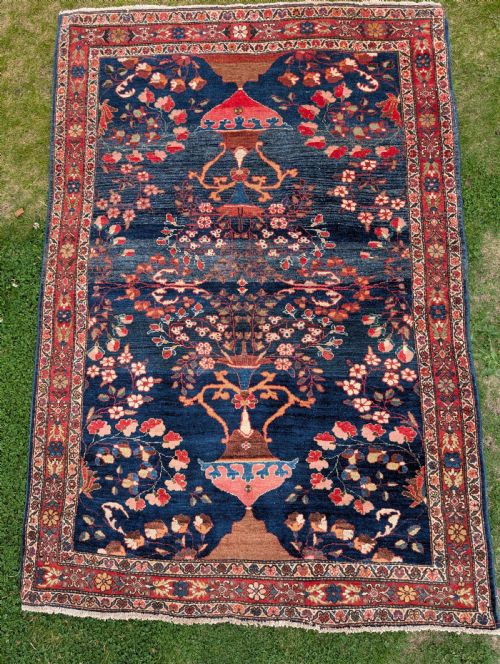
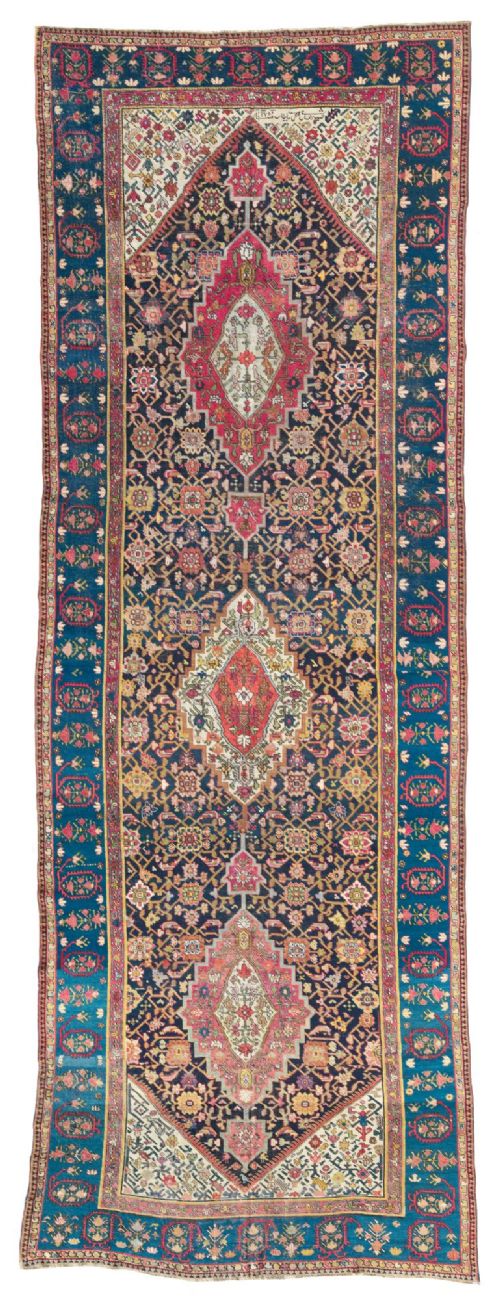
Traditional Floral Wool Rug
Traditional floral wool rug describes woven floor coverings featuring botanical motifs, offering enduring warmth and historic character for living spaces.
Traditional Floral Wool Rug
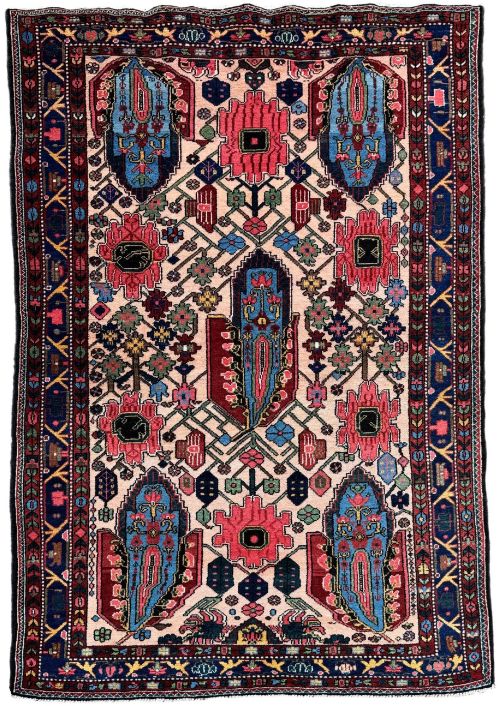
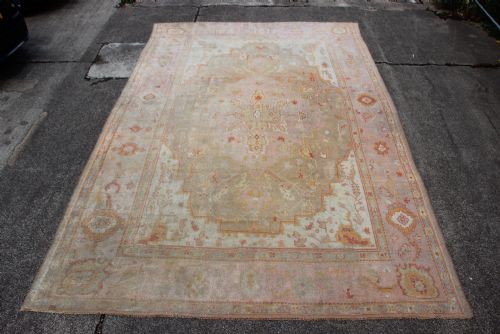
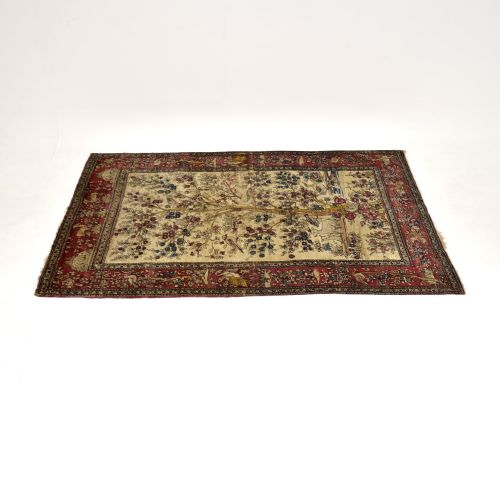
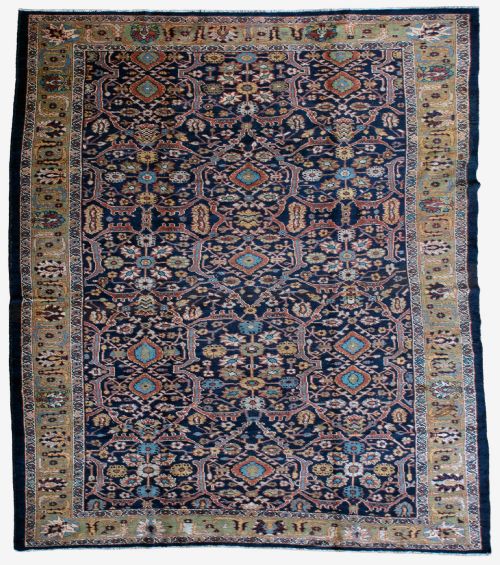
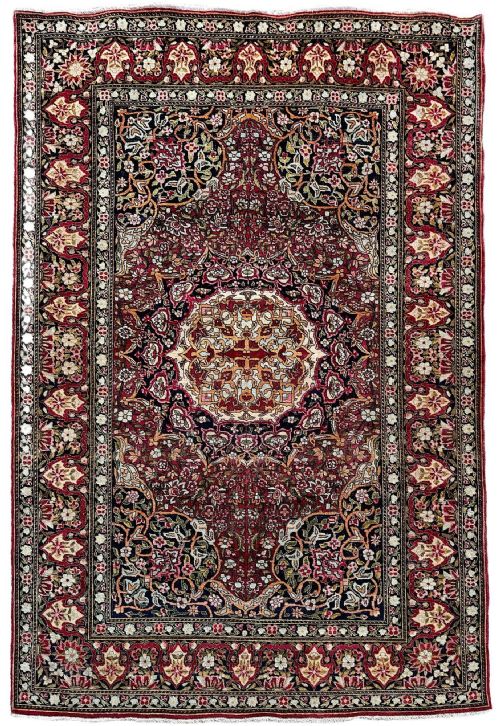
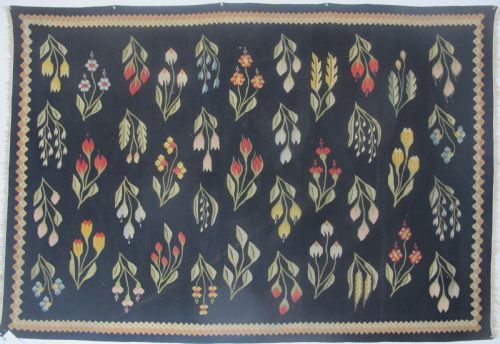
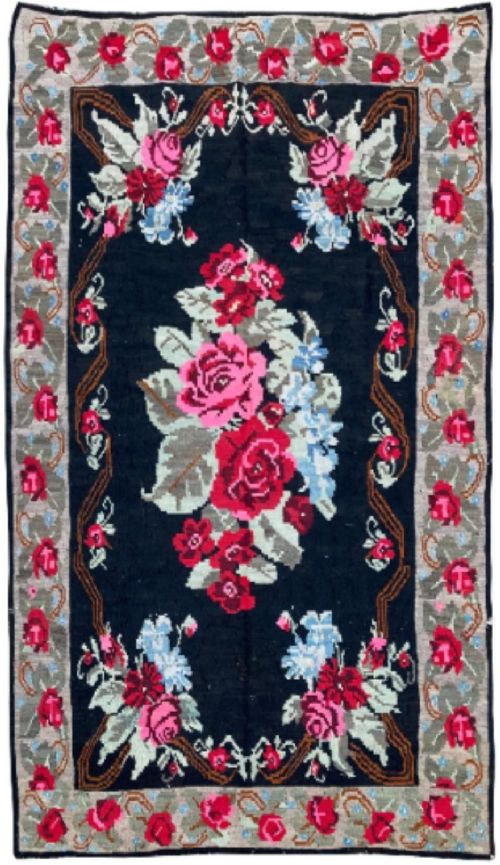
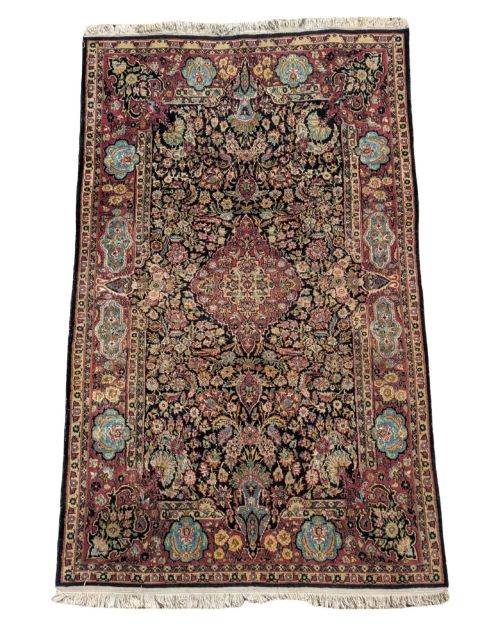
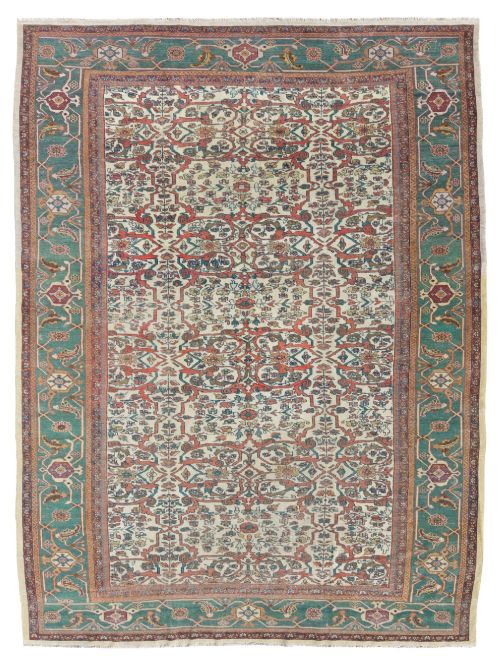
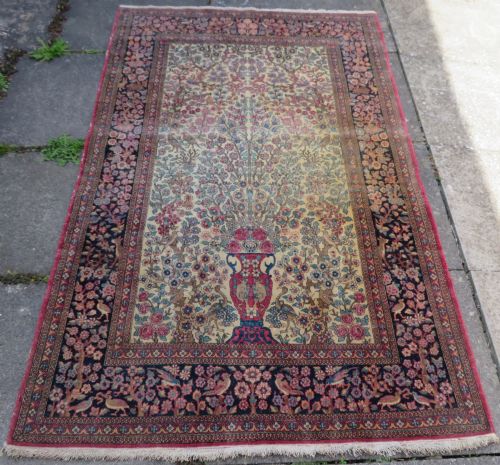
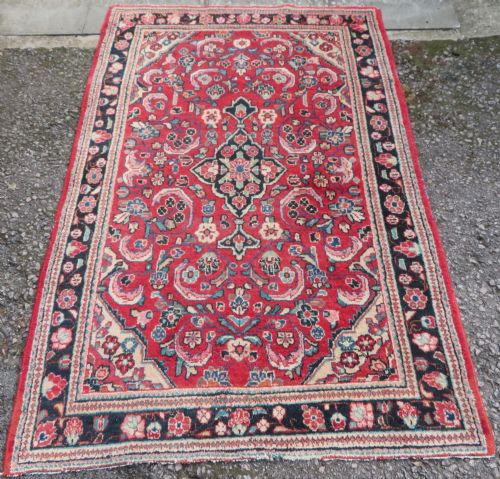
A traditional floral wool rug comprises hand-knotted and woven floor coverings sourced from Persian, Caucasian, Ottoman, and Eastern European folk art traditions. Buyers examining this page encounter room-size carpets, area rugs, runners, and hearth-sized pieces originating between the mid-nineteenth century and the mid-twentieth century.
The selection ranges from expansive country house carpets down to compact village rugs and kilims. Common stylistic origins include Saroukh, Bakhtiar, Oushak, Isfahan, Mahal, Tabriz, Kirman, and Heriz, alongside European tapestries.
These textiles bring intricate botanical designs and dense pile construction into domestic interiors. They serve both functional floor covering roles and decorative textile display.
How they were made
Makers constructed these pieces using wool, cotton, and occasionally silk highlights for detail. Natural fibres formed the foundation warps and wefts, while thick wool formed the primary pile.
Weavers knotted or flat-wove these materials by hand, utilising traditional regional techniques passed down through generations. Artisans dyed yarns with organic pigments derived from plants and minerals to achieve rich colour palettes.
Several rugs managed to cross international borders while retaining their original nineteenth-century village charm.
What varies in quality
Knot density and structural tightness dictate the resilience of the pile and the crispness of the botanical patterns. Higher-grade carpets maintain structural integrity under heavy foot traffic.
The depth of colour and subtlety of dye shading distinguish finer regional workshops from standard village production. Skilled dyers produced harmonious hues that age gracefully over decades.
The Traditional Floral Wool Rug Glossary
- Pile
- The cut or uncut loop surface of a rug that forms the soft upper layer. It provides cushioning and displays the woven pattern.
- Warp
- The vertical foundation threads stretched tightly on the loom before weaving begins. Wefts intersect these stationary threads to lock knots in place.
- Weft
- The horizontal threads passed through the warp threads during weaving. They stabilise the structural grid of the textile.
- Kilim
- A flat-woven carpet or tapestry lacking a raised pile. These pieces rely on interlocking weft techniques to create geometric and floral patterns.
Traditional Floral Wool Rug: Frequently Asked Questions
How do I clean an old wool rug?
Vacuum gently without a rotating brush roll to remove loose surface dirt from the fibres.
Professional specialist cleaning is recommended for deep washing to protect the natural dyes and wool pile.
Where were these woven?
Production centres span traditional weaving regions including Persia, the Caucasus, Turkey, Romania, and other parts of Europe.
Each region utilised distinct knotting structures, wool types, and botanical design vocabularies.
Are these rugs suitable for hallways?
Long runner formats and narrow village carpets fit effectively into hallways and corridors.
Durability depends on the tightness of the wool weave and the density of the pile.
How do I identify the origin?
Specific floral motifs, border arrangements, and colour combinations point toward particular workshops like Heriz, Tabriz, or Saroukh.
Structural characteristics on the reverse side also reveal regional weaving habits.