






Traditional Floor Covering Rug
A traditional floor covering rug brings warmth and historic pattern to a room, offering genuine hand-knotted craftsmanship from the nineteenth and early twentieth centuries.
Traditional Floor Covering Rug
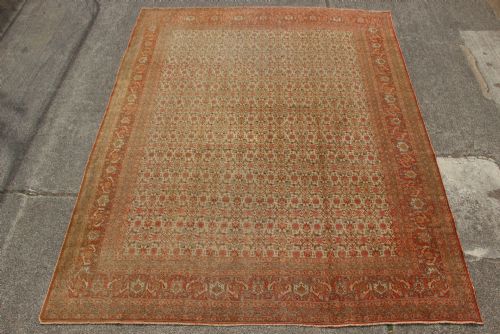
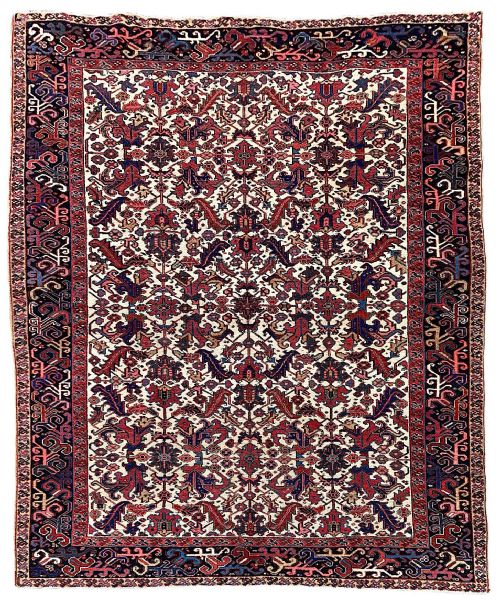
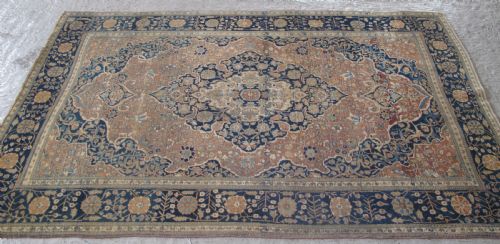
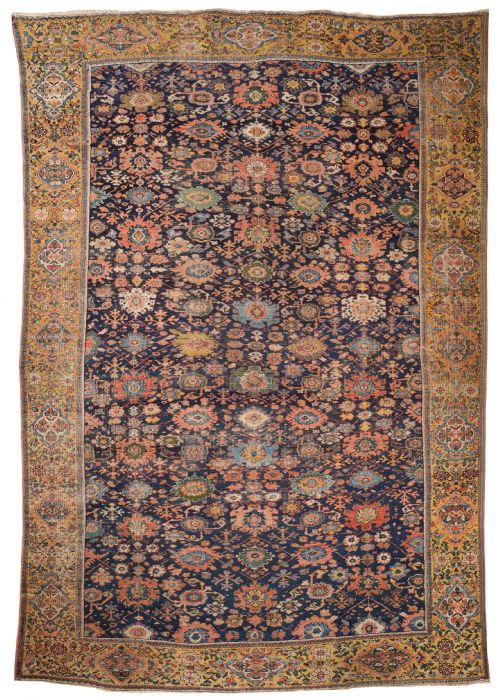
A traditional floor covering rug spans grand palace carpets and smaller tribal formats originating from Persia, the Caucasus, Turkey, and China. These textiles anchor a room with centuries-old regional motifs and time-honoured room-size or area dimensions.
The pieces available on this page run from the late nineteenth century through to the 1930s, encompassing named weaving traditions such as Heriz, Oushak, Isfahan, and Kazak. Buyers most frequently encounter room-size carpets and smaller tribal rugs woven in wool.
Each regional type carries distinct design signatures, from the geometric medallions of Caucasian pieces to the fluid floral compositions of Persian workshops. Selecting one means bringing home a durable floor textile shaped by specific regional aesthetics.
How traditional floor covering rugs were made
These pieces rely entirely on natural textile fibres, predominantly utilising wool for the pile and cotton for the foundational warps and wefts. The combination of a resilient wool pile over sturdy cotton foundations ensures the heavy structure required for continuous floor use.
Weavers constructed these carpets by hand-knotting individual strands of wool onto vertical looms, building up dense piles that secured both intricate colour patterns and long-term durability. This intensive hand-knotting technique allowed workshops to achieve the fine detail seen in Isfahan, Tabriz, and Kashan productions.
Traditional Floor Covering Rug Retail Price Guide 2026
Typical asking prices for traditional floor covering rug among the pieces listed under this phrase on Sellingantiques today, from the lower quarter to the upper quarter. They describe what is for sale here now, not the wider market.
Materials across all available entries are strictly confined to traditional combinations of wool and cotton.
What varies in quality
Quality rests in the precision of the hand-knotting and the density of the weave, which dictate how sharply the regional motifs resolve across the surface. Tighter knot counts allow complex medallion and floral layouts to hold their geometric integrity over decades of wear.
The depth and brilliance of the wool pile further distinguish the upper tiers of production, reflecting superior fibre selection and traditional dye preparation. Subtle variations in wool quality and knot density separate standard village pieces from master-weaver workshop carpets.
Benlian·Mokhtashem
The Traditional Floor Covering Rug Glossary
- Pile
- The upright yarn loops that form the usable surface of the carpet. This dense layer of wool absorbs foot traffic and displays the woven design.
- Warp
- The stationary vertical threads stretched tightly on the loom before knotting begins. Cotton warps provide the rigid structural grid for traditional oriental carpets.
- Weft
- The horizontal threads passed across the warps between rows of knots to lock the structure in place. These transverse strands stabilise the entire woven fabric.
- Medallion
- A central ornamental design motif placed in the middle of the field. This focal shape anchors the symmetrical layout typical of Persian and Turkish carpets.
- Tribal rug
- A nomadic or village-made textile featuring spontaneous geometric patterns rather than formal workshop designs. These pieces often display idiosyncratic colour palettes and symbolic motifs.
Traditional Floor Covering Rug: Frequently Asked Questions
What is an Oushak carpet?
Oushak carpets come from the historic manufacturing centre in western Turkey and are celebrated for softer pastel palettes and larger-scale floral patterns. They utilise a looser knotting technique that gives the wool a relaxed, supple handle.
Buyers often select Oushak pieces for their ability to complement contemporary interiors while retaining antique Turkish character.
How should I clean my antique rug?
Vacuuming on a gentle setting without a rotating power brush helps remove surface dirt without stressing the antique wool pile. Professional specialist cleaning remains essential for deep maintenance.
Water and harsh chemical detergents must be avoided to prevent dye migration and fibre degradation across older cotton foundations.
Where were Caucasian rugs made?
Caucasian rugs originate from the mountainous region bridging Europe and Asia, encompassing modern-day countries such as Armenia, Azerbaijan, and Georgia. Village weavers in these areas produced highly geometric designs.
These rugs are characterised by striking tribal symbols, rich primary colours, and compact formats suited to smaller rooms.