





Patterned Wool Living Rug
These patterned wool living rug examples bring authentic floor coverings into your space, offering warmth and traditional pattern underfoot.
Patterned Wool Living Rug
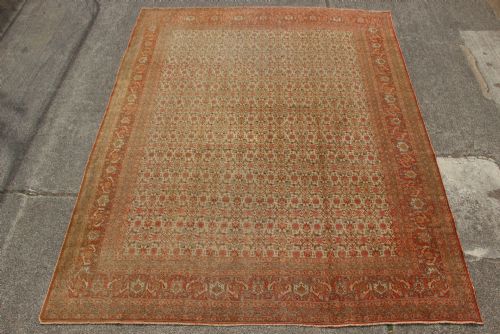
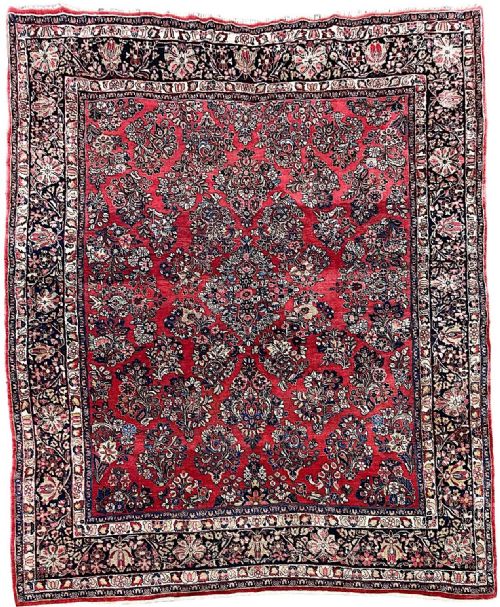
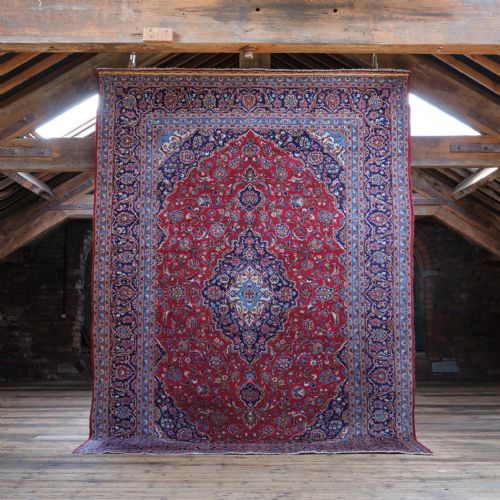
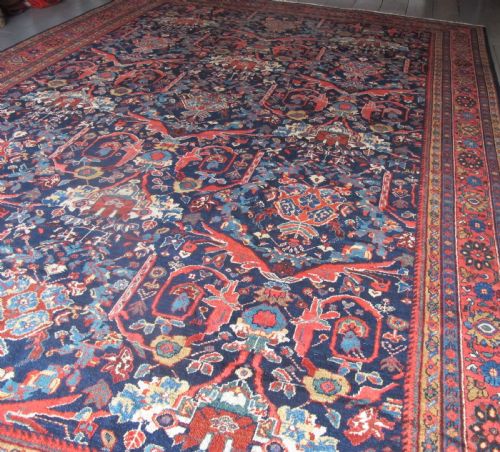
When you search for a patterned wool living rug, you find large carpets and area rugs originating from Persian and Caucasian weaving traditions. The listings show room-sized carpets and area rugs dating from the late nineteenth century through to the mid-twentieth century.
Tabriz, Mahal, and Qum carpets form the core of what appears here, alongside Sultanabad, Kashan, Baktiari, and Senneh pieces. These room-sized floor coverings reflect traditional Oriental and Persian aesthetic choices preserved across generations.
How they were made
The pieces listed rely primarily on hand-knotted wool construction, often incorporating cotton foundations to provide structural stability for large formats. Silk also appears among the material variations in the evidence.
Weavers employed traditional techniques to produce dense piles and intricate designs such as the Mostafi pattern. Natural dyes and hand knotting combined to create durable floor coverings that withstand daily use.
Patterned Wool Living Rug Retail Price Guide 2026
Typical asking prices for patterned wool living rug among the pieces listed under this phrase on Sellingantiques today, from the lower quarter to the upper quarter. They describe what is for sale here now, not the wider market.
Several carpets measured over four metres long managed to survive a century of foot traffic while keeping their colourful patterns intact.
What varies in quality
Knot density and the precision of the woven pattern separate standard production from finer examples. Finer carpets demonstrate greater complexity in their floral or geometric motifs and tighter structural foundation.
The choice of materials also divides the range, with pure wool and occasional silk content marking out superior pieces. Age and regional origin further influence the character and execution of each rug.
The Patterned Wool Living Rug Glossary
- Pile
- The cut loop surface of the rug formed by the knotted yarn. It provides the texture and absorbs wear during daily use.
- Foundation
- The underlying grid of warp and weft threads that holds the knots in place. Cotton is commonly utilised for this structural support.
- Mostafi
- A traditional repeating garden or trellis design pattern seen in Persian carpet weaving. It organises floral motifs within a structured framework.
- Warp
- The vertical threads stretched tightly on the loom before knotting begins. These fringe ends form the structural backbone of the carpet.
Patterned Wool Living Rug: Frequently Asked Questions
How do I clean an antique rug?
Surface dirt is best managed through gentle suction using a vacuum without a beater bar. Professional specialist cleaning is required for deep maintenance to protect the wool fibres.
Water saturation and harsh chemical detergents must be avoided entirely. Regular rotation prevents uneven fading from sunlight exposure near windows.
Can I place these rugs in heavy traffic areas?
Wool possesses natural resilience that handles normal domestic foot traffic effectively. Room-sized carpets from Persian workshops were originally made for sustained daily use.
Underlay helps reduce friction against hard floors and extends the lifespan of the textile. Placing them away from direct moisture protects the foundation threads.
How do I identify a Tabriz carpet?
Tabriz pieces originate from a major weaving centre in northwestern Persia known for refined workshop production. They often display intricate floral medallions and sophisticated border arrangements.
The knot count is typically high, allowing for sharp detail in the woven patterns. Dates in the evidence place many surviving examples in the early twentieth century.
What is a Mahal carpet?
Mahal carpets come from the district surrounding Sultanabad in Persia, known for robust room-sized formats. They frequently feature all-over geometric or large-scale floral designs.
The wool used in these pieces tends to create a substantial, hard-wearing floor covering. Surviving examples in the listings date from the late nineteenth and early twentieth centuries.