
Traditional Extending Table
A traditional extending table provides the surface and flexibility needed for large gatherings, bringing period timber and clever mechanics into the dining room.
Traditional Extending Table
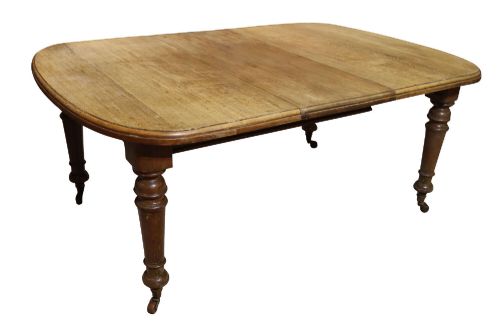
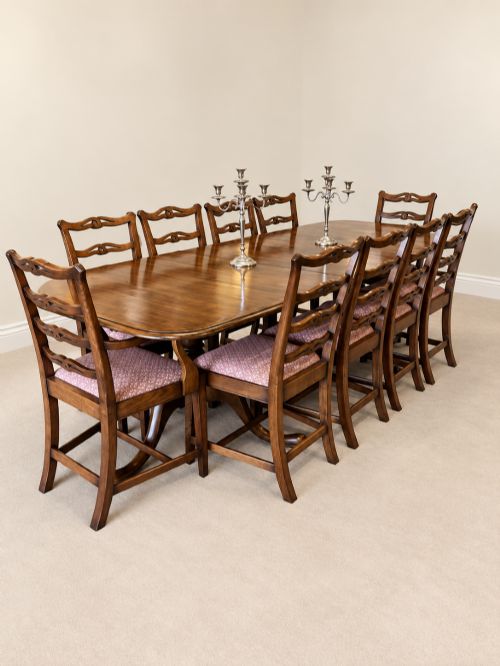
A traditional extending table is a dining room staple designed to accommodate varying numbers of guests through the addition of leaves or pull-out mechanisms. Buyers seeking a traditional extending table will find pieces spanning the nineteenth and early twentieth centuries, including Edwardian and Victorian eras.
Stylistic influences draw heavily upon Regency, Victorian, and Georgian designs, alongside revivals like Jacobean, Elizabethan, and Chippendale styles. These pieces originate from workshops that valued both formal dining presentation and domestic adaptability.
Materials and Mechanics
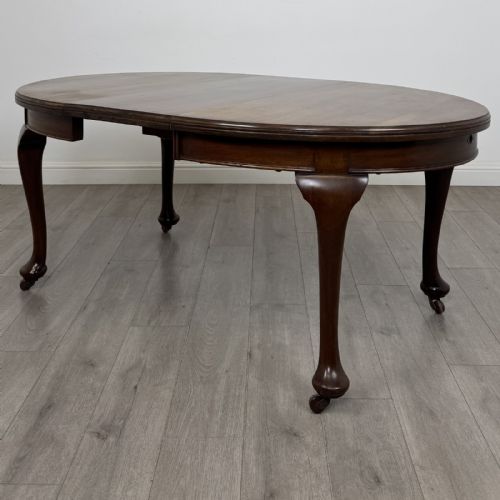
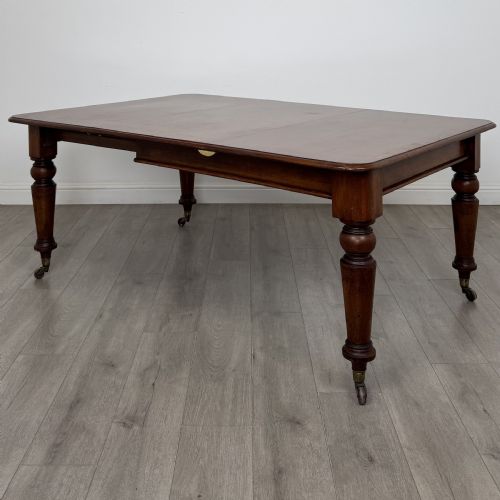
Construction relies primarily on hardwoods such as mahogany and oak, occasionally incorporating walnut alongside brass fittings and castors to facilitate movement. Timber selection dictates both the visual weight and the structural integrity of the frame.
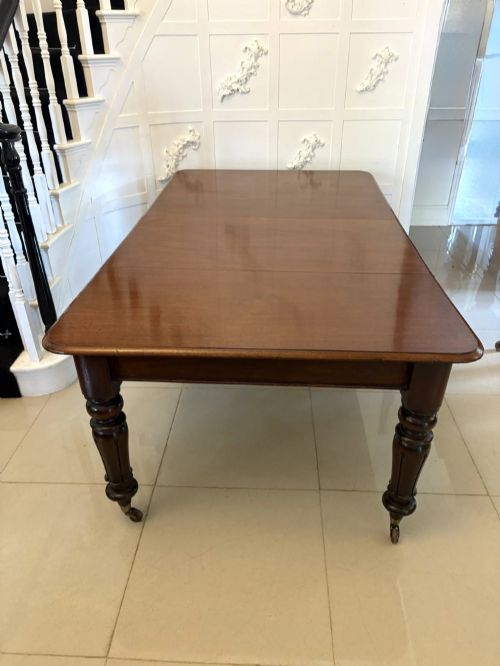
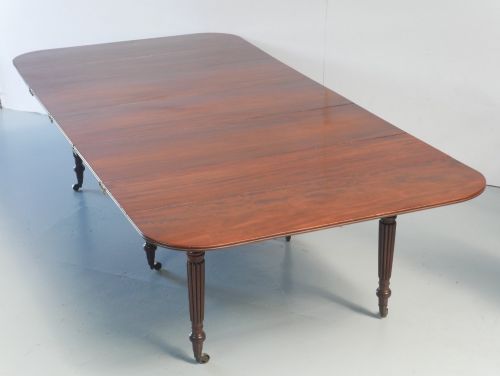
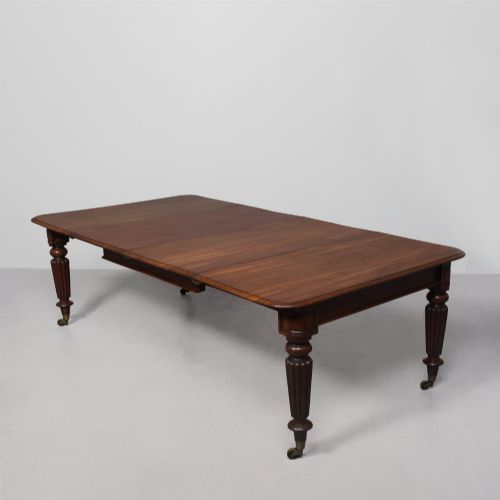
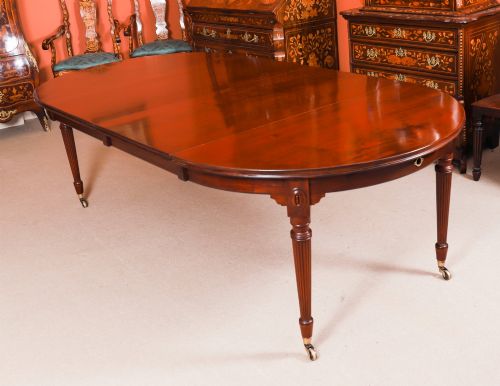
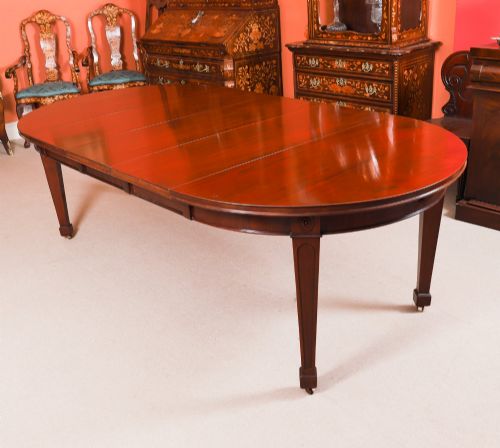
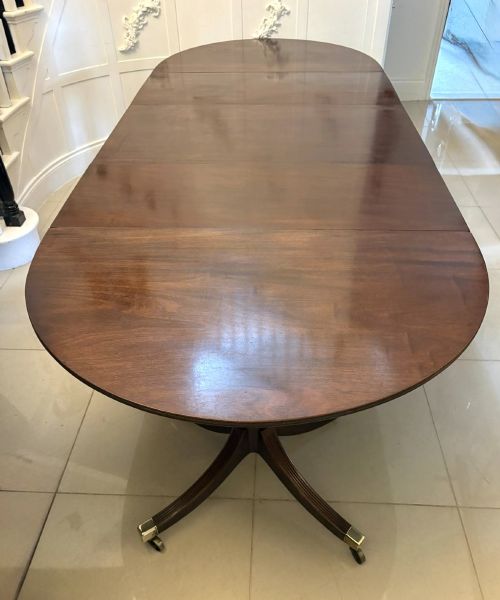
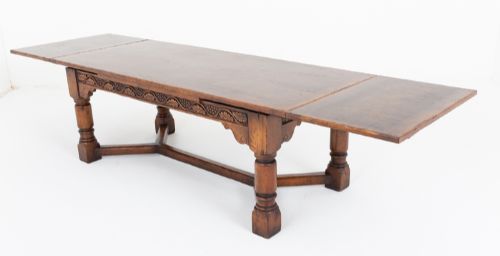
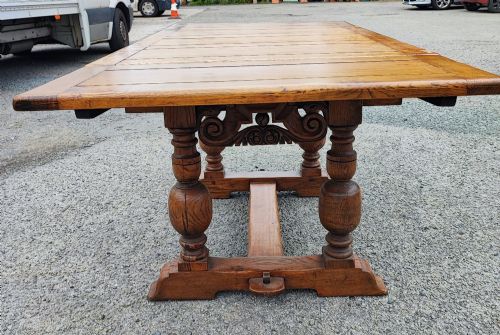
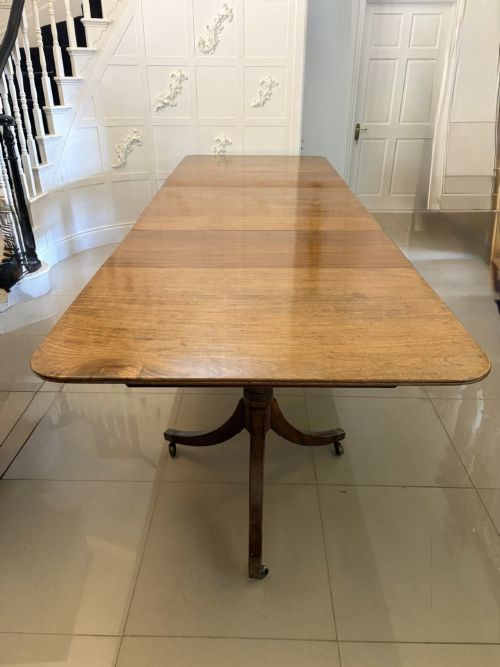
Extension systems vary by period and form, utilising wind-out mechanisms with winding handles, drop leaves, or draw-leaf boards concealed beneath the main top. Pedestal bases, refectory trestles, and reeded legs support the weight of multiple extra leaves.
Listings span the nineteenth and early twentieth centuries, featuring mahogany, oak, and walnut across styles from Regency to Jacobean Revival.
Judging Construction and Finish
Quality rests in the precision of the extension mechanism and the stability of the frame when fully opened with multiple leaves inserted. Tables that glide smoothly on their original wind-out tracks or draw-leaf runners demonstrate superior cabinet-making.
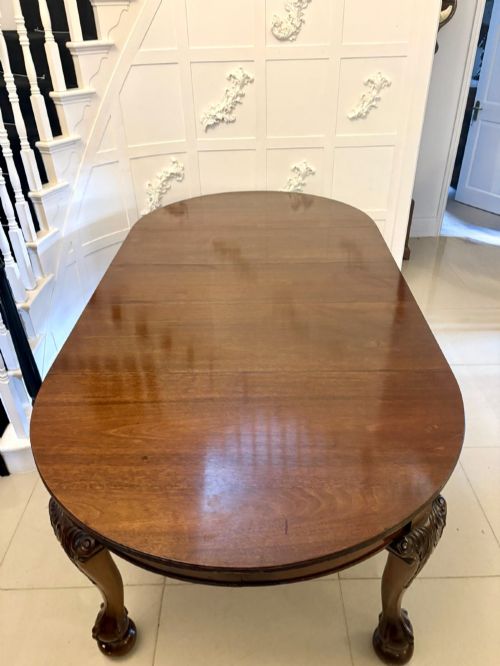
The choice and figuring of the timber veneers or solid planks define the visual tier of a piece, alongside the crispness of carved details on pedestals and legs. Original brass castors and matched grain across added leaves distinguish finer examples from standard production.
The Traditional Extending Table Glossary
- Wind-out table
- A dining table that extends via a mechanical screw mechanism operated with a detachable handle, parting the top to receive extra leaves.
- Draw-leaf table
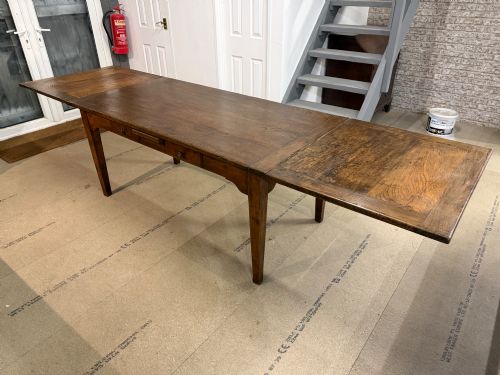
- A table with self-stored leaves hidden beneath the main surface that pull out from each end to extend the length.
- Pedestal base
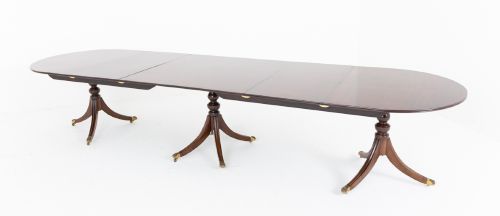
- A central column support, often single, double, or triple, resting on splayed legs that provide stability without corner posts.
- Reeded leg
- A column decorated with parallel convex moulding strips, commonly seen on Regency and late nineteenth-century dining tables.
- Refectory table
- A long, narrow table originally used in monastic dining halls, adapted in later periods with extension capabilities for domestic use.
Traditional Extending Table: Frequently Asked Questions
How do wind-out extension mechanisms work?
A winding handle turns an internal metal screw mechanism that pulls the table halves apart evenly.
This creates a gap in the centre where separate wooden leaves drop into place to lengthen the surface.
What is a draw-leaf table?
A draw-leaf table contains two auxiliary leaves stored directly beneath the main tabletop.
Users pull these leaves outward from the ends, allowing the main top to lower automatically into place flush with the extensions.
How many people can these tables seat?
Seating capacity ranges from compact formats seating six to eight up to grand banquet sizes.
Tables featuring multiple pedestals and extra leaves can accommodate twenty to twenty-four diners comfortably.
Which woods are most common?
Mahogany and oak dominate the selection across Victorian, Edwardian, and earlier periods.
Walnut also appears in specific styles, while brass and castors frequently furnish the hardware and legs.