





Traditional Ersari Rug
A traditional ersari rug brings the rich, geometric artistry of Central Asian weaving directly into domestic spaces through deep reds and enduring wool construction.
Traditional Ersari Rug
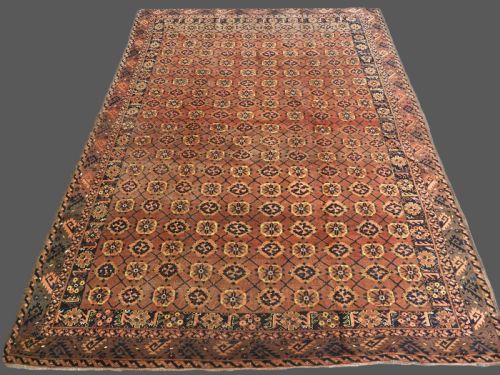
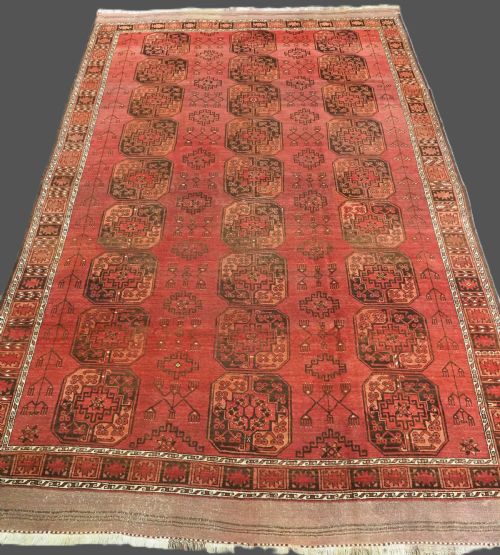
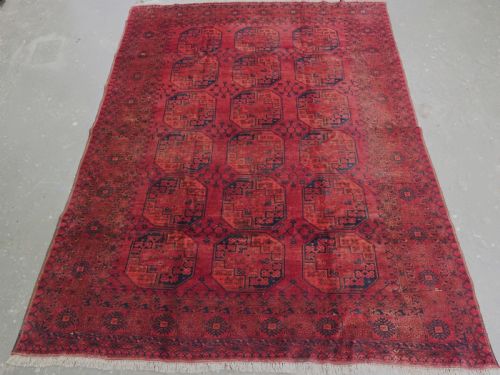
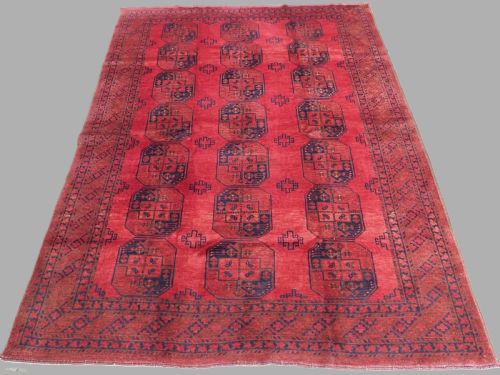
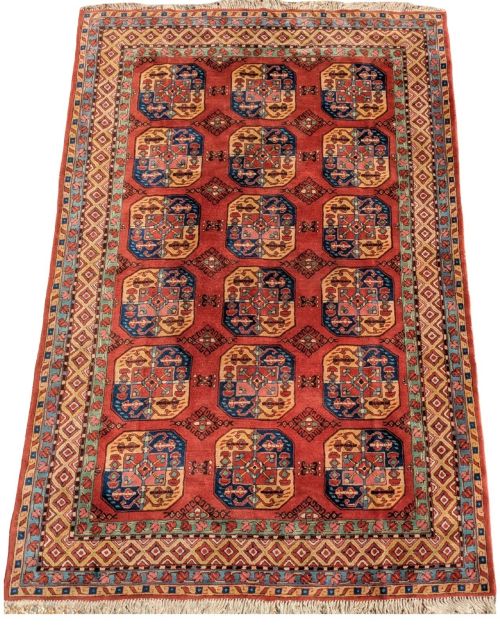
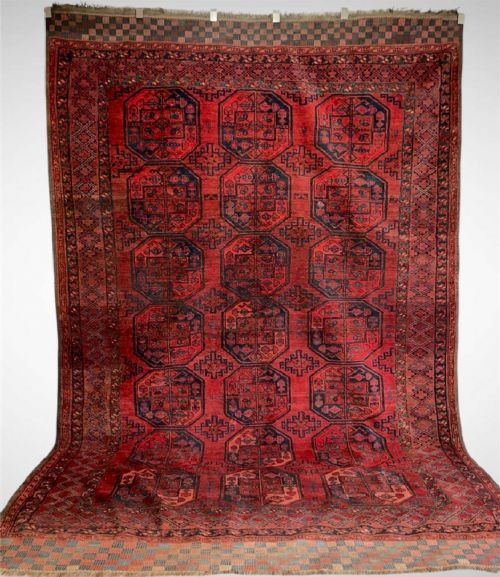
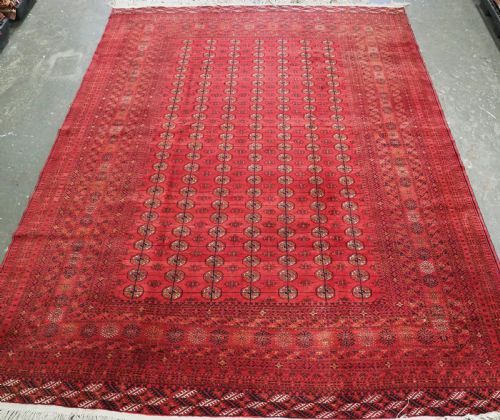
When browsing for a traditional ersari rug, collectors encounter woven textiles originating from Turkmen and Afghan tribal traditions, dating from the late nineteenth century into the early decades of the twentieth century. These pieces encompass large main carpets, village carpets, smaller prayer rugs, and utilitarian hanging bags known as torbas or chuvals.
The aesthetic is defined by repeating geometric motifs, particularly the traditional gul or octagonal medallion, rendered in warm red, deep red, and old gold colour palettes. Examples on this page range from room-size floor coverings to smaller format hangings like the ensi door rug.
How They Were Made
The weavers utilised hand-spun wool for the pile, yielding a soft yet resilient surface that often displays a glossy texture. Natural dyes provide the enduring depth of colour, anchoring the rich red and gold tones seen across the pieces.
Foundations frequently incorporate goat hair or horsehair alongside wool, contributing to the heavy-duty and hard-wearing nature of these textiles. This combination of sturdy animal hair foundations and dense wool knotting ensured the carpets could withstand generations of daily domestic use.
Traditional Ersari Rug Retail Price Guide 2026
Typical asking prices for traditional ersari rug among the pieces listed under this phrase on Sellingantiques today, from the lower quarter to the upper quarter. They describe what is for sale here now, not the wider market.
Object forms represented include large main carpets, torbas, chuvals, ensi door hangings, and mosque prayer rugs with double lanterns.
What Varies in Quality
Quality rests primarily in the handling of the natural dyes and the resulting vibrancy or subtlety of the colour palette, where deeper, richer reds and well-preserved golds elevate certain carpets above standard village work. The finesse of the drawing within the traditional guls and secondary motifs also distinguishes finer main carpets from simpler utilitarian formats.
Structural integrity and material selection define the upper tier, particularly where foundations employ robust horsehair or goat hair alongside exceptionally soft, glossy hand-spun wool. Pieces maintaining crisp geometric definition and balanced proportions across larger formats demonstrate the highest tier of tribal weaving skill.
The Traditional Ersari Rug Glossary
- Gul
- A repeating octagonal medallion motif central to Turkmen and Ersari design. These geometric emblems often denote specific tribal lineages.
- Ensi
- A traditional tribal door hanging rug used within yurt or tent dwellings. They typically feature a cross-panel design dividing the field into four distinct quarters.
- Torba
- A small storage bag woven in carpet technique and hung inside a dwelling. These items display intricate tribal patterns on a compact scale.
- Chuval
- A large tent bag used for household storage, often preserved today as a collectible face fragment. They showcase detailed guls and characteristic elem panels.
- ELEM
- The decorated lower end panel of a rug or carpet, situated beneath the main border and field. This decorative band frequently contains distinct floral or geometric motifs.
Traditional Ersari Rug: Frequently Asked Questions
What is an Ersari rug?
An Ersari rug is a hand-knotted textile produced by the Ersari Turkmen tribe of Central Asia and northern Afghanistan. They are recognised for their geometric guls and warm red colour palettes.
These pieces range from large main floor carpets down to smaller door hangings and prayer rugs, dating from the nineteenth and early twentieth centuries.
How do I care for antique wool rugs?
Antique wool rugs require gentle, regular vacuuming without a rotating brush bar to protect the hand-spun pile and natural dye foundations. Professional cleaning should be undertaken periodically by specialists familiar with antique tribal textiles.
Keeping them out of direct sunlight prevents the deep red and gold tones from fading over time.
Where were these carpets made?
These carpets were woven by Turkmen and Afghan village and tribal groups across Central Asia and northern Afghanistan. The makers utilised local materials including sheep wool, goat hair, and horsehair.
Production often took place within nomadic or settled village communities before the pieces entered trade markets.
What does main carpet mean?
A main carpet refers to a large-format floor covering designed for primary domestic use within a household or tent. These pieces feature expansive fields of repeating guls and complex border systems.
Because of their grand scale, they represent the principal artistic output of the weaving group.