


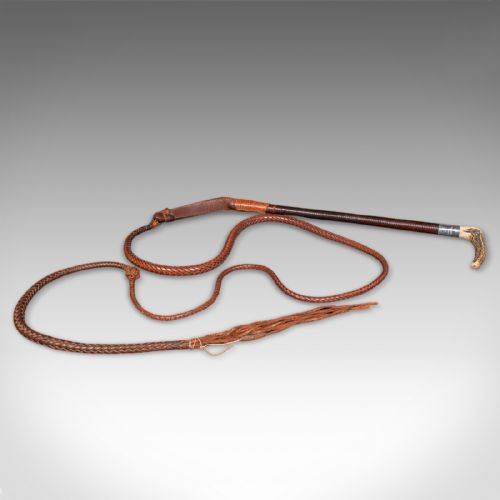


Traditional Equestrian Wall Decor
Traditional equestrian wall decor brings centuries of field sports and racing onto the wall through oils, prints, and metalwork.
Traditional Equestrian Wall Decor
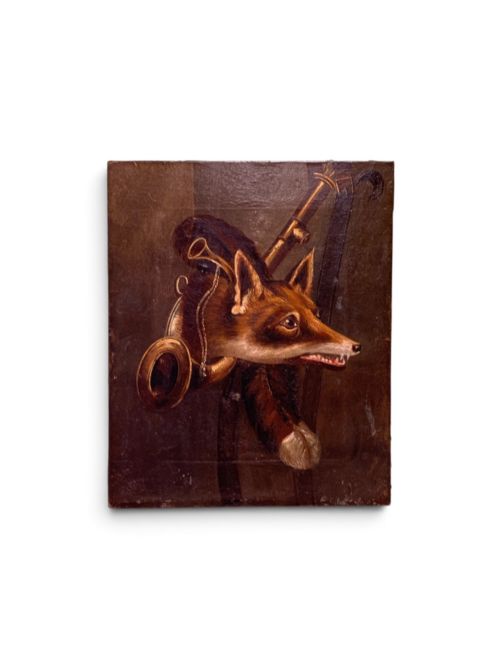
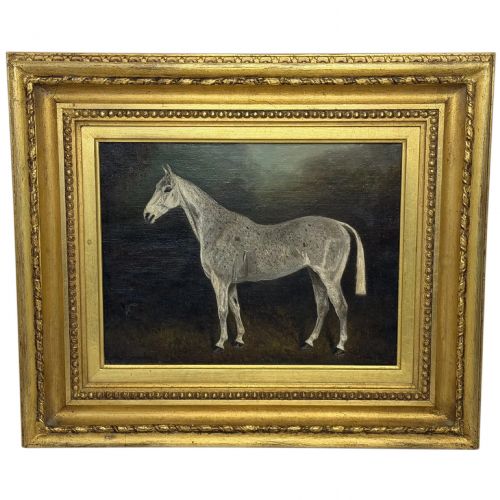
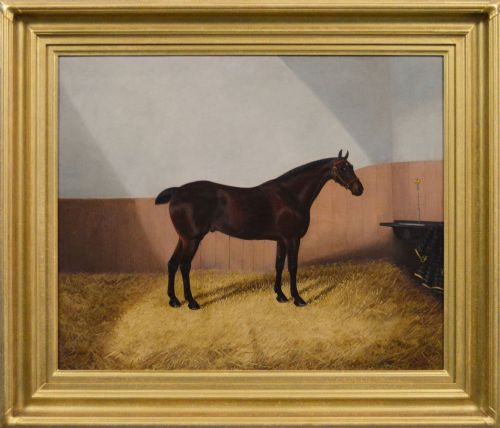
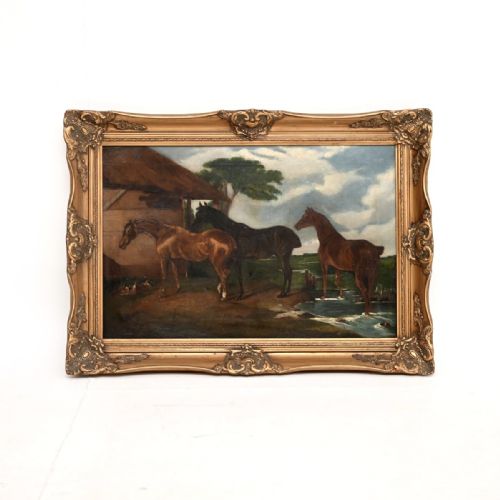
Traditional equestrian wall decor covers oil paintings, framed prints, and decorative metalwork focusing on horses, hounds, and hunting scenes. These pieces capture individual portraits of hunters and racehorses alongside sweeping meet and chase compositions.
Oil paintings on canvas and panel sit alongside engraved and printed plates spanning the Georgian, Victorian, and Edwardian eras. Metal accessories such as coaching horns and weathervanes also mount directly onto walls as part of the display.
Materials and construction
Painters utilised oil on canvas, wood panels, and paper, applying pigment to capture the musculature of horses and the motion of hounds. Engravers and printers used ink on paper to produce multiple impressions of notable racehorses and hunting sequences.
Metalwork pieces combine copper, brass, and silver in items like coaching horns and weathervanes, shaped and joined by hand. Frames employ wood and giltwood to house and protect the paintings and prints.
Several horses depicted in these oils managed to outlive their painters.
Factors of quality
Quality rests on the precision of anatomy in the horses and hounds, and the handling of light across the landscape. The strength of composition in a hunt scene or stable portrait separates a skilled hand from a routine output.
The preservation of the paint surface, the clarity of the printed line, and the integrity of the original framing materials dictate the standing of an individual piece.
Albert Clark·John Frederick Herring Jnr·Basil Nightingale·W Williams·Swaine Adeney·Charles Faulkner·Benjamin Cam Norton·John Atkinson·Charles Johnson Payne Snaffles·George Goodwin Kilburne·Edward Lloyd
The Traditional Equestrian Wall Decor Glossary
- Eglomise
- A process of applying design and gilding to the rear face of glass to create a reflective, finished picture. This technique produces a distinct glossy surface common in decorative prints.
- Giltwood
- Wood carved and coated with a thin layer of gold leaf or metallic gilt. It provides ornate framing for traditional paintings.
- Coaching horn
- A long brass or copper horn historically sounded by coachmen to signal arrival or clear the road. These horns frequently double as wall hangings.
- Oil on canvas
- Pigment bound in oil applied to a woven fabric support stretched over a wooden frame. This medium allows for deep colour blending and varied texture.
- Engraving
- A printmaking method where an artist cuts lines directly into a metal plate to hold ink. The resulting image transfers onto paper under pressure.
Traditional Equestrian Wall Decor: Frequently Asked Questions
How do I hang a heavy oil painting safely?
Heavy oil paintings require sturdy fixings screwed directly into wall studs or heavy-duty wall anchors designed for the weight of the wood frame and canvas.
Ensure the picture wire and D-rings on the reverse are secure before mounting the piece at eye level.
What rooms suit equestrian art best?
Studies, hallways, and living rooms provide natural settings for equestrian art, complementing traditional wood furniture and leather seating.
Keep pieces away from direct sunlight and damp walls to protect the canvas and paper.
How do I date a nineteenth century oil painting?
Dating relies on the stretcher construction, canvas stamp marks from suppliers, and the style of the clothing and tack shown in the scene.
Signatures and exhibition labels on the reverse also offer clues to the year of creation.
How do I clean old brass coaching horns?
Dust brass horns gently with a soft dry cloth and avoid harsh chemical polishes that strip away the aged patina.
Preserving the natural surface honours the age of the metalwork.