


1910s Oil Painting
These 1910s oil painting works capture the shifting artistic moods of an eventful decade through rich brushwork.
1910s Oil Painting
A 1910s oil painting brings domestic interiors, quiet landscapes, and striking portraiture into focus from the Edwardian era onwards. These works capture a transitional moment in art history where traditional representation meets early modern movements.
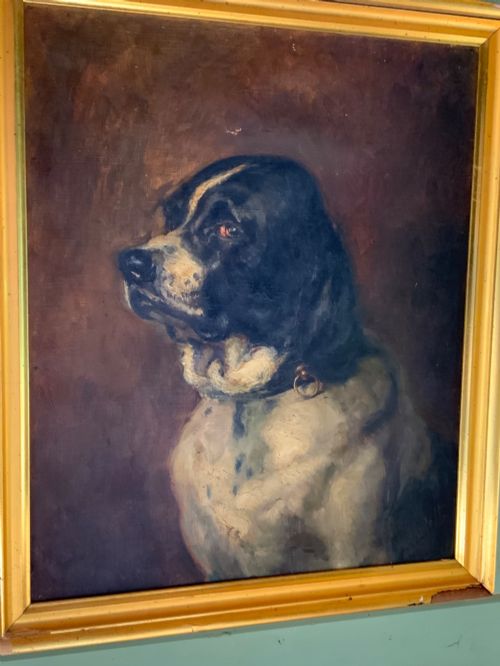
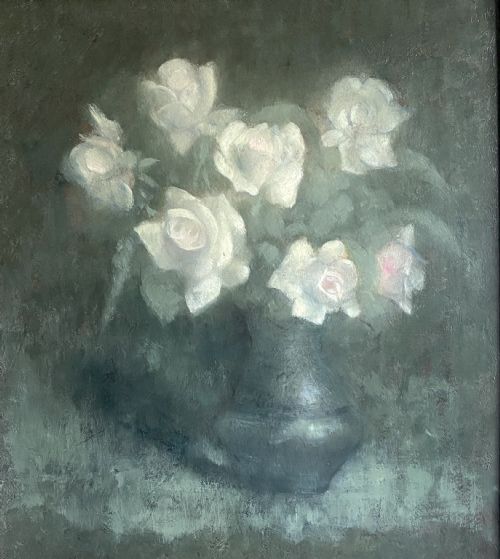
You will encounter pieces executed on canvas, board, and panel, spanning French Impressionism, Post-Impressionism, and early twentieth-century realism. Subjects range from intimate interior scenes and floral still lifes to military portraits and coastal views.
Makers and subjects reflect both British and continental European origins, documenting everyday figures alongside notable personalities of the period. The selection here leans heavily towards signed portraits and atmospheric landscapes dating from nineteen ten to nineteen twenty.
Materials and methods
Artists of this decade typically applied oil paint to stretched canvas, wooden panels, or prepared boards, often framed in gilt wood. The physical support dictates much of the surface texture, with boards and panels offering a firmer resistance to the brush than woven canvas.
Brushwork varies from the blended precision seen in formal portraiture to the looser, visible strokes characteristic of Impressionist and Post-Impressionist landscapes. Pigments are bound in oil and layered to achieve depth, light, and shadow within the composition.
The documented periods span the Edwardian era through to the immediate post-First World War years.
Assessing quality
The strength of the composition and the confidence of the brushwork distinguish the finest examples from simpler student or amateur works. A skilled hand demonstrates command over light and shadow, particularly in portraiture and interior scenes where atmospheric depth matters.
The integrity of the original support and the stability of the paint layer play a major role in evaluation. Works that retain their original gilt framing and show minimal surface disruption command stronger visual presence.
Jules Rambo·Hans Temple·G Hindle·John McGhie
The 1910s Oil Painting Glossary
- Oil on board
- A painting executed on a rigid wooden or cardboard support rather than stretched fabric. This method provides a solid ground that resists the flex of canvas.
- Gilt frame
- A wooden picture surround covered with a thin layer of gold leaf or metallic gilt paint. These frames were often contemporaneous with the artwork.
- Intimist
- An artistic style focusing on intimate, quiet domestic scenes and private interiors. This approach is frequently associated with French painters of the early twentieth century.
- Panel
- A flat piece of wood used as a painting support. Artists favoured panels for their smooth surfaces and durability.
- Post-Impressionism
- An art movement extending Impressionism while rejecting its limitations. Practitioners developed individual approaches involving heavier brushwork and expressive forms.
1910s Oil Painting: Frequently Asked Questions
How do I date a 1910s oil painting?
Many works from this decade carry explicit dates, artist signatures, or exhibition inscriptions on the front or reverse. Clothing styles, hair, and interior furnishings also offer reliable chronological clues.
Contextual evidence such as period framing and recorded biographical details of the artist help narrow down the exact year of creation.
Where should I hang an oil painting?
Select an interior wall away from direct sunlight, heating vents, and high humidity to protect the paint and canvas. Stable environmental conditions prevent warping and cracking over time.
Ensure the hanging hardware is securely fixed to support the weight of the wooden frame and painting.
How do I clean an oil painting?
Dust the surface gently with a soft, dry artist's brush to remove loose particles. Avoid using water, household cleaners, or chemical solvents on the paint layer.
Professional conservators should handle any deep cleaning or removal of discoloured varnish to prevent damaging the original pigment.
What subjects are typical of this period?
Popular subjects include portraits of military personnel and merchants, floral still lifes, and coastal landscapes. Domestic interior scenes also feature prominently among artists influenced by contemporary French movements.
These diverse subjects reflect both personal commissions and the broader artistic interests of the Edwardian and post-war years.