





Traditional English Country Decor
Traditional English country decor brings the rustic charm of historic rural life into domestic spaces through authentic period paintings and utilitarian wooden objects.
Traditional English Country Decor
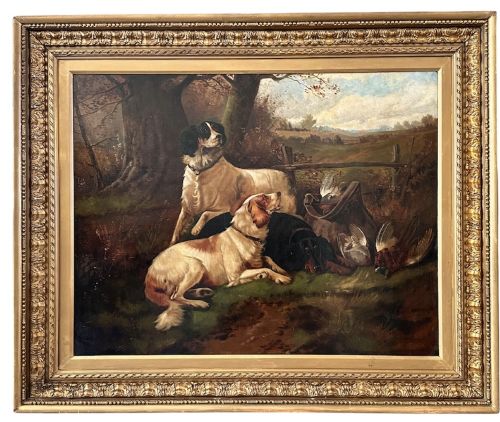
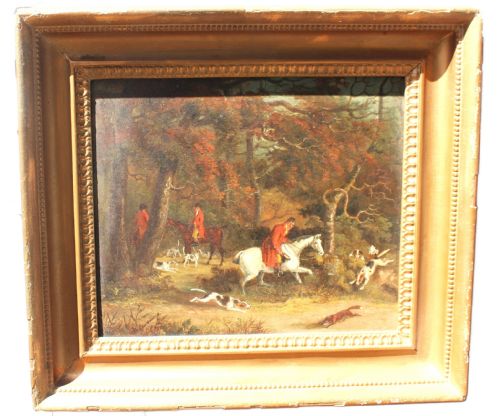
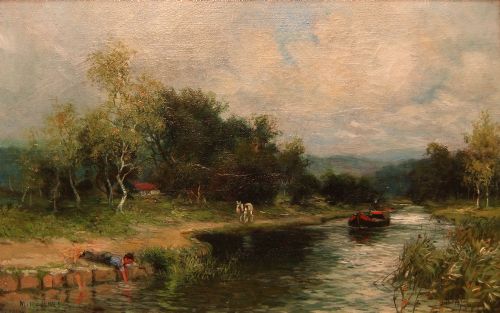
Traditional English country decor centres on rustic objects and pastoral artwork that reflect rural life across the eighteenth, nineteenth, and early twentieth centuries. Buyers searching for traditional English country decor encounter oil paintings depicting sporting scenes, farmyard animals, and rolling landscapes alongside practical items like oak candle boxes and beech shoulder yokes.
The pieces on this page span several distinct periods from the eighteenth century up to the 1930s, encompassing Victorian sporting art, rustic country items, and British Impressionism. Canvas, wood, and paper dominate the material record, creating an interior aesthetic grounded in agricultural utility and field sports.
Materials and construction methods
The physical evidence relies heavily on oil paint applied to canvas, occasionally laid onto board, alongside seasoned oak and beech shaped for utilitarian domestic tasks. Artisans utilised traditional woodworking methods to craft hanging candle boxes and dairy maids' shoulder yokes, ensuring durability for daily farm work.
Framed wall art and paintings utilise canvas and paper supports, while metalwork appears in brass hearth utensils and warming pans. These materials reflect a reliance on durable, locally sourced substances designed to withstand rural environments.
A sturdy wooden shoulder yoke reminds modern buyers of the dairy maid who once hauled heavy milk pails across muddy farmyards.
Indicators of quality
Quality in these rural paintings rests upon the handling of light, anatomical accuracy in animal subjects, and the fidelity of the landscape composition. Works associated with named painters or followers of established schools display superior brushwork and compositional depth compared to anonymous regional output.
For wooden artefacts and domestic items, quality emerges through the integrity of the timber, the retention of original surface patination, and the balance of functional design. Pieces that exhibit careful joinery without excessive modern restoration hold greater interest for collectors of country house interiors.
John Sargent Noble·John Constable·Charles Faulkner·John Charles Tunnard·John Atkinson·John Emms·Edgar Hunt·H. Alken·Maud Raphael Jones
The Traditional English Country Decor Glossary
- Oil painting
- A work executed with pigments bound in a drying oil medium, typically applied to canvas or board. This technique allows for rich colour blending and textured brushwork.
- Shoulder yoke
- A curved wooden device carved to fit across the shoulders for carrying buckets or loads evenly. Farm workers utilised these daily in agricultural and dairy settings.
- Sporting art
- Depictions of field sports, hunting scenes, hounds, and horses that gained popularity in British country houses. Artists captured specific moments of the hunt or detailed portraits of gun dogs.
- Brass warming pan
- A long-handled metal pan filled with hot embers and passed between bedsheets. These functional household items served rural bedrooms before central heating.
- Watercolour painting
- A work created using water-soluble pigments on paper supports. The medium produces transparent washes of colour ideal for countryside watercolours and atmospheric landscapes.
Traditional English Country Decor: Frequently Asked Questions
What subjects appear in these paintings?
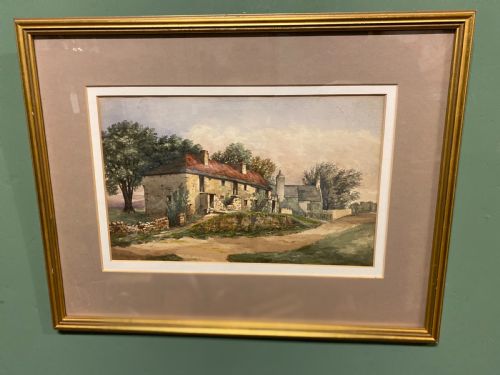
The painted works record rural landscapes, fox hunting scenes, gun dogs, and farmyard poultry. Artists focused on the daily realities of agricultural life and sporting pursuits.
These canvases capture horses, terriers, cockerels, and pastoral cottages across various British counties. The imagery reflects the nineteenth-century fascination with country sports and rural scenery.
How do I date an oil painting?
Dating relies upon stylistic evidence, canvas stamps, stretcher construction, and signatures or inscriptions left by the artist. Sporting art and landscape traditions shifted noticeably between the Georgian and Victorian eras.
Comparison with documented works by known painters or their followers helps narrow the decade of creation. Written annotations on the reverse of the canvas also provide clues.
Where should I hang rural oil paintings?
These works suit period interiors, country kitchens, or studies where traditional wooden furnishings predominate. They pair naturally with exposed brick, oak beams, and earthy wall tones.
Placing paintings away from direct sunlight protects the oil pigments and canvas from degradation. Adequate wall space allows framed sporting art and landscapes to anchor a room's decorative scheme.