




Traditional Dutch School Artwork
Traditional dutch school artwork brings centuries of tonal painting, frozen winter canals and detailed domestic scenes into a room.
Traditional Dutch School Artwork
Traditional dutch school artwork covers oil paintings spanning from the seventeenth century through to the mid twentieth century. Buyers seeking traditional dutch school artwork commonly encounter nineteenth century interpretations alongside earlier seventeenth century examples and mid twentieth century compositions.
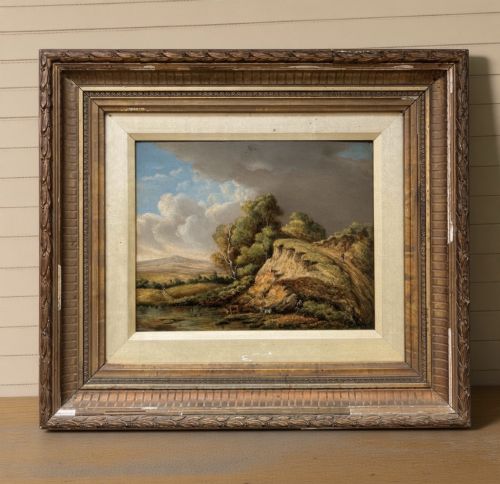
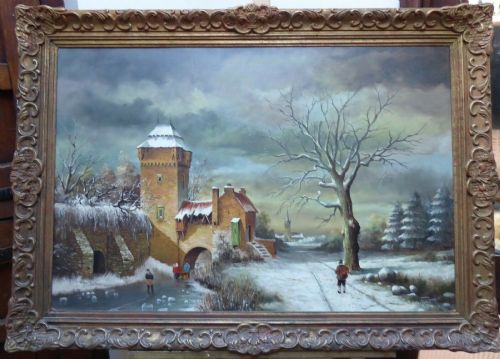
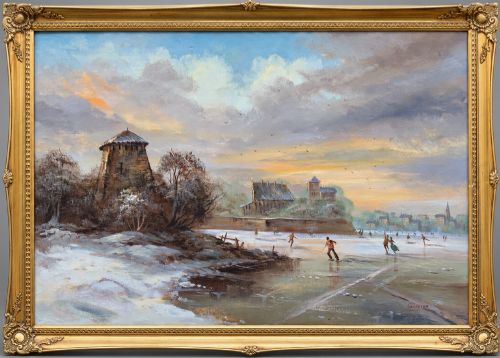
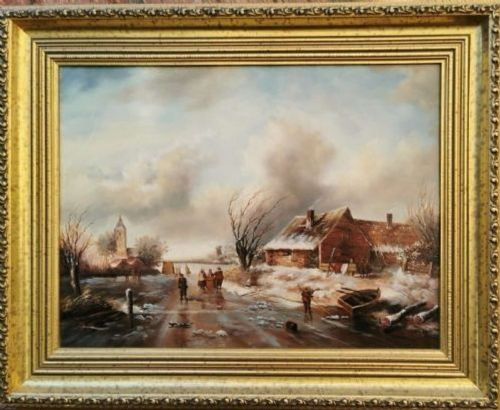
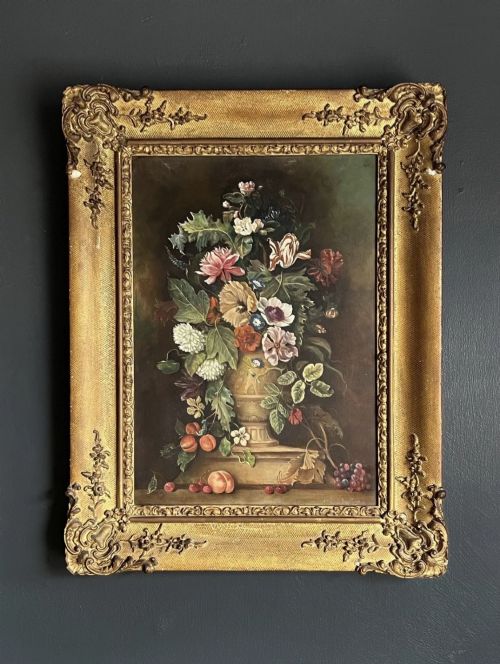
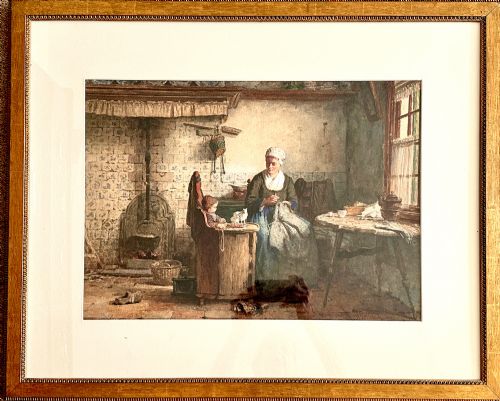
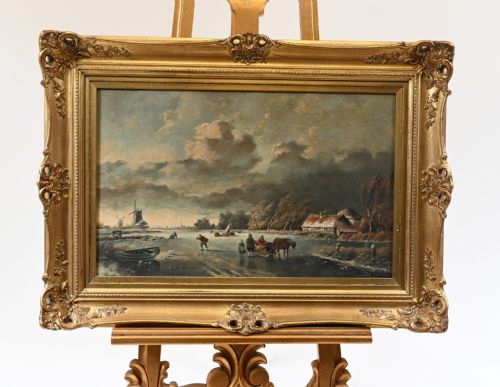
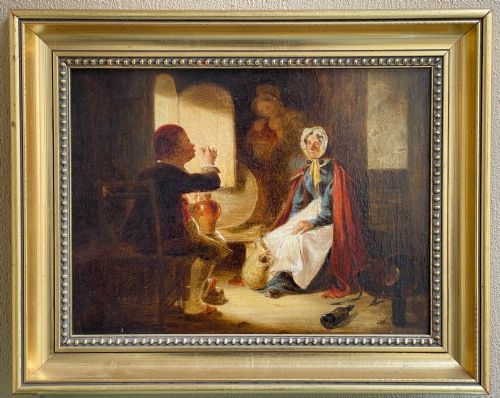
The subjects range from quiet tavern interiors and winter landscapes with figures skating to floral still lifes and maritime scenes of shipping. These pieces frequently arrive housed in gilt gesso or giltwood frames that complement the dark palettes.
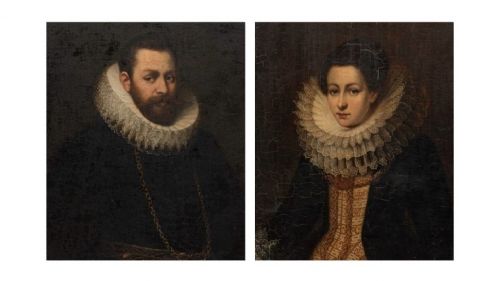
Portraits of noblemen and intimate genre scenes at the hearth appear alongside rural landscapes and windmills at sunset. The selection reflects both seventeenth century golden age style and later nineteenth century realism.
Materials and technique
Artists painted primarily in oil upon canvas, wood panels, and occasionally copper plates. The application of oil paint built up deep shadows and luminous highlights characteristic of the style.
Frames utilise gold leaf, gilt, and moulded gesso to create ornate borders around the canvas. These traditional mountings complete the visual presentation of each painting.
Traditional Dutch School Artwork Retail Price Guide 2026
Typical asking prices for traditional dutch school artwork among the pieces listed under this phrase on Sellingantiques today, from the lower quarter to the upper quarter. They describe what is for sale here now, not the wider market.
Listings feature oil paintings executed on canvas, wood panels, and copper plates across the seventeenth, eighteenth, and nineteenth centuries.
Distinctions in quality
Quality rests upon the handling of light and shadow across the canvas, distinguishing atmospheric depth from flat application. Skilled brushwork defines the intricate details of ruff collars, winter landscapes, and floral arrangements.
The integrity of the underlying wood panel or canvas, paired with the preservation of the original gilt frame, elevates an individual piece. Works attributed to listed artists or bearing clear signatures demonstrate stronger provenance within the genre.
Hendrik Valkenberg·T Bergman·David Teniers·Johannes Philippus Galjaard·Hendrik Willebrord Jansen·Pieter Cornelis Steenhouwer·Louis Smets·Pieter Cornelis Dommersen·Laurens Plas·E Van Drielst·Hermanus van Brussel
The Traditional Dutch School Artwork Glossary
- Dutch Golden Age
- The period of seventeenth century painting noted for innovations in realism, lighting, and subject matter. This era established the foundational motifs visible in later traditional dutch school artwork.
- Giltwood
- Wood that has been coated with gold leaf or a gold coloured finish. This material forms the ornate frames often paired with these paintings.
- Genre Painting
- The depiction of scenes from everyday life, such as tavern interiors or domestic hearths. These works capture ordinary people in moments of daily routine.
- Gesso
- A paint mixture consisting of a binder mixed with chalk, plaster, or pigment. It is applied to wooden frames before gilding to create smooth decorative reliefs.
- Oil on Panel
- A painting technique where oil paint is applied directly to a prepared wooden board rather than fabric. This surface provides a rigid support found in many historical works.
Traditional Dutch School Artwork: Frequently Asked Questions
What subjects define traditional dutch school artwork?
The subjects encompass winter landscapes with frozen canals, floral still lifes, tavern interiors, and maritime views. Portraits of nobility and rural scenes with windmills also appear frequently.
These motifs reflect centuries of artistic tradition focused on domestic life, natural light, and the local landscape.
How do I identify a seventeenth century piece?
Seventeenth century pieces often display the distinct sombre palette and dramatic lighting associated with the golden age style. They typically utilise wood panels or early canvas supports.
Examination of the frame and the craquelure in the oil paint helps indicate the true age of the object.
Where should I hang these oil paintings?
These paintings suit traditional studies, living rooms, and hallways where darker tones and gilt frames add depth. Positioning them away from direct sunlight protects the oil paint and canvas.
Pairing a landscape or still life with antique furniture creates a cohesive historical interior.
What frames do these paintings usually have?
Many examples retain their original gilt gesso or giltwood frames, which often feature intricate moulded details. These frames were designed specifically to enhance the luminosity of the oil paintings within.
Checking the condition of the gold leaf provides insight into how well the piece has been preserved over time.