
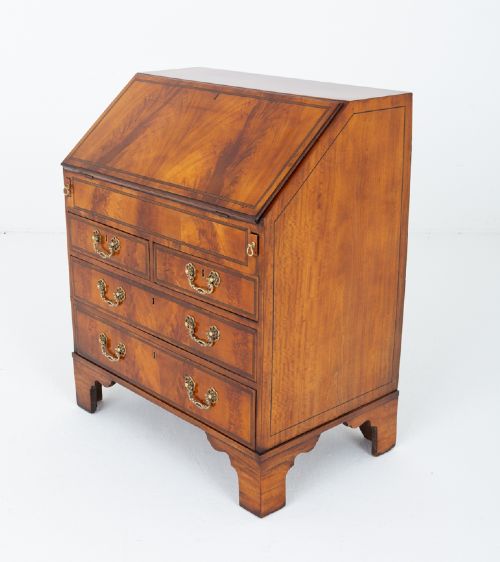
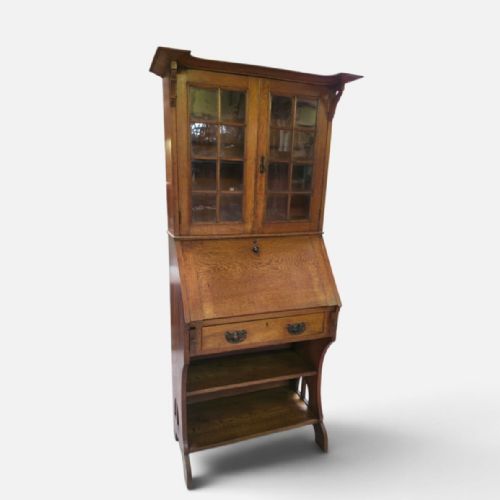
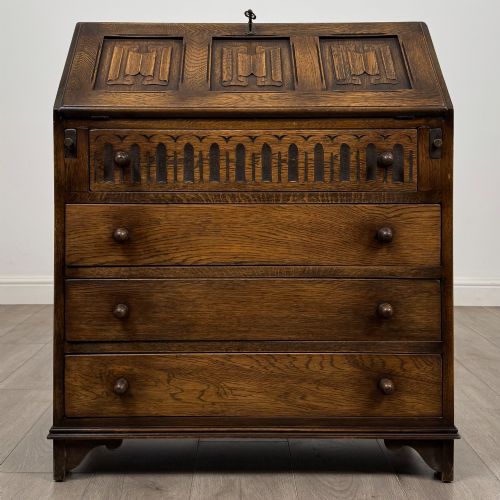
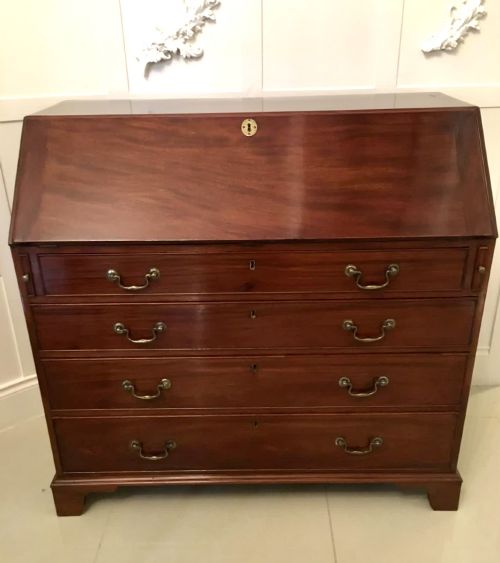
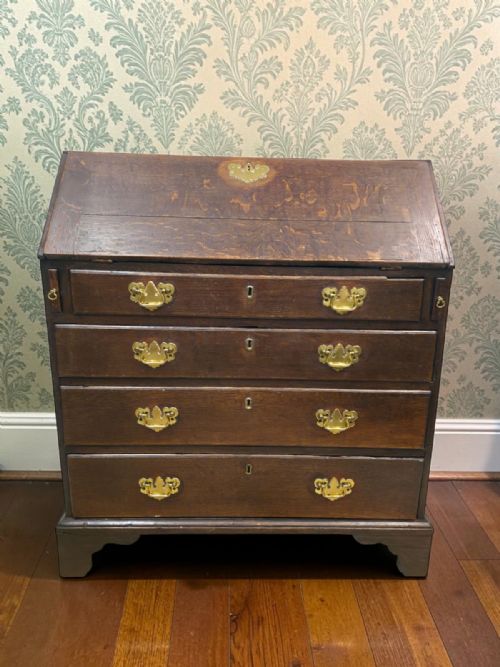
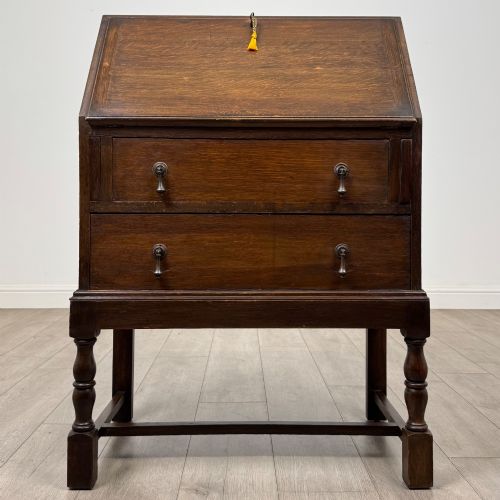
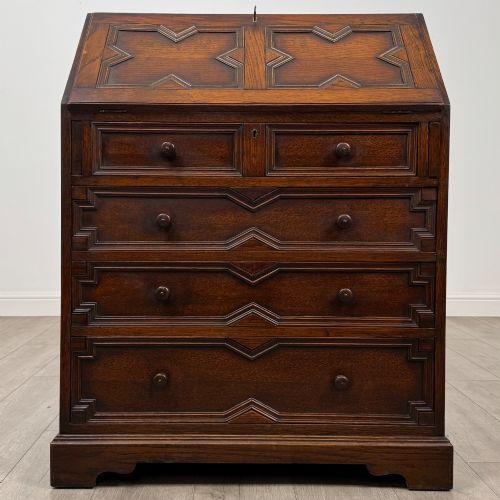
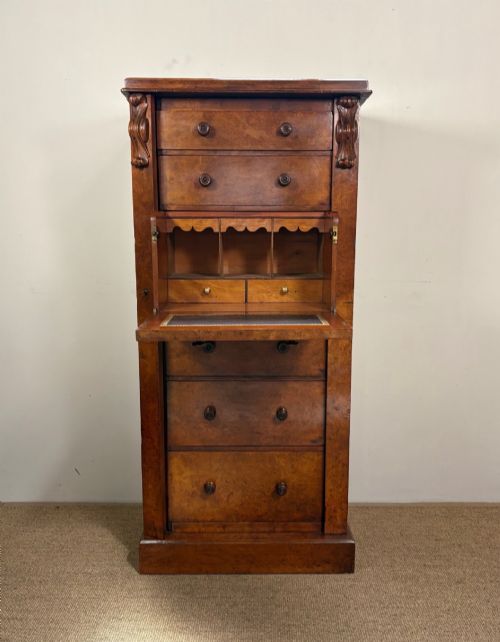
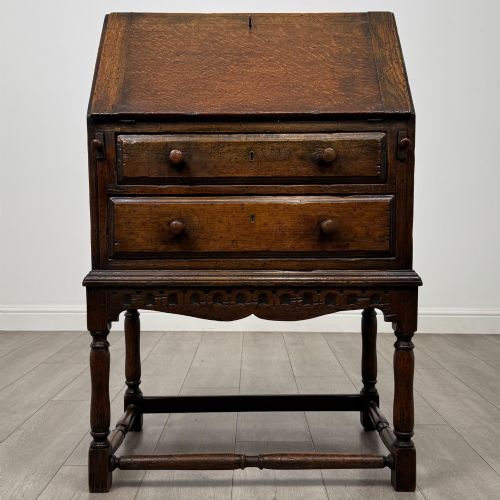

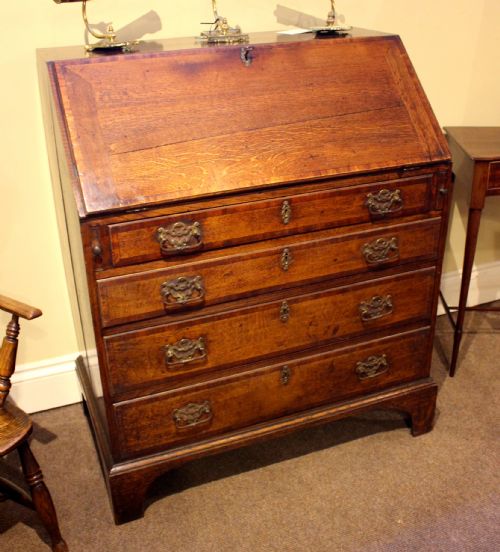


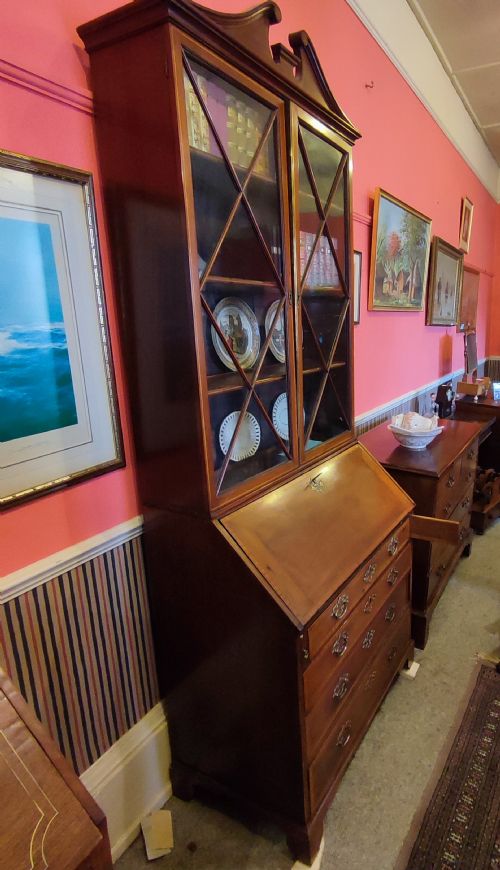


Traditional Drop Front Bureau
A traditional drop front bureau offers a sloping writing flap that opens to reveal fitted pigeonholes and drawers.
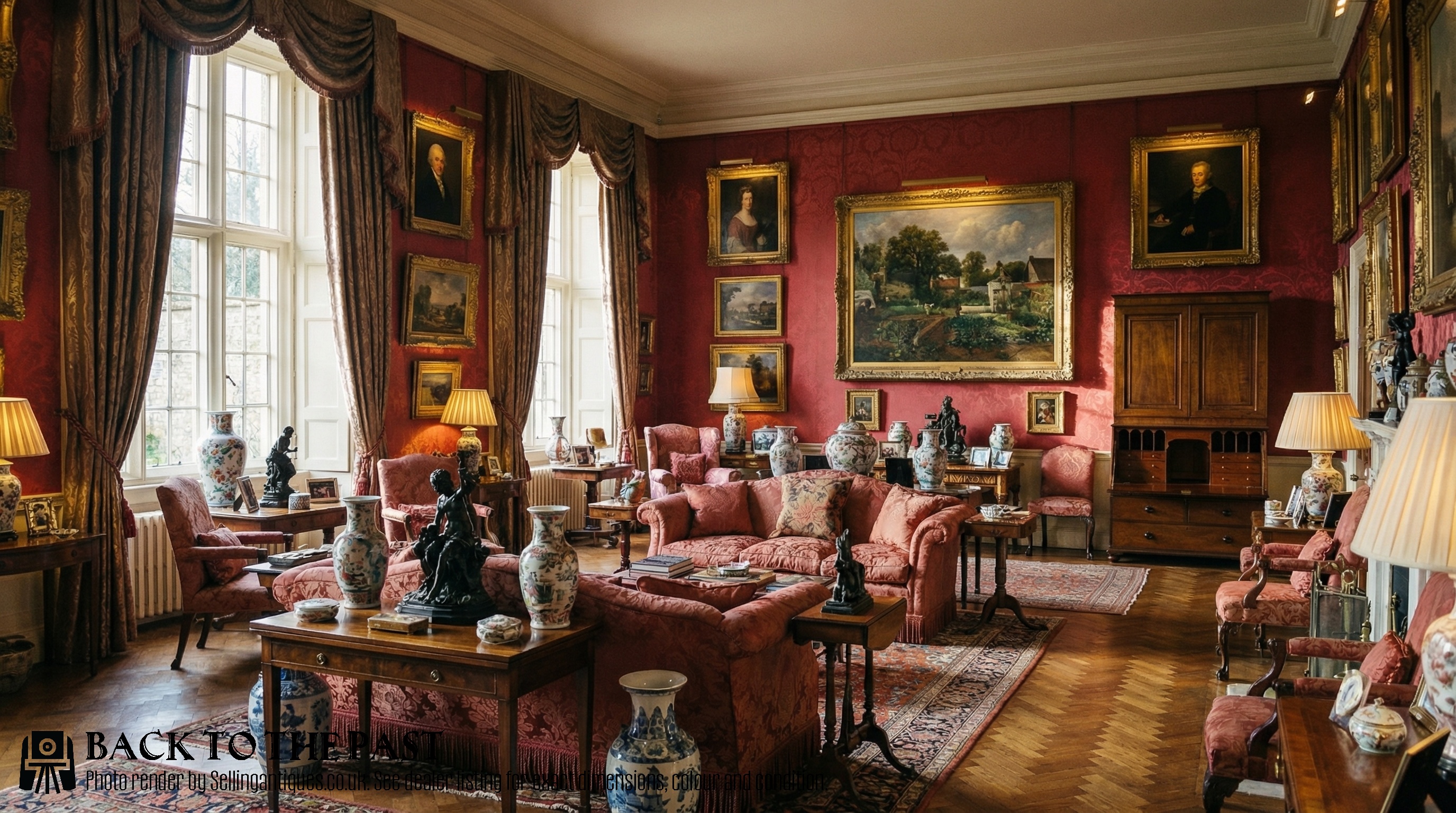
Traditional Drop Front Bureau
A traditional drop front bureau is a writing cabinet with a hinged writing slope that folds down for use and conceals an interior arrangement of small drawers and compartments. These pieces combine desk functionality with cabinet storage, often featuring banks of graduated drawers beneath the writing surface.
The selections span multiple periods, from 18th century examples in oak and mahogany to Edwardian and later 20th century revival styles. Oak and mahogany predominate across the pieces seen here, alongside walnut, burr walnut, elm, pine and yew wood.
Buyers encounter various forms including standard standalone bureaux, taller bureau bookcases topped with glazed or panelled doors, and secretaire chests. Stylistic influences range from early vernacular oak construction to Georgian proportions and later Jacobean, Queen Anne and Sheraton revivals.
Materials and construction methods
Cabinet makers utilised solid timbers such as oak, mahogany and walnut for primary carcases, frequently applying finely figured veneers including burr walnut and burr elm to drawer fronts and writing flaps. Secondary woods formed interior partitions and drawer linings.
Traditional joinery methods such as dovetailing secure the drawer construction, while brass hinges, handles and escutcheons provide functional and decorative hardware. Fall fronts rely on specialised supports or hinges to bear the weight of the writing surface when opened.
Materials utilised across the current selection include brass, oak, mahogany, glass, walnut, burr walnut, metal, leather, elm, pine and yew wood.
Factors that determine quality
Quality separates through the choice of timber and the precision of the cabinet work, particularly in the figuring of veneers and the tightness of dovetail joints. Superior examples exhibit well-proportioned exterior lines combined with intricate internal fittings such as secret compartments, sliding wells and shaped pigeonholes.
The condition of the original brass hardware, the smoothness of the drawer actions and the integrity of the fall front hinges indicate the level of craftsmanship. Pieces retaining their original timber patination and balanced proportions command greater appreciation than altered or heavily restored items.
The Traditional Drop Front Bureau Glossary
- Fall front
- The hinged writing flap of a bureau that lowers to provide a horizontal working surface.
- Bureau bookcase
- A piece combining a lower writing desk section with an upper cabinet enclosed by doors.
- Secretaire
- A cabinet or chest containing a writing drawer or pull-out writing compartment.
- Marquetry
- Decorative veneer work forming pictorial or floral patterns using various coloured woods.
- Pigeonhole
- A small open compartment inside the bureau interior used for sorting papers and letters.
Traditional Drop Front Bureau: Frequently Asked Questions
How do I use a bureau desk?
Lower the hinged fall front to create a writing surface supported by internal stays or pull-out lopers. Store stationery and documents within the internal pigeonholes and small drawers.
Close the flap when writing tasks are finished to conceal paperwork and present a tidy cabinet front in the room.
What is the difference between an oak and mahogany bureau?
Oak bureaux generally date from earlier vernacular periods or later revival styles, displaying pronounced grain patterns and robust construction. Mahogany versions often align with Georgian periods and feature smoother surfaces with finer reddish-brown tones.
Both timbers provide sturdy writing surfaces, though mahogany often accommodates more delicate cabinet details and crossbanding.
Where should I place a bureau in my home?
Position the bureau against a study or living room wall with adequate clearance in front for the fall front to open fully and a chair to pull up. Ensure the wood is kept away from direct heat sources and strong sunlight to protect the polish and timber.
The compact footprint allows these writing desks to function effectively in bedrooms, hallways and home office spaces.