
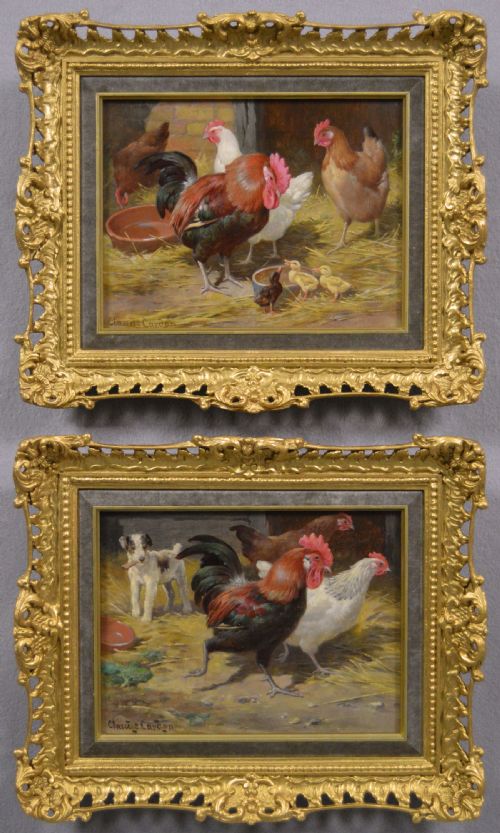


Traditional Dog Canvas Painting
Traditional dog canvas painting works bring centuries of sporting and domestic animal portraiture into your rooms with oil and pigment.
Traditional Dog Canvas Painting
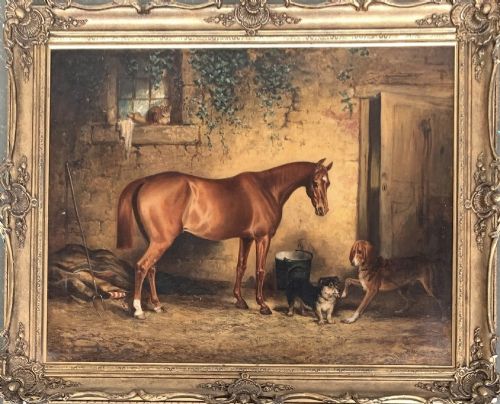
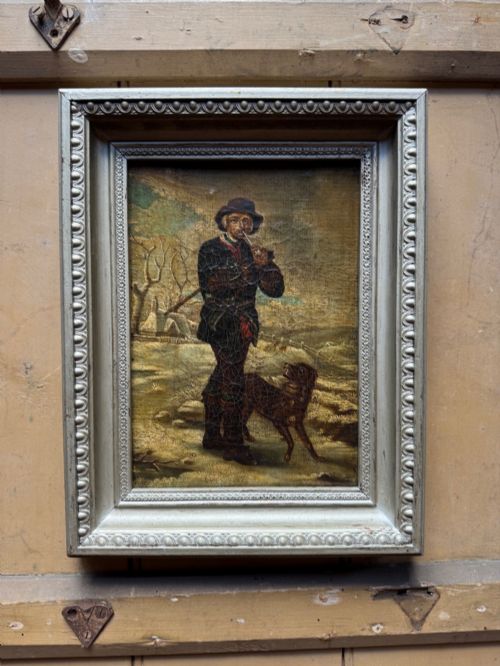
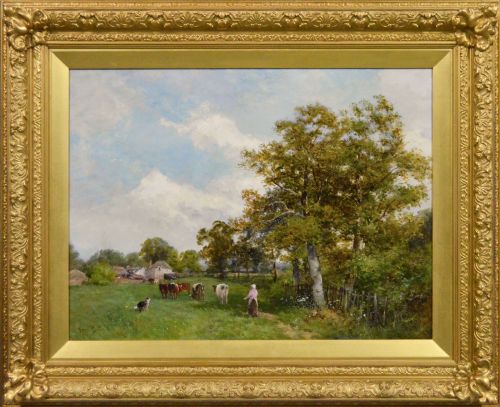
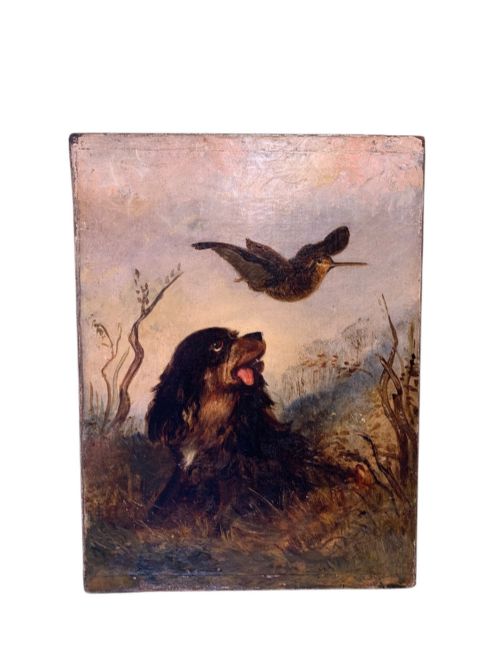
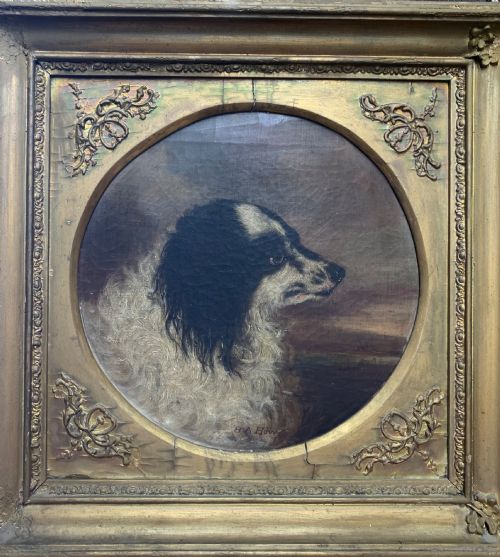
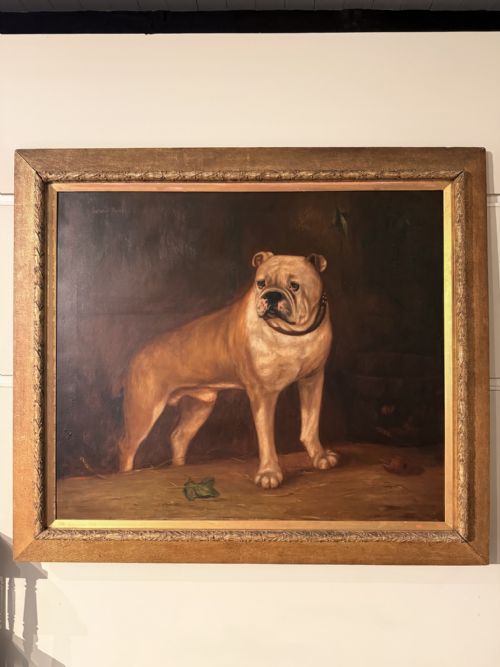
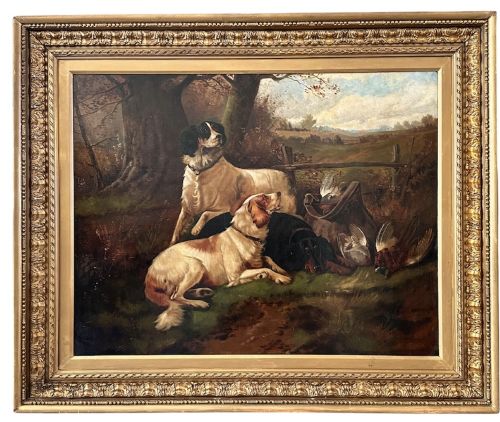
A traditional dog canvas painting captures sporting hounds, working spaniels, and pampered pets rendered in oil paint upon stretched canvas. These works span from the seventeenth century through to the mid-twentieth century, encompassing Victorian sporting art, realism, and pastoral scenes.
The most common pieces you will encounter on this page date from the nineteenth century, including Victorian portrayals of gun dogs, terriers, and prizewinning hounds. Many depict individual animals with distinct personalities, while others place working dogs alongside horses, farm animals, or country houses.
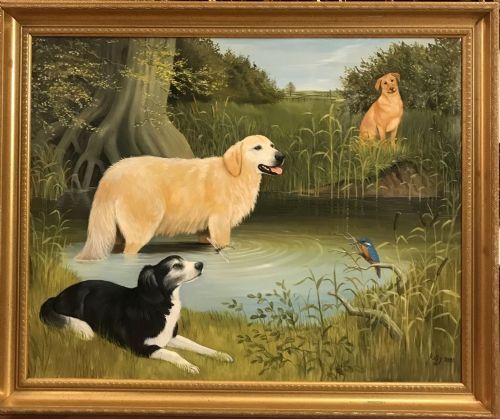
You will also find works produced after notable animal artists, alongside mid-twentieth-century portrayals of breeds such as cocker spaniels and Labradors. These oil paintings reflect changing social attitudes towards pets and sporting companions over several hundred years.
How these oil paintings were constructed
Artists painted primarily with oil paint upon stretched canvas, occasionally utilising wood panels or incorporating giltwood frames to finish the piece. The application of oil pigment allowed painters to build up rich textures in animal coats, landscapes, and interiors.
Canvases were typically stretched over wooden frames, primed, and worked with brushes of varying fineness to capture the sheen of a dog's fur or the details of a moorland setting. Many surviving works retain their period frames, sometimes accented with gilt.
Listings span from the seventeenth century through to the 1960s, executed primarily in oil paint on canvas and wood.
What separates the finest works
The distinction between ordinary and exceptional works lies in the anatomical accuracy of the animal, the expressive depth in the eyes, and the handling of light across the coat. Master painters captured the distinct bone structure and character of specific breeds rather than relying on generic canine shapes.
Compositional strength also sets superior canvases apart, whether the dog is set within a detailed interior, a winter snowscape, or a sweeping moorland scene. The integration of the subject with its background demonstrates the artist's skill and elevates the painting beyond a simple record.
Henry Barraud·David Bates·B A Howe·John Sargent Noble·Claude Cardon·Frans Snyders·LM Webb·William Barraud·George E Sharpe·Fannie Moody·Edwin Frederic Holt·Colin Graeme Roe·John Charles Tunnard·Michael Lyne·Henri Schouten·M E Hankinson·John Emms·Valentine Thomas Garland·Daniel Pasmore·George Cole·Charles Bilger Spalding·Samuel John Carter·William Albert Clark·Richard Buckner
The Traditional Dog Canvas Painting Glossary
- Canvas
- A heavy woven fabric stretched across a wooden frame to serve as a sturdy surface for oil painting. It provides the foundational texture visible beneath many historical works.
- Oil Paint
- A slow-drying medium made by mixing pigments with oils such as linseed. This technique allows for subtle blending and rich colour depth in animal portraits.
- Sporting Art
- A genre of painting depicting field sports, horses, and hunting hounds, often associated with the British countryside. These works record the activities of the landed gentry and their working animals.
- Realism
- An artistic movement focusing on everyday subjects depicted in a naturalistic manner without idealisation. In animal painting, this translates to an unvarnished portrayal of working dogs and farm life.
- Giltwood
- Wood carved and covered with a thin layer of gold leaf, commonly used for period picture frames. It adds a warm metallic border to traditional canvas works.
Traditional Dog Canvas Painting: Frequently Asked Questions
What periods do these dog paintings come from?
The works span from the seventeenth century through the Victorian era up to the mid-twentieth century. Nineteenth-century examples form the largest group on this page.
You will find everything from early seventeenth-century Dutch realism to twentieth-century sporting canvases and mid-century breed portraits.
How were these canvas paintings framed originally?
Many historical oil paintings are housed in period wooden frames, often finished with gilt or gilding. These frames range from simple mouldings to ornate decorative borders.
Original framing helps contextualise the age of the piece, though many antique canvases have been reframed over the decades to suit changing tastes.
What is Victorian sporting art?
Victorian sporting art encompasses paintings that record hunting hounds, gun dogs, horses, and field sports. Artists of this era focused heavily on the bond between owner, animal, and landscape.
These pieces often feature detailed renderings of specific breeds in natural outdoor settings, reflecting the popularity of country sports during the nineteenth century.
How do I care for an oil painting on canvas?
Keep oil paintings away from direct sunlight, damp environments, and rapid temperature fluctuations. Dust the surface gently with a soft, dry brush without applying pressure.
Avoid using water or chemical cleaning products on the canvas or paint layer, and consult a professional conservator if the surface requires deeper cleaning.