


Vintage Canine Oil Artwork
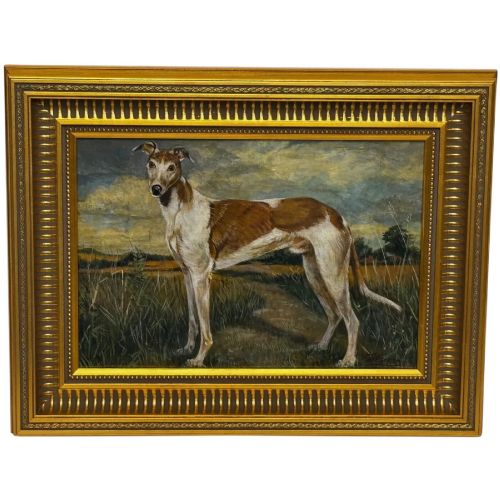
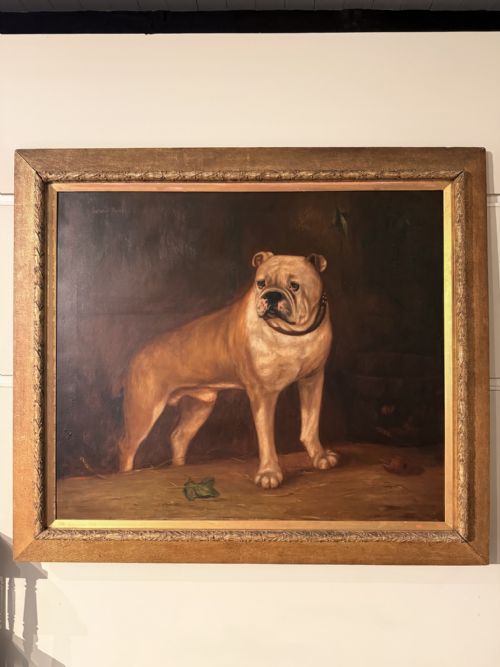
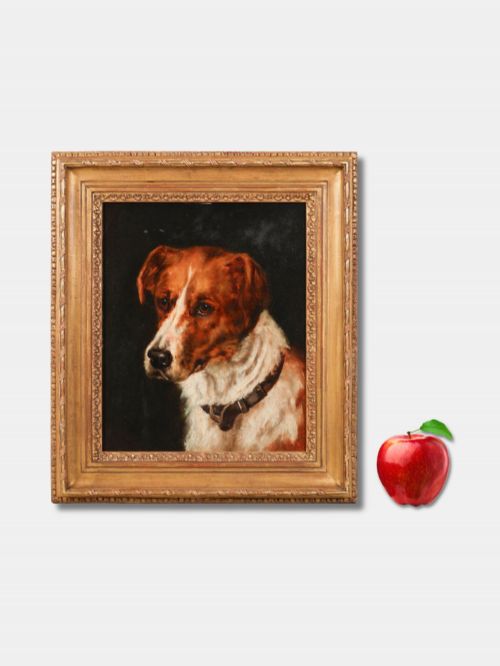
These vintage canine oil artwork pieces capture character and breed history, offering collectors authentic painted portraits of hounds, terriers, and spaniels.
Vintage Canine Oil Artwork
When you search for vintage canine oil artwork, you encounter painted canine portraits spanning the Victorian era through the mid-twentieth century. The works depict individual dogs, working gun dogs, and pairs in landscapes, interiors, or farmyards.
You meet various specific breeds on this page, including collies, spaniels, terriers, bulldogs, and retrievers. Many examples originate from British schools, capturing sporting animals and household pets in oil paint.
The selection ranges from intimate panel studies to larger canvas paintings. Artists of the nineteenth and twentieth centuries recorded these animals with distinct attention to pose and personality.
Materials and methods
Artists painted these works using oil paint applied to stretched canvas, wooden boards, or wooden panels. Pigments were layered to build depth in fur textures and natural lighting within landscapes or interior settings.
Many surviving pieces retain their period frames, constructed from wood with gilt or giltwood finishes. These frames complement the depth of the oil pigments and protect the edges of the canvas or board.
Terriers are caught red-handed guarding rats in barns, proving that mischief makes the best model.
Variations in quality
Quality rests upon the artist's ability to render canine anatomy and individual expression accurately. Stronger pieces convey the distinct personality and alert posture of the specific breed rather than a generic animal shape.
The handling of the surrounding environment influences the overall success of the composition. Skilled painters integrated the dog naturally into a landscape, courtyard, or interior space with balanced light and brushwork.
John Emms·Sir Edwin Landseer·William Barraud·James Ward·Florence Mabel Hollams
The Vintage Canine Oil Artwork Glossary
- Oil on Canvas
- Pigment mixed with drying oil applied to a woven fabric support. This method allows for subtle blending and rich texture.
- Oil on Board
- Paint applied directly to a rigid wooden or composition board. Artists often used this support for smaller, rapid studies.
- Giltwood
- Wood carved and covered with a thin layer of gold leaf or metallic powder. It provides a traditional decorative border for framed paintings.
- Sporting Art
- Depictions of animals, hunting, and rural pursuits. This genre forms a significant portion of nineteenth-century canine portraiture.
- British School
- A classification for artists trained or working within Britain. It encompasses regional portraiture and animal painting traditions.
Vintage Canine Oil Artwork: Frequently Asked Questions
How do I identify the breed in an old painting?
Study the facial structure, ear shape, and coat type depicted by the artist. Many Victorian and twentieth-century painters recorded specific working and companion breeds with notable accuracy.
Compare the proportions against historical standards for terriers, spaniels, or collies from the corresponding period.
Are these paintings usually signed by the artist?
Signatures appear on many canvases and boards, often placed quietly in a lower corner. Some historical works remain unsigned or attributed to followers of prominent painters.
Checking the reverse of the canvas or board can sometimes reveal inscriptions, artist stamps, or old gallery labels.
What framing is appropriate for these artworks?
Period giltwood frames suit nineteenth and early twentieth-century oil paintings best. These frames complement the traditional aesthetic of canine portraits.
Ensure the moulding matches the era of the painting to maintain historical harmony.
How should I care for an oil painting on board?
Keep the artwork away from direct sunlight and dramatic temperature fluctuations. Stable indoor environments prevent the wood board from warping and the oil paint from cracking.
Dust the surface gently with a dry, soft brush without applying liquid cleaners.