





Victorian Terrier Painting
These Victorian terrier painting works capture the tenacity and character of working dogs through traditional nineteenth-century brushwork.
Victorian Terrier Painting
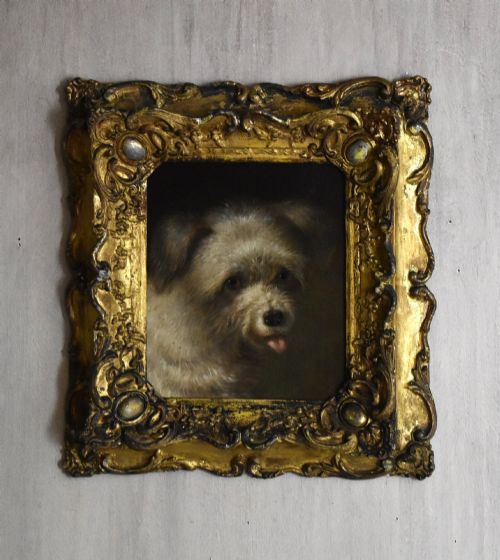
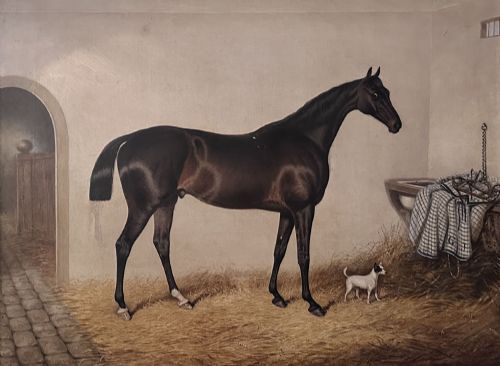
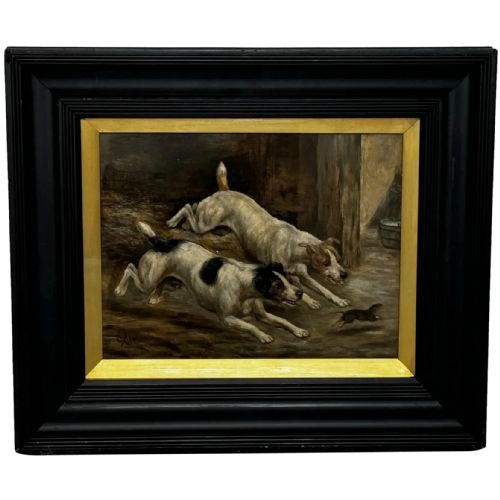
A Victorian terrier painting depicts canine subjects ranging from solitary kennel portraits to lively barn scenes where dogs guard against rats or wait on the scent. These works frequently record specific breeds such as Jack Russells, Scottish terriers, and white English terriers.
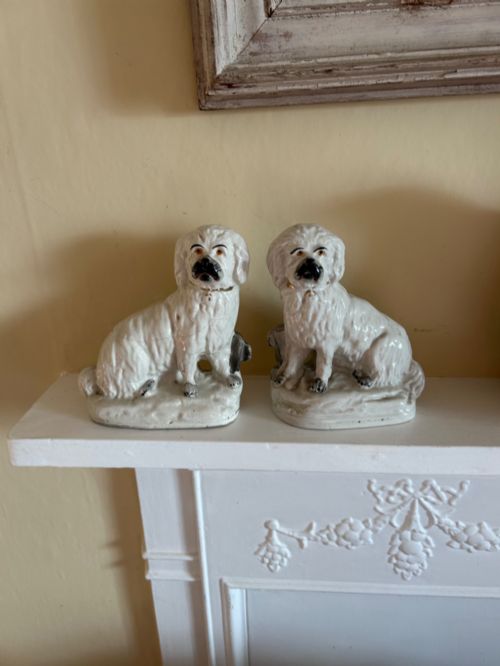
The pieces on this page span the nineteenth century and into the early twentieth century, taking the form of oil paintings on canvas alongside occasional pottery figures. Many examples place the dogs within farmyards, walled gardens, or simple interiors.
Makers and followers working in the British sporting art tradition produced these pieces, drawing on the prominent animal painting styles of the era. Buyers encounter both signed canvases by known painters and evocative works by followers of major artists.
Markers of Quality
Quality rests upon the artist's ability to render canine anatomy and individual expression with convincing realism rather than rigid stiffness. Works by established painters demonstrate superior control over light, shadow, and the narrative tension of ratting scenes.
The condition of the canvas and the presence of an original period gilt frame contribute substantially to the standing of a piece. Finer examples capture the distinct personality and alert posture of the terrier with assured, confident brushstrokes.
Several terriers captured in these historic scenes appear perpetually mid-bark at an unseen rat.
Valentine T. Garland·Martin Theodore Ward·Sir Edwin Landseer·John Emms·George Armfield·Samuel Fulton
The Victorian Terrier Painting Glossary
- Oil on Canvas
- A traditional painting medium where coloured pigments are suspended in drying oils and applied to a woven fabric support. This technique allowed artists to achieve rich tones and subtle blending for fur and fabric.
- Giltwood
- Wood that has been treated with a thin layer of gold leaf or metallic gilt paint. These frames surround many nineteenth-century paintings to enhance their visual presence.
- Follower
- An artist whose style closely mirrors that of a more famous master without being a direct pupil. These painters adopted the compositional methods and subject matter popularised by leading figures.
- Sporting Art
- Artwork depicting rural sports, hunting scenes, and working animals. This genre gained immense popularity in Britain during the nineteenth century.
Victorian Terrier Painting: Frequently Asked Questions
What subjects appear in these paintings?
These works primarily show terriers in various settings, from solitary portraits in gardens to active scenes in barns where dogs chase or guard against rats.
Other compositions feature puppies, hunting dogs, or subjects inspired by prominent animal painters of the nineteenth century.
How do I identify the period of a painting?
Dating relies on examining the canvas preparation, stretcher frames, and the style of the giltwood framing alongside any artist signatures.
Costume details, architectural elements in the background, and written inscriptions on the reverse also help place the work within the nineteenth or early twentieth century.
Where were these paintings displayed originally?
Victorian households hung these canvases in libraries, studies, and dining rooms as reflections of country pursuits and working dog ownership.
They suited domestic interiors designed to showcase sporting interests and appreciation for animal realism.
Are these works signed by the artists?
Some pieces bear clear signatures or initials from known nineteenth-century painters, while others remain attributed to followers or circles of major artists.
Unsigned works are evaluated through technique, subject matter, and stylistic comparison with documented pieces from the era.