




Traditional Diamond Solitaire
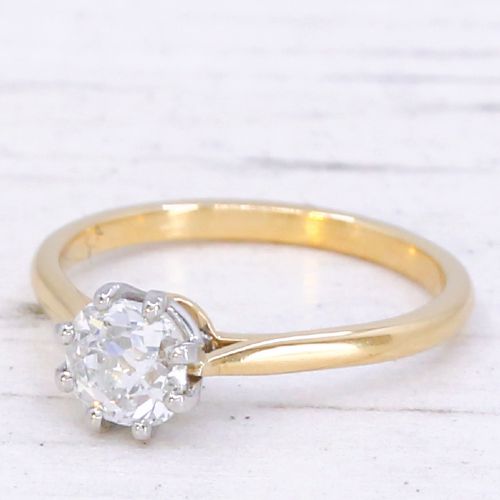
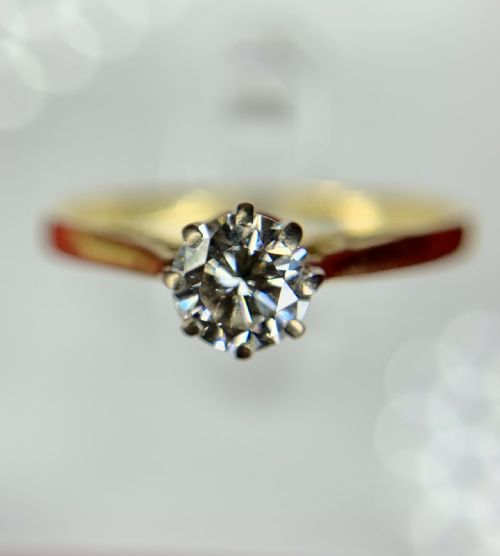
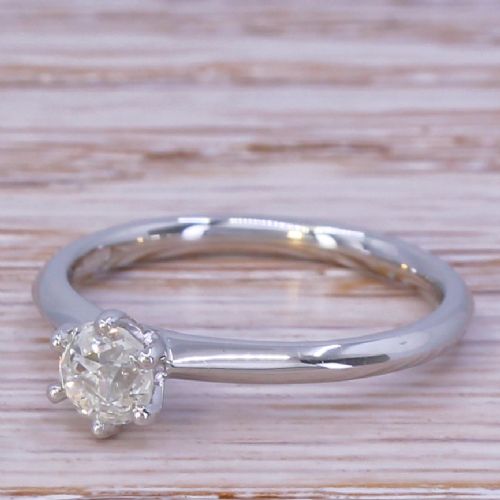
A traditional diamond solitaire offers a single stone set simply on a band, prized for its clean focus on the gem itself.
Traditional Diamond Solitaire
When you search for a traditional diamond solitaire, you encounter rings and earrings focused on a single principal stone. The forms on this page range from Victorian illusion-set rings to Edwardian and Art Deco pieces.
The selection includes engagement rings and earrings spanning eras from the Victorian period through 1960. Old cut, mine cut, and old cushion cut diamonds dominate the pieces listed here.
Mounts vary between yellow gold, white gold, 9ct, 18ct, 22ct gold, and platinum. Certain examples incorporate side stones or ruby accents alongside the main diamond.
How they were made
Goldsmiths shaped mounts in yellow gold, white gold, and platinum to hold old cut and mine cut diamonds securely. Techniques such as illusion setting made smaller stones appear substantial by surrounding them with reflective metal work.
Jewellers utilised durable metals like platinum and high-carat gold to construct engagement rings and earrings designed for daily wear. Gem reports accompany specific vintage pieces to document stone characteristics.
Old cut diamonds were shaped to catch the flicker of oil lamps and candlelight, glowing softly long after the sun went down.
What varies in quality
Quality rests in the cut and presence of the diamond, alongside the weight of the precious metal mount. Old cut and mine cut stones display distinct facets hand-polished by past lapidaries.
The choice between 9ct gold, 18ct gold, 22ct gold, and platinum changes the weight and colour profile of the setting. Certified stones provide explicit grading for colour and clarity.
The Traditional Diamond Solitaire Glossary
- Old cut
- A diamond cut style from the late nineteenth and early twentieth centuries featuring a smaller table and larger culet. These stones catch candlelight warmly.
- Mine cut
- An early precursor to the modern brilliant cut, typically featuring a high crown and deep pavilion. This hand-cut style is common in pieces from the Victorian era and 1900.
- Illusion set
- A setting technique where metal encasing the diamond is faceted to mimic a larger stone. This method maximises the visual impact of the gem.
- Platinum
- A dense, white precious metal utilised for secure claw settings and enduring jewellery mounts. It holds small details crisply over decades of wear.
Traditional Diamond Solitaire: Frequently Asked Questions
How do old cut diamonds differ from modern stones?
Old cut and mine cut diamonds were shaped by hand before modern machinery standardised proportions. They exhibit smaller tables and broader facets.
These stones produce a distinct, softer sparkle under ambient light compared to modern brilliant cuts.
What metals were used for these rings?
Goldsmiths utilised yellow gold, white gold, and platinum across various purities including 9ct, 18ct, and 22ct. Platinum gained favour for secure white metal settings.
Gold choices shifted through eras, from rich yellow tones in Victorian pieces to crisp white metals in later designs.
How should I care for antique jewellery?
Antique rings and earrings benefit from gentle cleaning with warm soapy water and a soft brush. Regular checks by a jeweller ensure settings remain tight.
Removing pieces during manual tasks protects delicate historical mounts from unnecessary wear.