


Traditional Countryside Oil Art
Traditional countryside oil art captures rural life, rolling pastures and pastoral rivers through layered pigment and expressive brushwork.

Traditional Countryside Oil Art
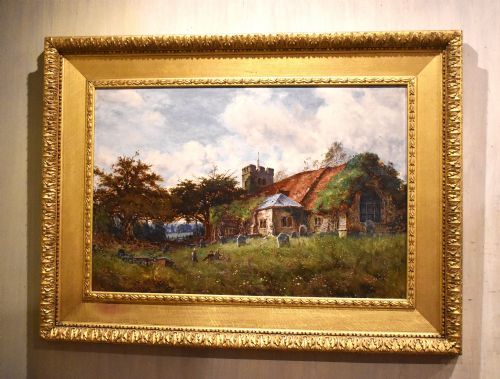
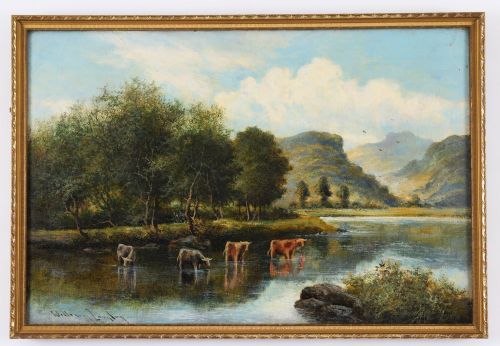
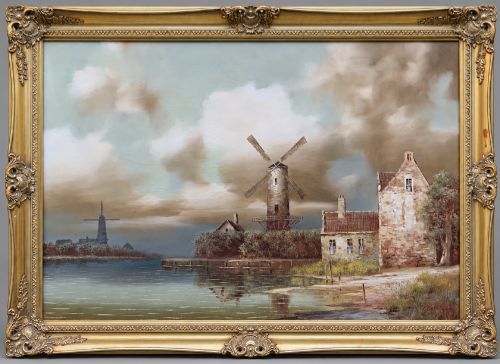
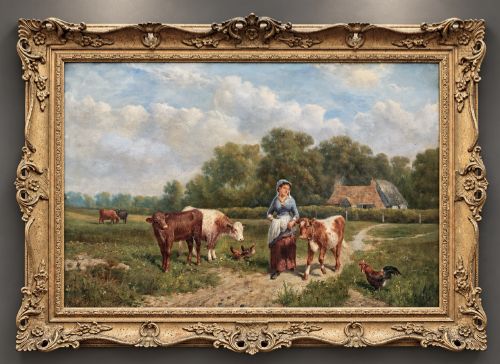
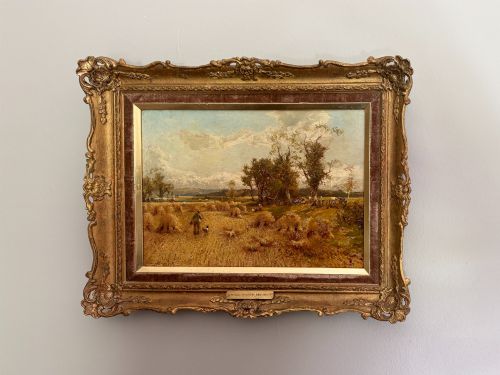
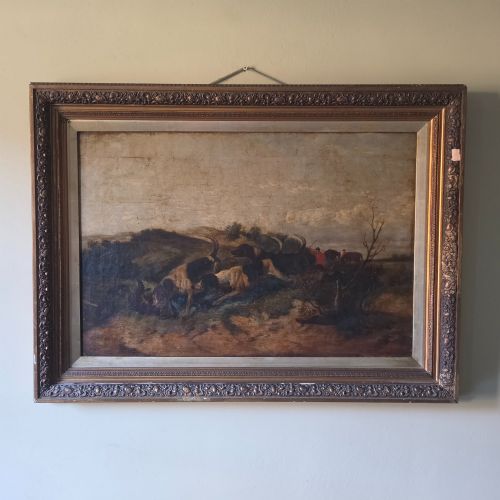
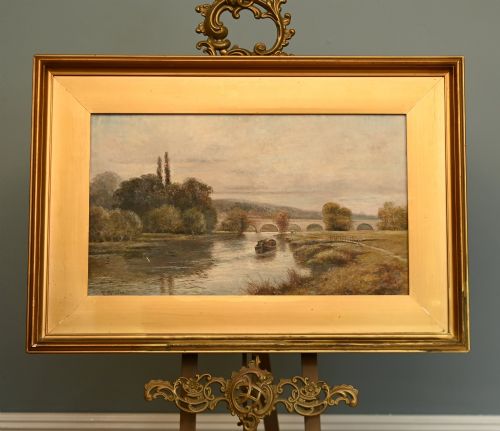
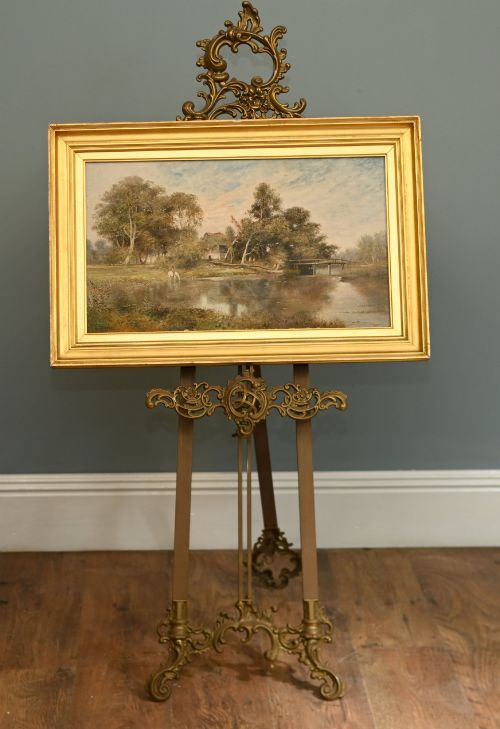
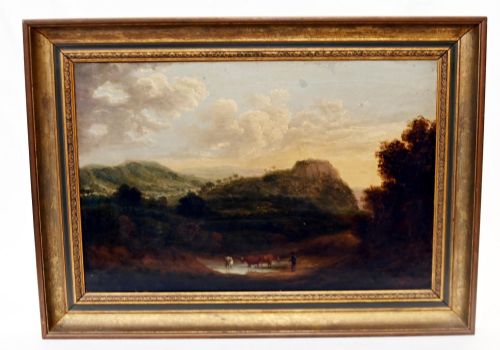
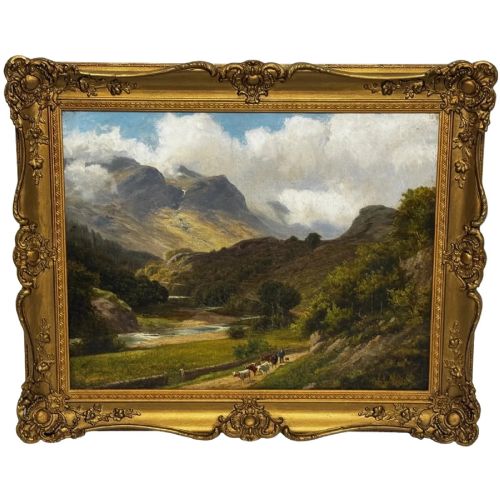
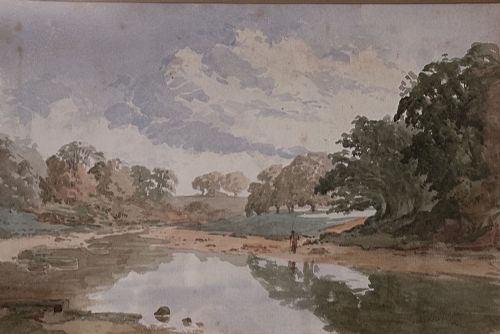
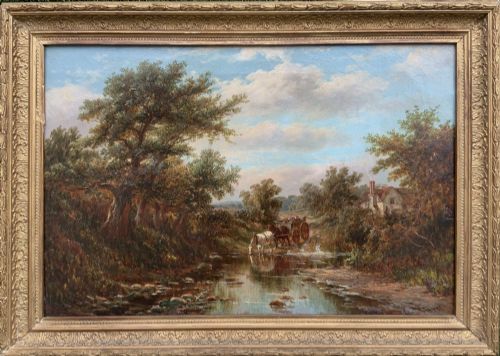
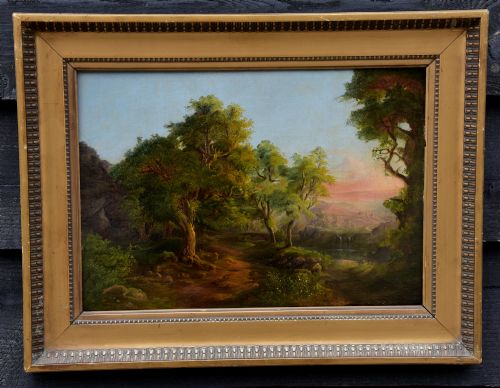
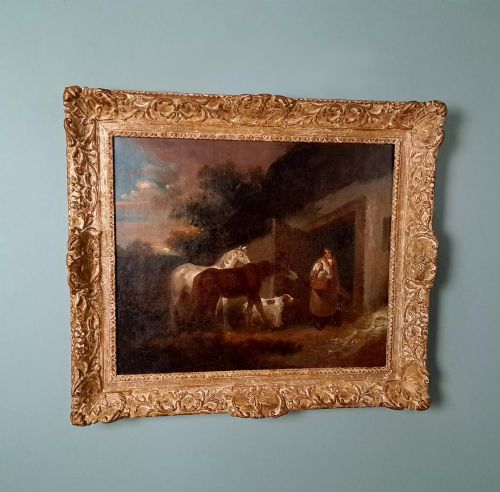
Traditional countryside oil art comprises framed paintings depicting pastoral scenes, rural rivers, livestock and agricultural life. These works capture British and European landscapes across changing seasons and rural communities.
The selections available range from nineteenth-century romantic vistas to early twentieth-century views rendered on canvas, board and wood panel. Buyers encounter detailed depictions of cottages, farm animals and woodland paths framed in giltwood.
Rural landscapes dominate the selection, often featuring figures herding cattle, working horses or gathering water by West Country rivers and Welsh valleys.
How they were made
Artists painted primarily with oil paint on stretched canvas, wooden boards or prepared wood panels, building texture with layered pigment. Gesso and gilt wood frames frequently encase these works, providing structural support and ornamentation.
Brushwork varies from tight Victorian realism to looser British Impressionism, capturing natural light across fields and waterways.
Support materials include stretched canvas, wooden boards, and wood panels housed in original giltwood and gesso frames.
What varies in quality
The success of a landscape relies on the artist's handling of natural light, depth and atmospheric perspective across sky and terrain. Superior examples demonstrate confident brush control and harmonious colour balance within the rural composition.
Original frames in matching giltwood or gesso add integrity to a piece, whereas later re-framing alters the historical context of the painting.
Richard Sebastian Bond·William H Myers·George Graham·William Joseph Shayer Senior·Hendrik Willem Schweickhardt·Thomas Barker of Bath·David Bates·Vernon DeBeauvoir Ward·Alexander Wellwood Rattray·John Horace Hooper·Hubert Wellington·Owen Bowen·Charles Walter Simpson·William Henry Mander·Herbert Royle·John Sanderson Wells·Reginald Grange Brundrit·Alfred Augustus Glendening Jnr·William Sydney Cooper·Sidney Richard Percy·Thomas Spinks·Robert John Hammond·Johannes Philippus Galjaard·Giulio Cecchini·William Greaves
The Traditional Countryside Oil Art Glossary
- Oil on Canvas
- Pigment mixed with drying oil applied to a woven fabric support stretched over a wooden frame. This medium allows for rich colour saturation and textured brushwork.
- Gesso
- A plaster mixture applied to wood panels or frames as a smooth base for painting or gilding. It provides a stable surface for the subsequent application of oil paint or gold leaf.
- Gilt Wood
- Carved wood decorated with gold leaf or metallic gilt powder. It is commonly found on traditional picture frames from the Victorian and Edwardian periods.
- Wood Panel
- A flat wooden board utilised as a rigid painting support before stretched canvas gained widespread favour. Panels offer a smooth, stable ground for detailed landscape scenes.
Traditional Countryside Oil Art: Frequently Asked Questions
How do I date a countryside oil painting?
Examine the canvas weave, the stretcher construction, and the style of the giltwood frame for period clues. Signatures, artist records, and costume details of any figures also provide clear dates.
Paintings executed on wooden boards or prepared panels frequently point toward specific nineteenth or early twentieth-century regional schools.
Where should I hang a rural landscape?
Choose a wall with indirect natural light to protect the oil pigments and the giltwood frame from fading. Rooms with stable humidity levels help preserve the wooden panels and stretched canvases.
Position the artwork at eye level above a mantelpiece or sideboard to complement traditional interior aesthetics.
How do I clean an antique oil painting?
Dust the surface very gently with a soft, dry brush without applying pressure to the pigment layers. Avoid using water, household cleaners, or solvents on the canvas.
Professional conservators should handle any removal of darkened varnish or accumulated grime from the painted surface.
What subjects appear in traditional pastoral art?
Common subjects include shire horses ploughing fields, cattle by rivers, and thatched cottages nestled in wooded valleys. Artists frequently depicted daily agricultural labour and serene rural waterways.
Scenes range from tranquil morning views in Kent to dramatic mountain landscapes in Wales.