


Traditional Country Sports Painting
Traditional country sports painting captures the movement of hounds, horses and game across nineteenth and twentieth century landscapes.
Traditional Country Sports Painting
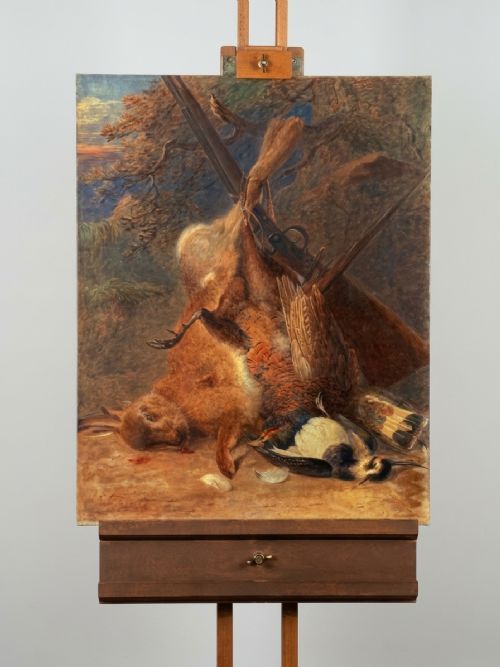
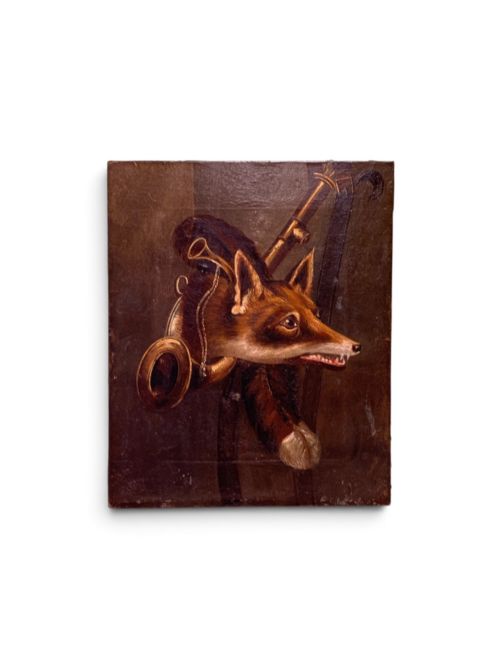
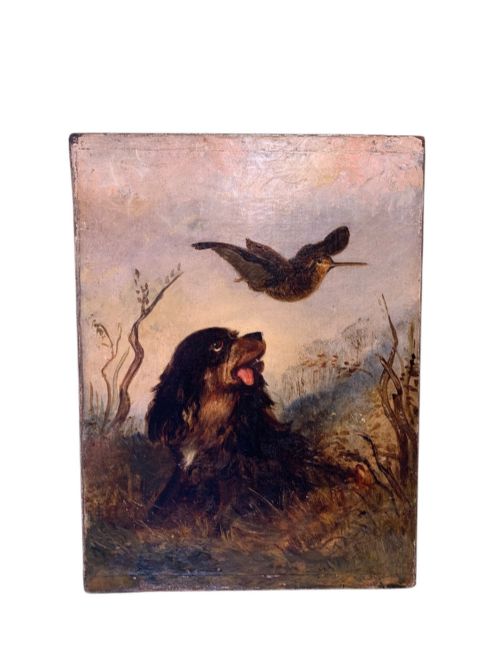
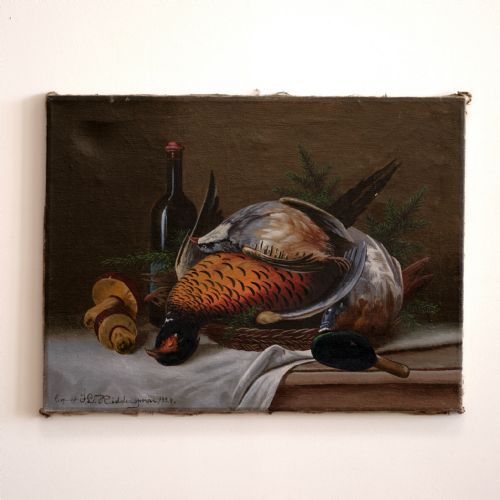
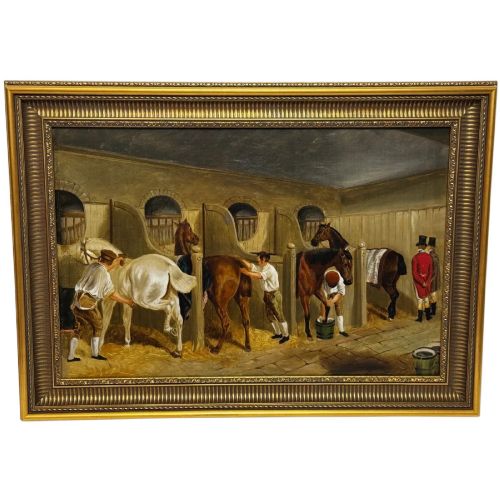
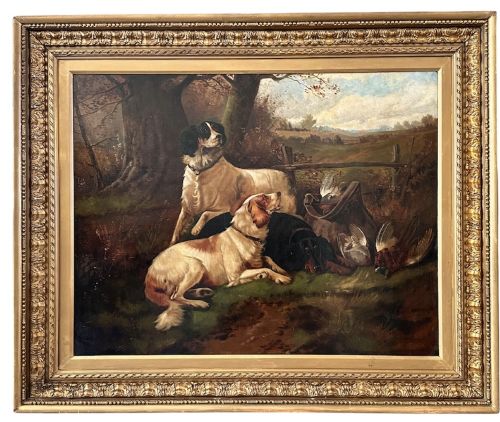
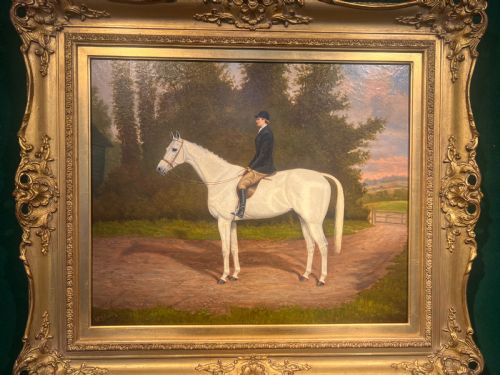
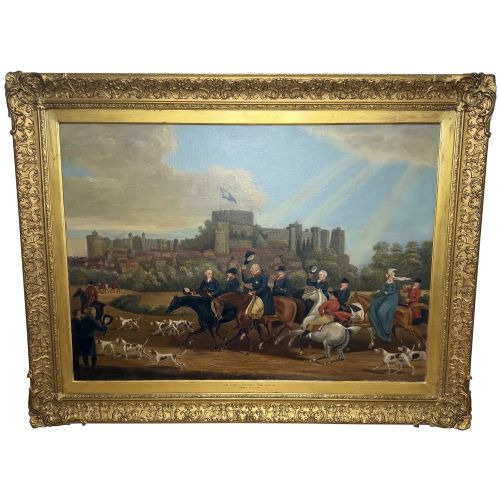
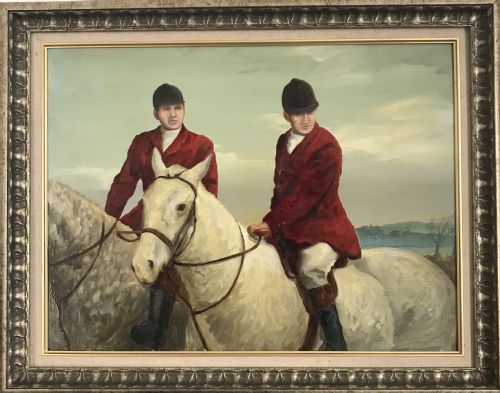
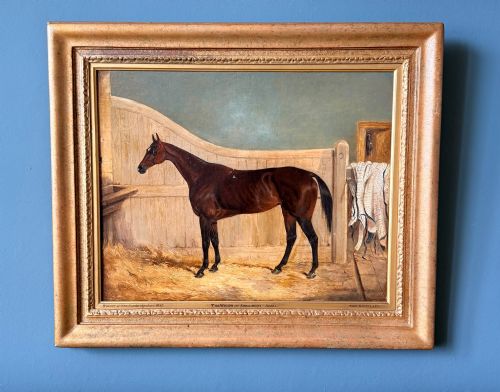
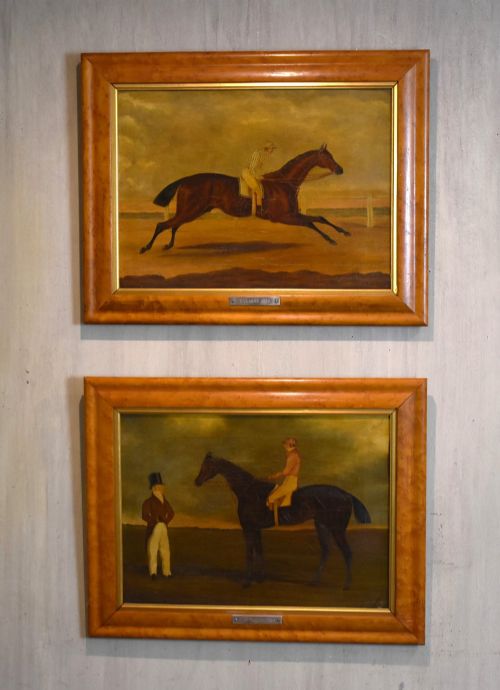
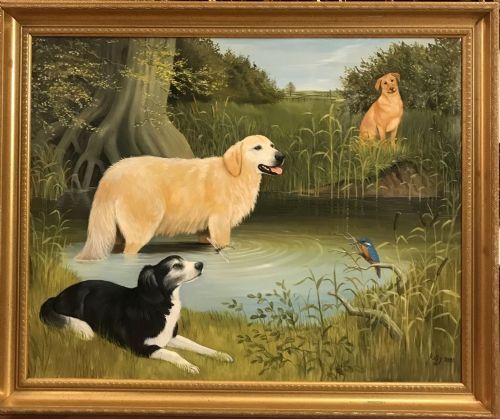
A traditional country sports painting depicts scenes of hunting, equestrian portraits, gun dogs with game, and rural coaching life. These works draw the eye across open fields, winter snow, and moorland backgrounds populated by horses, hounds, and riders in full cry.
The versions most commonly met on this page date from the nineteenth and twentieth centuries, spanning Victorian and Edwardian periods. They appear primarily as oil paintings on canvas alongside watercolours, bodycolour works, and painted prints housed in gilt frames.
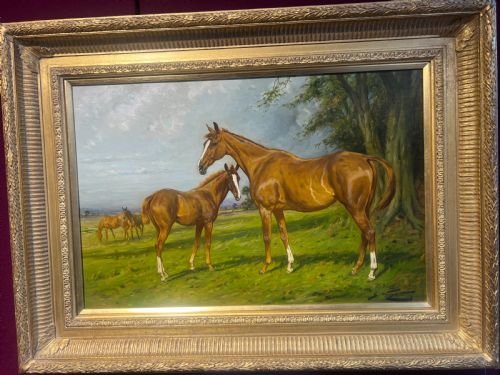
Subjects range from individual animal portraits of spaniels, setters, and bay hunters to large narrative compositions of the hunt meeting, the chase, and the day's bag. Each piece reflects the rural pursuits valued in British art traditions.
Materials and methods
Painters utilised oil paint on stretched canvas or oil on canvas panels, building depth through layered glazes and detailed brushwork. Watercolours and bodycolour on paper appear alongside these oil works, often finished with gum arabic for richer tones.
Frames play an integral part in the construction of these pieces, frequently consisting of moulded giltwood or gilt wood adorned with decorative plasterwork corners. The combination of oil pigments, canvas supports, and heavy gilt frames defines the physical structure of the artwork.
Listings feature works spanning the nineteenth and twentieth centuries, executed in oil on canvas, watercolour, and giltwood frames.
Distinctions in quality
Quality rests in the anatomical accuracy of the animals and the vitality of the composition. Skilled artists render the tension in a hunter's leg muscles, the alert posture of a spaniel, and the atmosphere of a winter landscape with precise brushwork.
The handling of light and background detail separates standard workshop pieces from superior works. Master practitioners balance the central animal or hunt group against atmospheric skies and rolling terrain without losing narrative clarity.
George Sydney Shepherd·John Sargent Noble·George Wright·William Albert Clarke·Thomas Walker Bretland·John Frederick Herring Snr·Benjamin Blake·John Arthur Lomax·Philip Henry Rideout·George Armfield·George E Sharpe·Charles Faulkner·Fannie Moody·Colin Graeme Roe·Clifton Tomson·John Frederick Herring Jnr·Samuel Henry Alken·John Charles Tunnard·John Sanderson Wells·Charles Clifford Turner·Henri Schouten·John Atkinson
The Traditional Country Sports Painting Glossary
- Bodycolour
- Watercolour paint mixed with a white pigment to make it opaque. This technique adds dense highlights and solid areas of colour to works on paper.
- Giltwood
- Wood carved and coated with a thin layer of gold leaf or metallic powder. It provides the traditional reflective border for framing nineteenth-century canvases.
- Bodycolour
- Watercolour paint mixed with a white pigment to make it opaque. This technique adds dense highlights and solid areas of colour to works on paper.
- Giltwood
- Wood carved and coated with a thin layer of gold leaf or metallic powder. It provides the traditional reflective border for framing nineteenth-century canvases.
Traditional Country Sports Painting: Frequently Asked Questions
What is a traditional country sports painting?
A traditional country sports painting is an artwork depicting equestrian scenes, hunting dogs, game, and rural field sports.
These pieces record British rural life and sporting history through oil on canvas and watercolour mediums.
How were these paintings displayed?
They were traditionally hung in country houses, libraries, and estate drawing rooms within heavy giltwood frames.
The framing complemented the rich earth tones and pastoral subjects of the canvas.
How do I identify nineteenth century works?
Nineteenth century pieces often show specific clothing styles, tack, and painting techniques characteristic of the Victorian era.
Signatures, artist dates, and stretcher frame construction help confirm the period of origin.
What subjects are most common?
Fox hunting scenes, gun dogs with game, and portraits of prized hunters dominate the available subjects.
Artists focused heavily on accurate animal anatomy combined with recognisable British rural landscapes.