
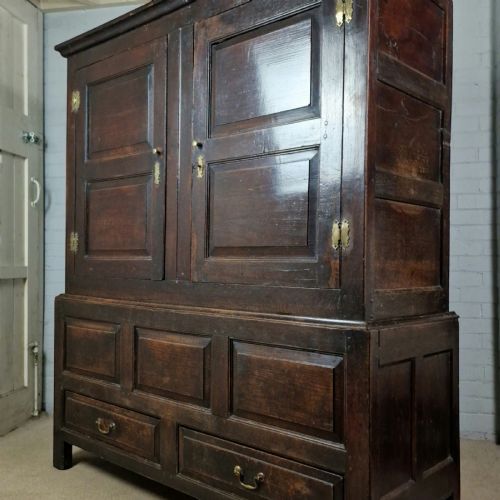
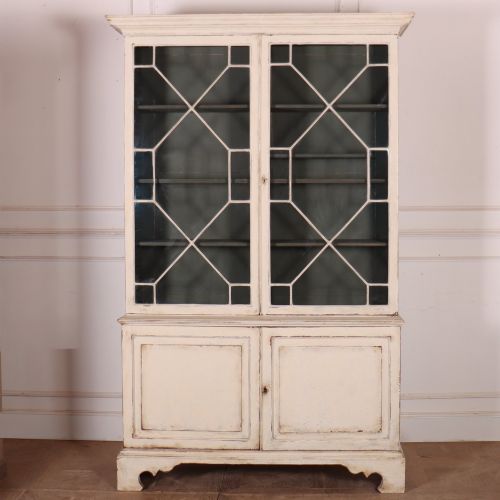
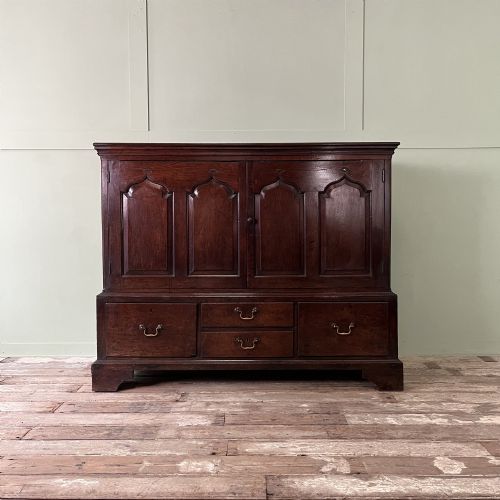
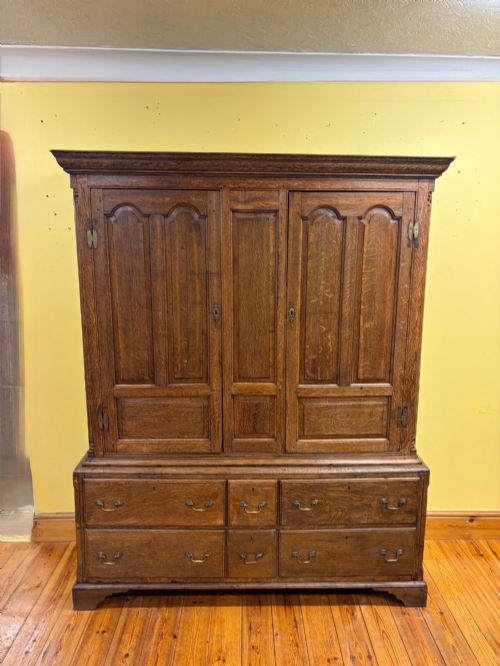
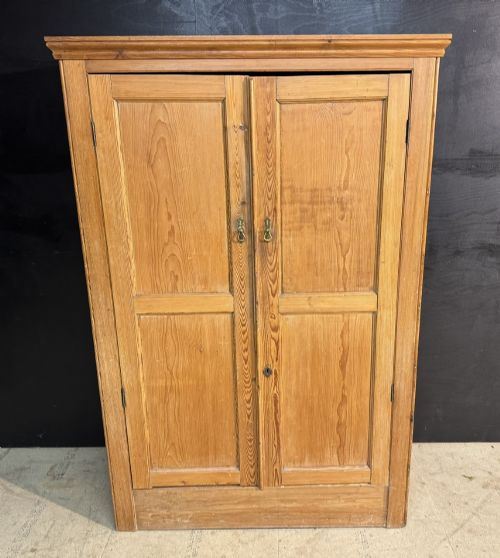
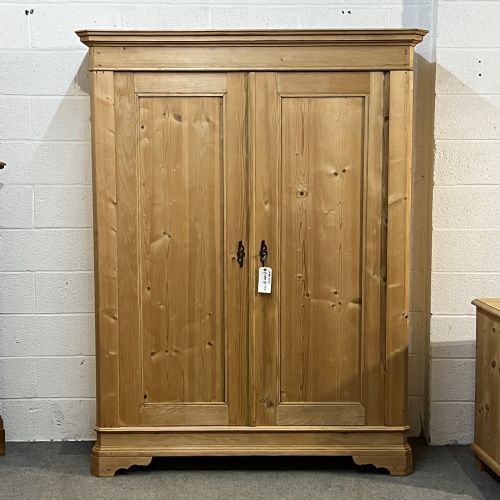
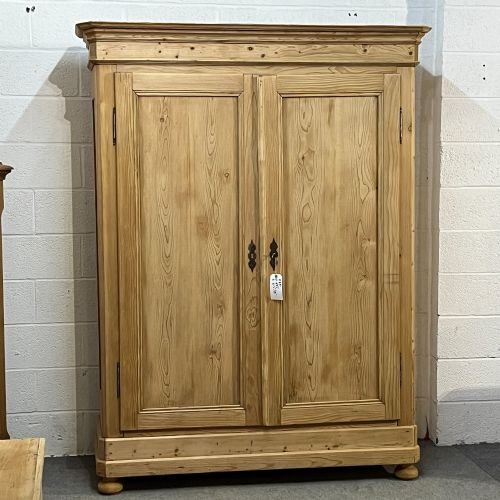
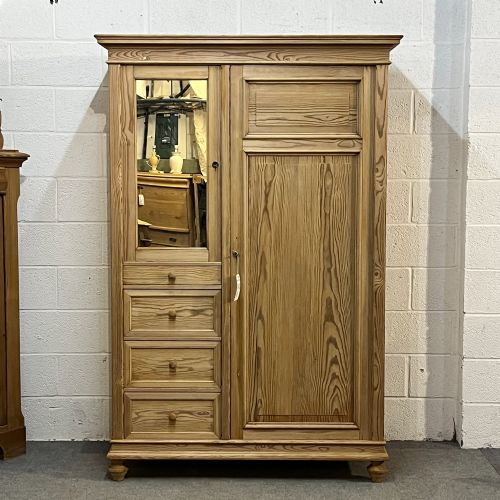
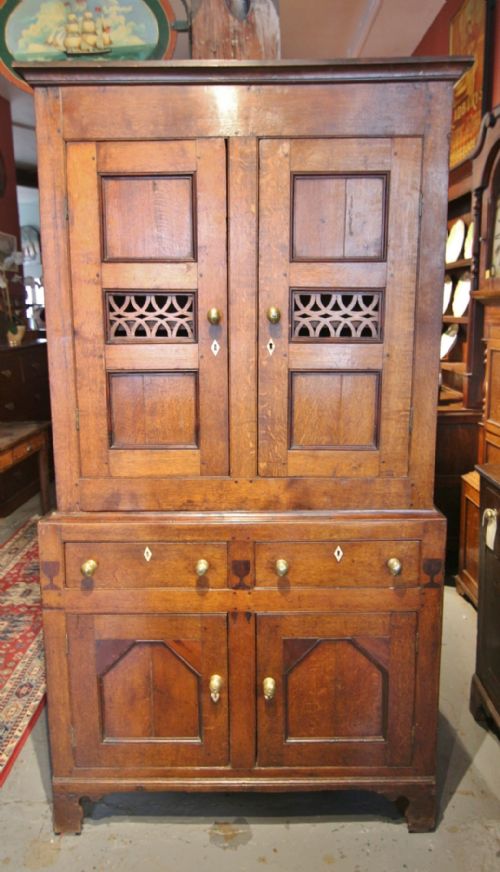
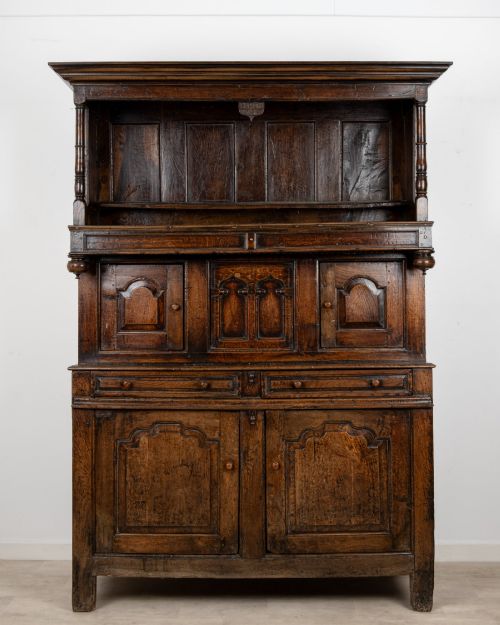
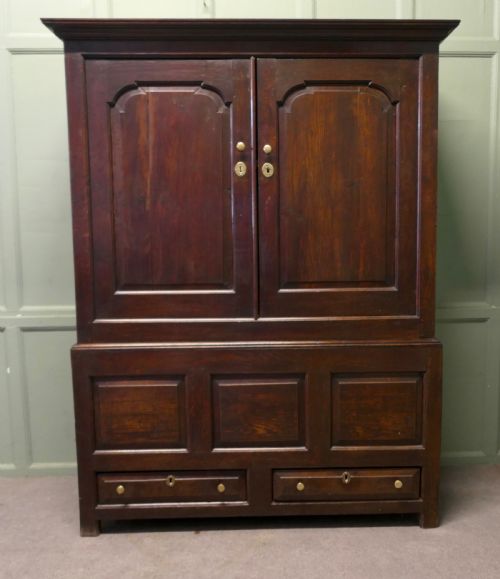
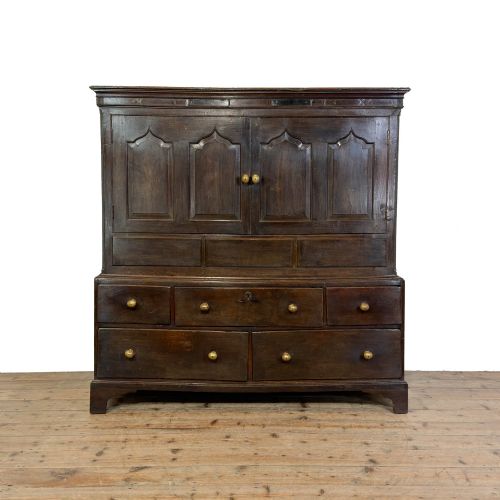
Traditional Country Press Cupboard
Traditional country press cupboard examples offer practical domestic storage formed from honest regional timbers and utilitarian craftsmanship.
Traditional Country Press Cupboard
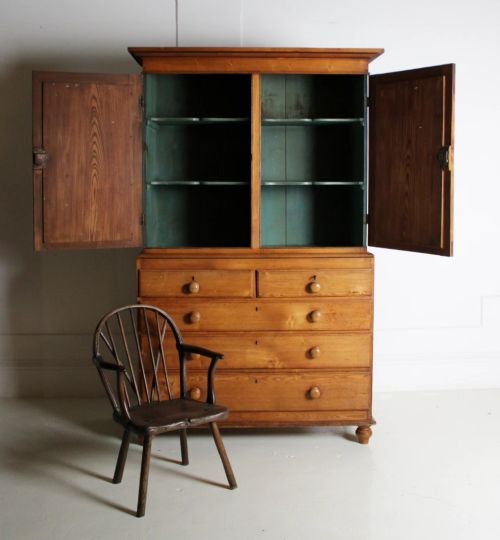
A traditional country press cupboard serves as a substantial storage unit designed for linen, provisions, or garments within domestic interiors. These forms encompass regional variations such as housekeeper cupboards, linen presses, and food cupboards originating from eighteenth and nineteenth century vernacular traditions.
The pieces appearing on this page span Georgian, Victorian, and early twentieth century periods, reflecting the practical needs of rural households. Oak and pine dominate the structural forms, often finished with original paint, scumble, or wax surfaces.
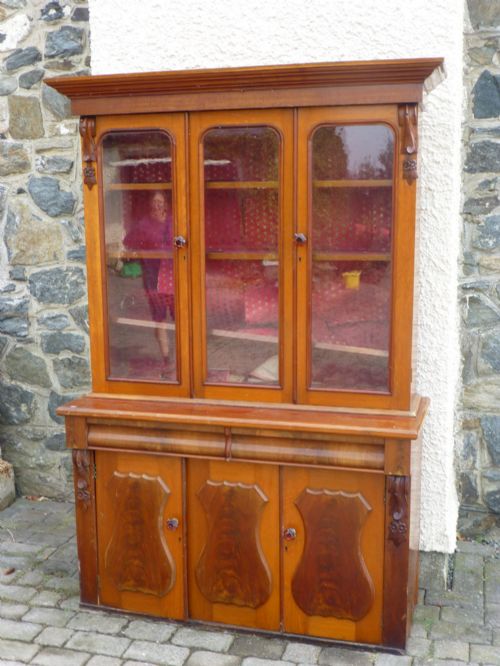
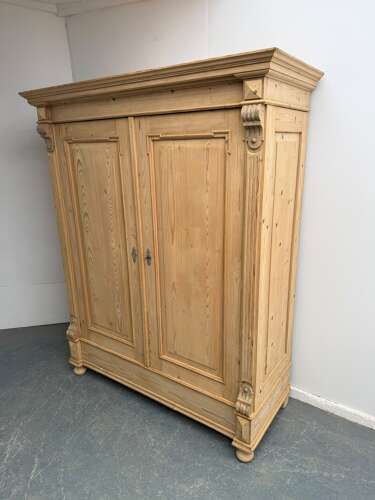
Buyers encounter distinct regional typologies, including Welsh vernacular pieces, West Country designs, and French provincial wardrobes. Functional configurations range from low double door wardrobes to large multi-door storage cabinets and glazed bookcase combinations.
Materials and construction methods
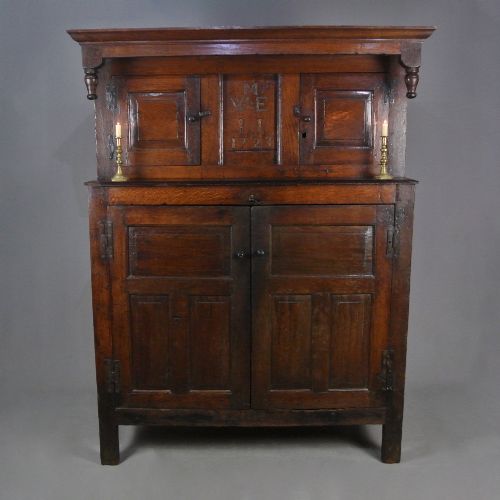
Local timbers such as solid oak and pine form the primary structural body of these items, selected for durability and availability in domestic workshops. Carpenters utilised traditional joinery methods, incorporating pegged joints and panelled doors suited to heavy daily use.
Hardware details feature forged iron hinges, blacksmith locks, and brass fittings that secure heavy timber doors and drawers. Surface treatments vary from unadorned waxed pine to layered paint and scumble finishes applied to protect and decorate the wood.
A blacksmith hammered out the iron hinges by hand while listening to the village gossip.
Distinctions in construction and surface preservation
The integrity of original timber surfaces and authentic hardware distinguishes superior examples from heavily altered pieces. Retained blacksmith locks, original hinges, and untouched paint or wax finishes contribute significantly to the character of an item.
Proportion and structural balance separate utilitarian workshop output from finer vernacular cabinet making. Clean lines in the moulding, well-fitted knockdown construction, and sound structural joinery indicate careful regional craftsmanship.
The Traditional Country Press Cupboard Glossary
- Press cupboard
- A large storage cabinet traditionally used for storing pressed linen or clothing, often featuring internal shelving or hanging space.
- Housekeeper cupboard
- A utilitarian storage unit designed for domestic provisions, household stores, and linens, frequently found in large country houses.
- Tridarn
- A traditional Welsh three-tiered oak cupboard featuring display tiers and enclosed storage sections, dating back to the eighteenth century.
- Scumble paint
- A decorative surface technique where a translucent glaze is manipulated over a lighter base coat to imitate finer wood grains.
- Knockdown wardrobe
- A large piece of furniture engineered with removable panels and pegged joints for ease of transport between rooms.
Traditional Country Press Cupboard: Frequently Asked Questions
What is a traditional country press cupboard used for?
These pieces provide substantial storage capacity for household linens, clothing, and general domestic items within living spaces.
Their deep shelves and hanging compartments accommodate bulky textiles that standard modern wardrobes struggle to hold.
How do I care for a waxed pine cupboard?
Maintain the timber by applying a traditional beeswax polish periodically to nourish the dry wood surface.
Avoid placing antique furniture near direct heat sources or in damp environments to prevent timber splitting.
How can I tell the difference between Georgian and Victorian pine?
Georgian examples often display simpler joinery, hand-planed surfaces, and tighter growth rings in the older pine timbers.
Victorian pieces frequently incorporate machine-moulded details, wider proportions, and more complex internal configurations.
What does knockdown construction mean on a wardrobe?
Knockdown construction refers to large wardrobes designed to dismantle into flat panels and separate sections for moving.
Country carpenters used this method so bulky cupboards could be transported through narrow farmhouse doorways.