

Traditional Country Oil Painting
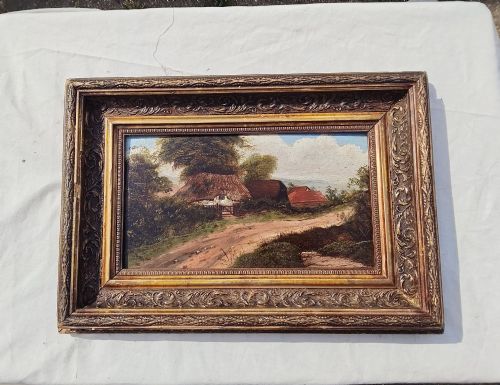
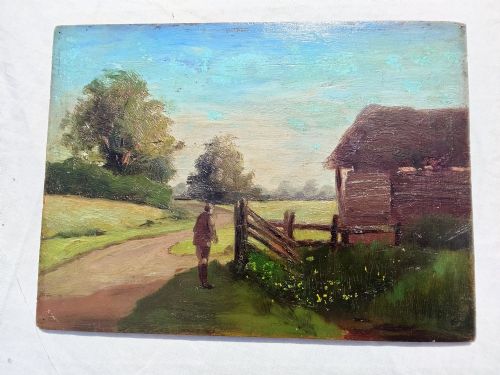
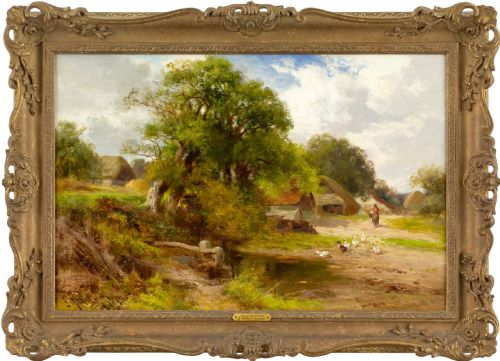
A traditional country oil painting captures rural life, landscapes, and animals on canvas, panel, or board from the Victorian era onward.
Traditional Country Oil Painting
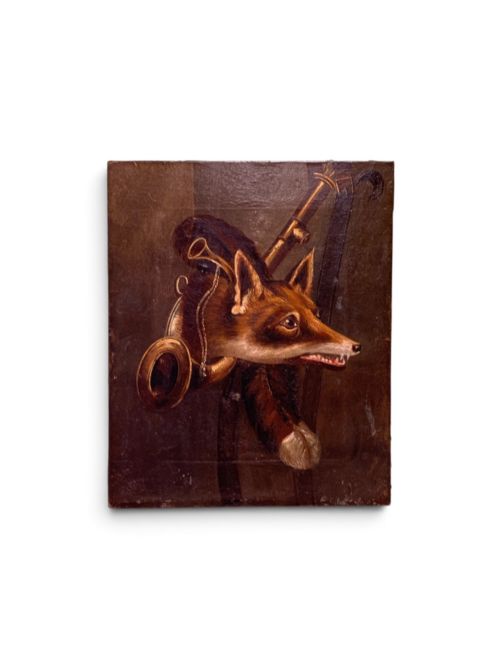
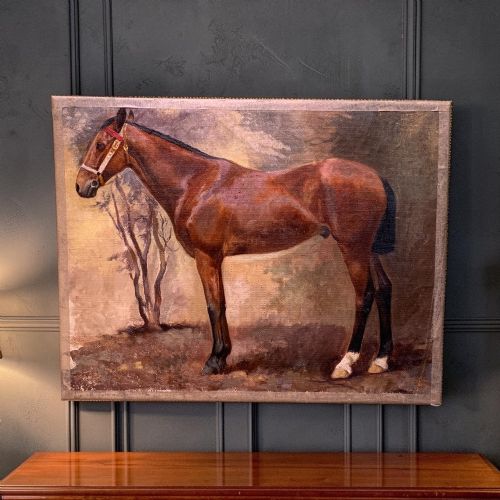
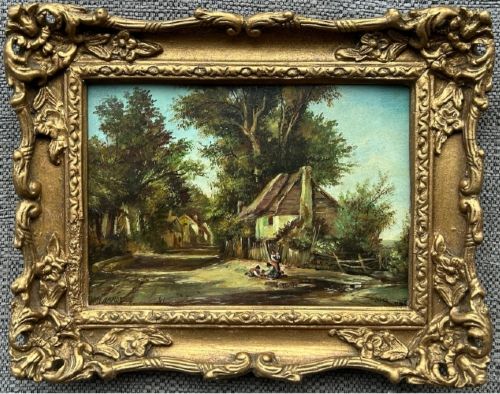
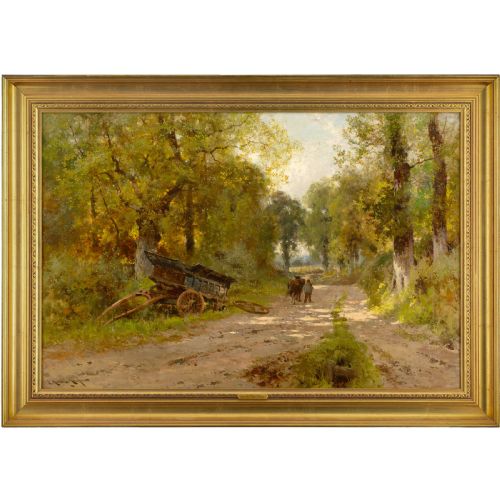
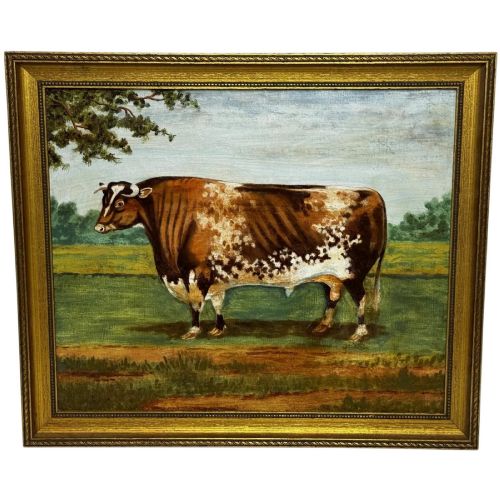
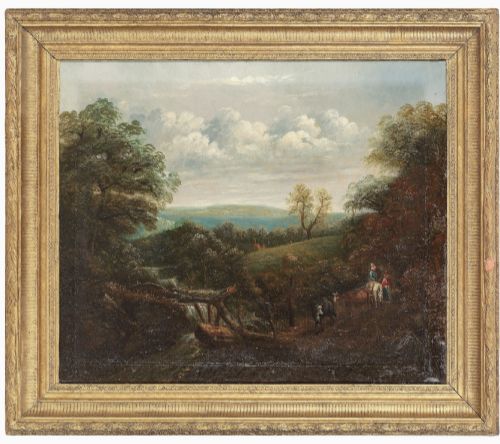
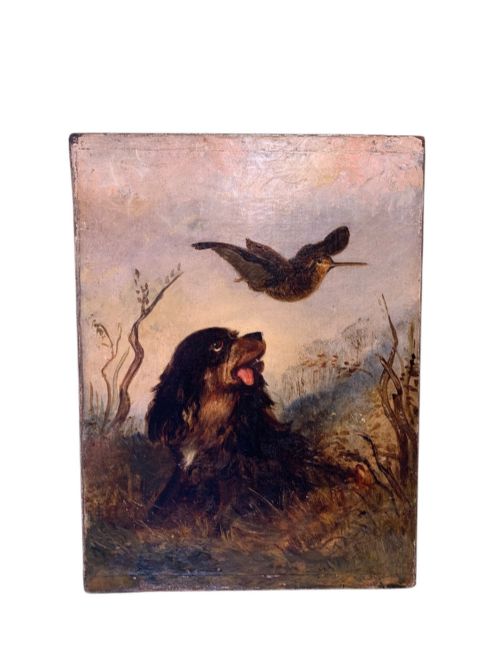
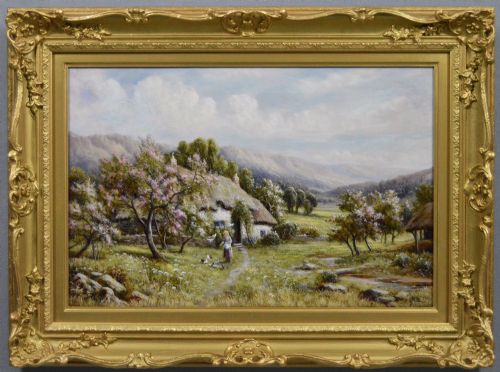
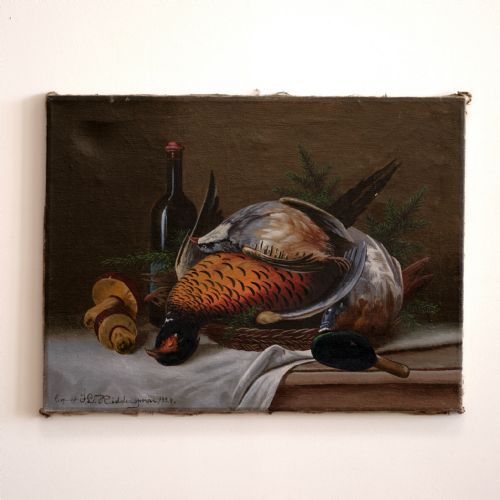
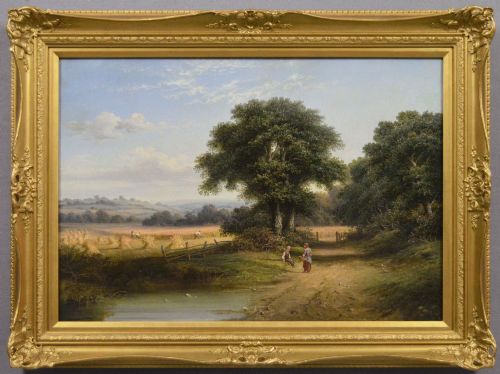
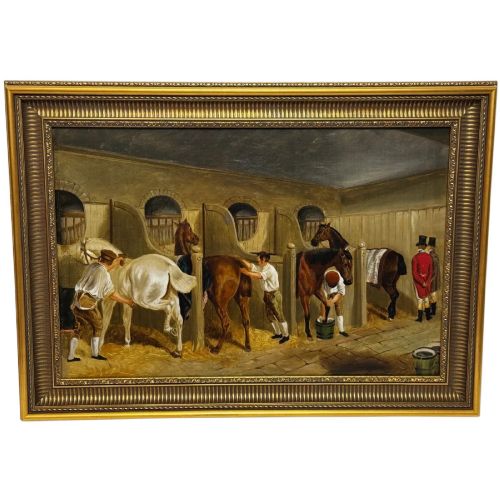
Traditional country oil painting encompasses framed works depicting British and European rural scenes, cottages, riversides, and harvest fields. Buyers encounter pastoral views alongside sporting art featuring horses, hounds, and prized livestock.
The selections span the eighteenth, nineteenth, and twentieth centuries, including pieces by named artists of the British, French, and Belgian schools as well as unsigned works by regional painters.
Common formats range from canvas and wooden board to panel and card, frequently housed in gilt wood or gesso frames.
How They Were Made
Artists applied oil paint using brushes and palette knives onto prepared surfaces of stretched canvas, wooden board, card, or panel. Pigments dried slowly, allowing painters to blend tones and build rich textures across landscapes and animal portraits.
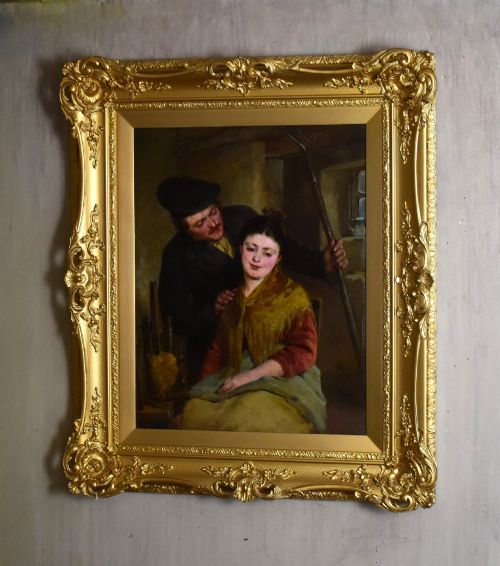
Finished works were secured in timber frames finished with carved or moulded gilt wood and gesso ornamentation to complement the composition.
Traditional Country Oil Painting Retail Price Guide 2026
Typical asking prices for traditional country oil painting among the pieces listed under this phrase on Sellingantiques today, from the lower quarter to the upper quarter. They describe what is for sale here now, not the wider market.
Listings feature works across the nineteenth and twentieth centuries, including Victorian sporting art and Edwardian landscapes.
What Varies in Quality
Quality rests upon the skill of brushwork, anatomical precision in animal portraits, and depth of perspective within landscape compositions. Master painters command greater liveliness in light and shadow, whereas lesser examples display rigid forms and flat tones.
The condition of the paint layer and the originality of the accompanying gilt wood or gesso frame influence the integrity of the piece.
William Howard Hardy·John Horace Hooper·Robert John Hammond·Walter Heath Williams·Howard Helmick·Thomas Sidney Cooper·John Sargent Noble·George Wright·William Albert Clarke·Carl Whitfield·Henry Yeen King·John Alfred Wheeler·T C Hofland·Henry H Parker·Thomas Walker Bretland·Miles Birkett Foster·Henry Schouten·George Morland
The Traditional Country Oil Painting Glossary
- Oil paint
- A slow-drying medium composed of pigments suspended in a drying oil, typically linseed oil. This medium allows for deep colour saturation and smooth blending.
- Gesso
- A paint mixture consisting of a neutral binder mixed with chalk, pigment, or gypsum used to prepare wood or canvas surfaces. It also forms moulded relief details on decorative frames.
- Panel
- A flat piece of wood or card used as a rigid support for painting instead of stretched canvas. Panels often yield tighter brush control.
- Gilt wood
- Wood coated with a thin layer of gold leaf or metallic powder. It provides a reflective, ornate border for traditional artworks.
- British School
- A designation for artists trained or working within Britain whose specific identities are unrecorded or grouped by regional style.
Traditional Country Oil Painting: Frequently Asked Questions
What subjects appear in these paintings?
The compositions show rural vistas, riversides, cottages, harvest fields, and figures working the land. Animal portraits feature shire horses, hunting dogs, cattle, and sheep.
Many works record specific agricultural animals or named racehorses from the nineteenth and twentieth centuries.
How do I identify the period of a painting?
Dating relies upon the style of the brushwork, clothing of any figures, and framing materials such as gilt wood and gesso. Signatures, inscriptions, and artist biographical dates provide direct markers.
Support materials like wooden boards or stretched canvas also help distinguish nineteenth-century works from later twentieth-century examples.
Are these paintings signed by the artist?
Some pieces bear signatures or attribution plaques naming artists such as Thomas Sidney Cooper or George Morland. Other works originate from regional or continental European schools without an artist signature.
Attributions are determined through recorded provenance, stylistic comparison, and subject matter.
How should I display an oil painting at home?
Hang paintings away from direct sunlight and steady heat sources to protect the oil pigments and wooden supports. Ensure the wall structure securely supports the weight of the timber frame.
Keep the room at a stable humidity to prevent movement in canvas or wooden panels.