


Traditional Corner Storage Unit
These traditional corner storage unit pieces make intelligent use of awkward room angles whilst providing generous concealed shelving.
Traditional Corner Storage Unit
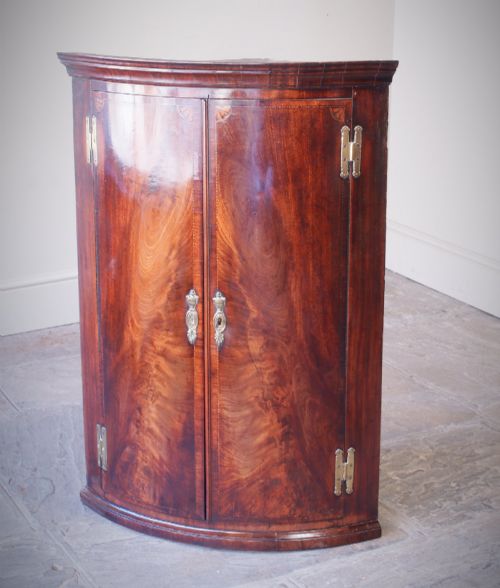
A traditional corner storage unit is designed specifically to fit snugly into the junction of two walls, transforming dead space into practical furniture. The selections here span several distinct eras, bringing useful height and depth to corners that usually remain empty.
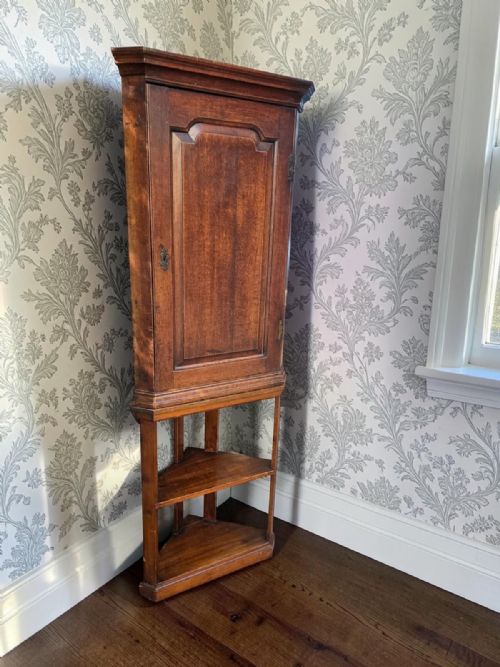
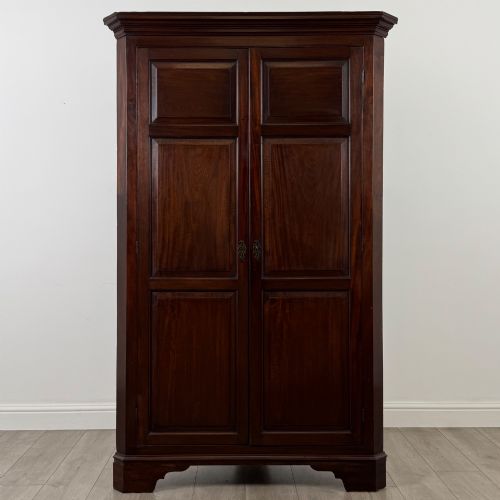
Most examples encountered on this page take the form of corner cupboards and cabinets, built to stand directly on the floor or sit upon dedicated stands. These items accommodate various domestic requirements through enclosed shelving behind single or double doors.
Originating across the Georgian, Victorian, and Edwardian periods, these units reflect the domestic architecture of their respective eras. Makers adapted the interior capacity to suit rooms of modest proportions as well as grander reception spaces.
How they were made
Construction relies heavily on timber selection, with oak, mahogany, and pine forming the primary carcasses. Cabinet makers joined these heavy timbers using traditional joinery methods suited to the acute angles demanded by room corners.
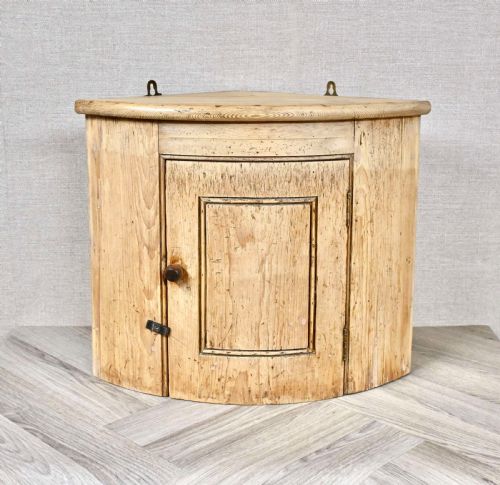
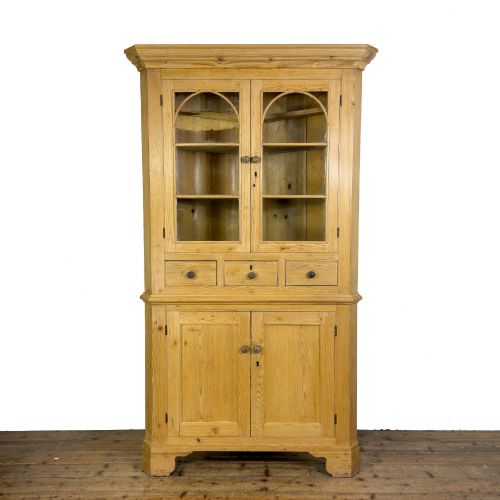
Surface treatments vary from polished mahogany veneers and satinwood inlays to stripped pine and painted finishes. Brass hinges, iron fixings, and glass panels frequently complete the doors, depending on the stylistic period.
Listings feature traditional corner storage unit forms executed in oak, pine, mahogany, and satinwood across multiple centuries.
What varies in quality
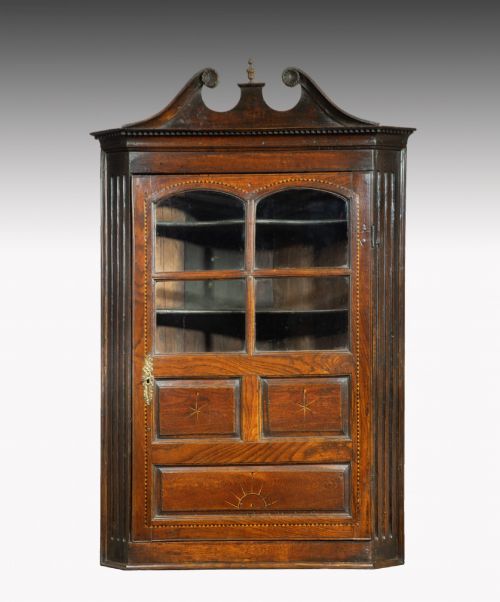
Quality rests upon the choice of timber and the sophistication of the exterior detailing, such as fine carvings or contrasting satinwood inlays. Finer examples display harmonious proportions and well-figured grain across the primary door panels.
The architectural presence of a piece is heavily influenced by the execution of cornices, base mouldings, and whether the unit stands independently on the floor or integrates with a matching stand.
The Traditional Corner Storage Unit Glossary
- Bow front
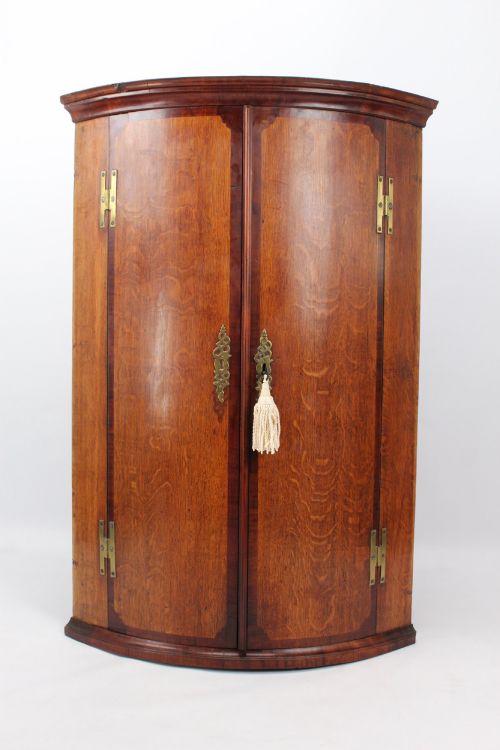
- A convex curved cabinet front that projects outward, commonly seen on Georgian and nineteenth-century pieces.
- Standing corner cupboard
- A tall floor-standing unit that rests directly upon the ground rather than hanging on a wall.
- Panelled corner cupboard
- A piece featuring wooden panels set within a frame on the doors or sides, demonstrating traditional cabinet construction.
- Welsh corner cupboard
- A regional variant combining characteristic timbers such as oak and mahogany, often associated with nineteenth-century craftsmanship.
Traditional Corner Storage Unit: Frequently Asked Questions
How do I measure for a corner cabinet?
Measure the wall space extending outward from the corner in both directions to ensure the cabinet flanks fit the available perimeter.
Take note of the overall height and diagonal depth to guarantee the unit clears skirting boards and cornice lines.
Are these cupboards fixed to walls?
Floor-standing models support their own weight independently, though tall units benefit from wall security brackets for stability.
Wall-hanging variants require secure fixings into structural studs or masonry to support the weight of the timber and stored contents.
How do I tell Georgian from Victorian pieces?
Georgian examples often utilise mahogany and display restrained classical proportions, sometimes featuring fine stringing or satinwood inlay.
Victorian pieces frequently employ pine, heavy oak, or rustic finishes, reflecting the revival styles popular during the nineteenth century.
What is a corner cupboard on stand?
This configuration separates the main storage cabinet from the floor by placing it upon an integrated or matching wooden base structure.
Such designs lift the primary storage compartment higher into the room and lighten the visual weight of the furniture.