
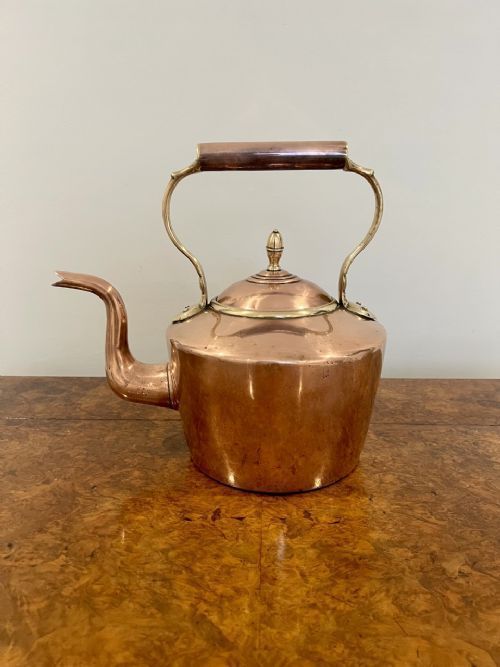
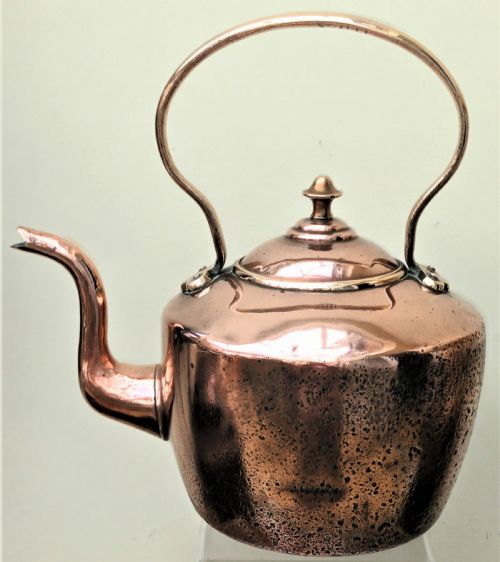
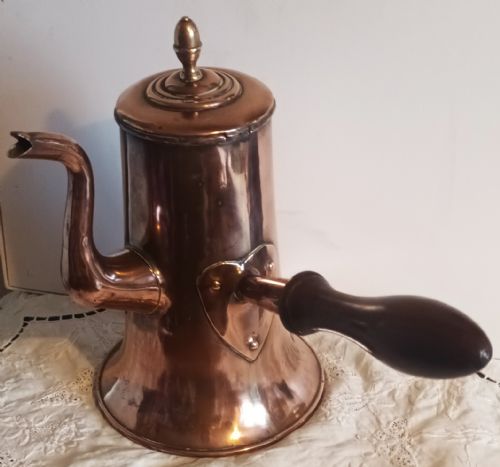
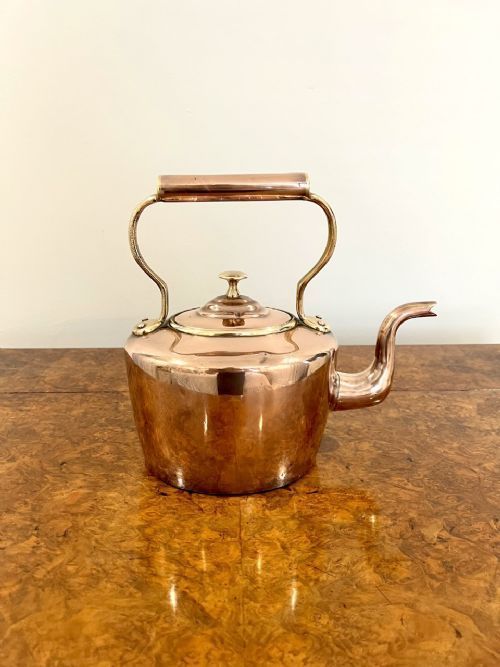


Traditional Copper Kettle
A traditional copper kettle brings warmth and practical heritage to a hearth, uniting heavy metalwork with daily utility.
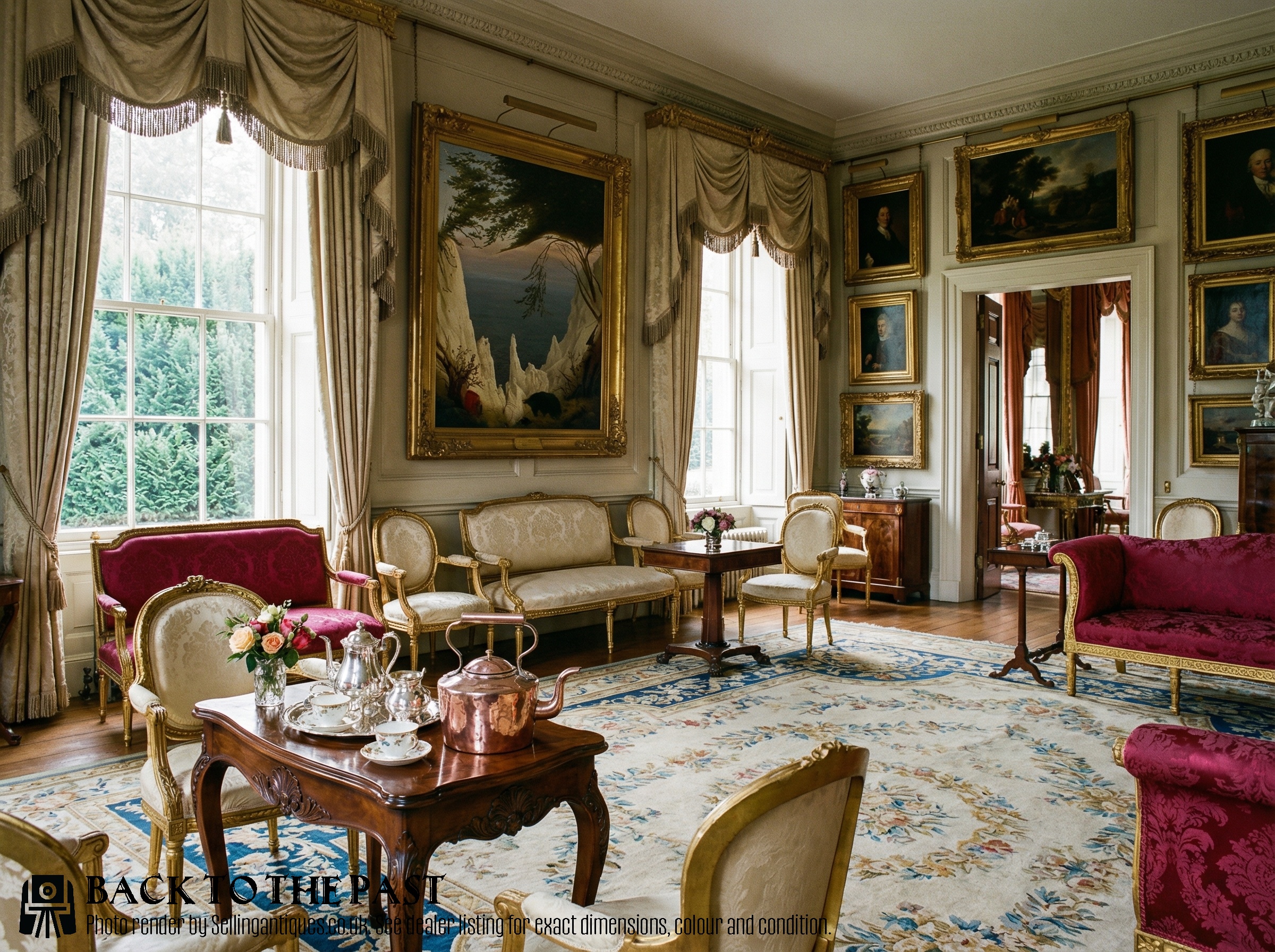
Traditional Copper Kettle
A traditional copper kettle is a historic vessel designed for heating water, appearing primarily in George III, Georgian, and Victorian styles. Buyers search for these pieces to add authentic metallic character to a room.
The selections span standard tea kettles, larger fish kettles, and related vessels like tea urns, samovars, and coffee pots. Most examples date from the nineteenth century or around eighteen hundred.
Forms range from compact small pieces to large display items. Many incorporate brass and ebonised wood details alongside the primary metal.
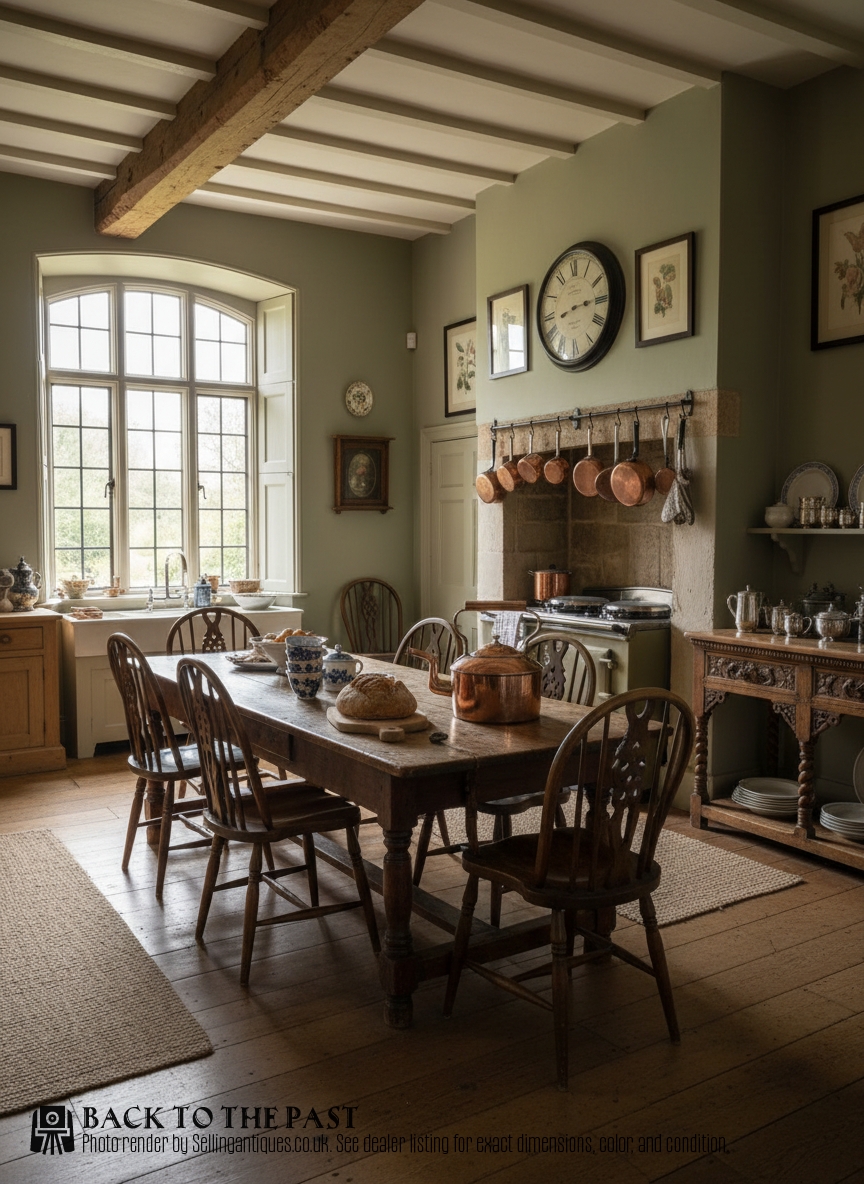
How they were made
These vessels rely on beaten or shaped copper bodies, frequently paired with contrasting brass components. Metalworking techniques of the period involved skilled hammering and joining to create durable containers.
Handles and insulators often utilise wood or ebonised wood to protect the hand from heat. Tin linings appear in food-safe interiors, while some surfaces are polished to highlight the metallic sheen.
Traditional Copper Kettle Retail Price Guide 2026
Typical asking prices for traditional copper kettle among the pieces listed under this phrase on Sellingantiques today, from the lower quarter to the upper quarter. They describe what is for sale here now, not the wider market.
Listings combine George III, Victorian, and Georgian eras, showcasing copper, brass, wood, tin, and ebonised wood.
What varies in quality
Quality rests in the weight of the metal and the crispness of the form, such as an unusual oval shape versus a standard round body. Superior examples display careful handling of the seams and well-proportioned brass or wooden fittings.
The distinction between ordinary utility items and finer pieces lies in the finishing details and the preservation of original polished surfaces. Earlier George III pieces often command attention for their robust proportions.
The Traditional Copper Kettle Glossary
- George III
- A British stylistic period spanning the late eighteenth and early nineteenth centuries, noted for refined domestic metalwork. Pieces from this era often show classic proportions.
- Samovar
- A heated metal container traditionally used to boil water for tea, sometimes featuring brass and copper construction. These large vessels stand out in nineteenth-century collections.
- Ebonised wood
- Timber treated to resemble ebony, frequently utilised for kettle handles and knobs to provide a dark contrast against bright metal. It offers a secure, heat-resistant grip.
- Fish kettle
- An elongated metal vessel designed to poach whole fish, featuring a fitted lid and handles. This specialised form is heavier than a standard tea kettle.
- Tea urn
- A large standing metal container for dispensing hot water, related in function and material to the samovar. They are typically found in Victorian collections.
Traditional Copper Kettle: Frequently Asked Questions
How do I clean a copper kettle?
Traditional copper vessels respond well to gentle metal cleaners designed to remove tarnish without scratching the surface. Regular wiping maintains the warm reddish sheen.
Avoid harsh abrasives that can wear away the historic exterior finish. Preserving the natural patina is often preferred by collectors.
Can I use an antique kettle on a stove?
Many older kettles were built for open hearths or early coal ranges rather than modern cooktops. Thin historic bases might not distribute heat evenly on induction surfaces.
It is generally wiser to treat nineteenth-century examples as decorative display items. Using them for heating water risks damaging fragile historic seams.
How do I date a copper kettle?
Dating relies on examining the manufacturing methods, handle attachments, and stylistic cues like Georgian or Victorian shapes. Hand-beaten seams and specific brass fittings often point to the era of production.
Comparing the form to known eighteenth and nineteenth-century examples clarifies the timeline. Documentation from the period helps narrow down the decade.
What is the difference between a samovar and a kettle?
A samovar is typically a larger, standing urn equipped with an internal heating tube or spigot for serving hot water. Standard kettles are smaller vessels meant for lifting and pouring directly.
Samovars often incorporate brass taps and handles, serving a communal role in tea service. Both share similar copper construction techniques from the Victorian period.